Image 1 of 5
1 / 5
Plant Reference
Persicaria, Genus, amplexicaulis, Species, 'Firetail', Cultivar,
- Genus & species
- Cultivar
red knotweed
Species native to the Himalayas (Pakistan, India, Nepal, Bhutan) and southwestern China
Overview
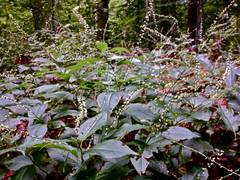
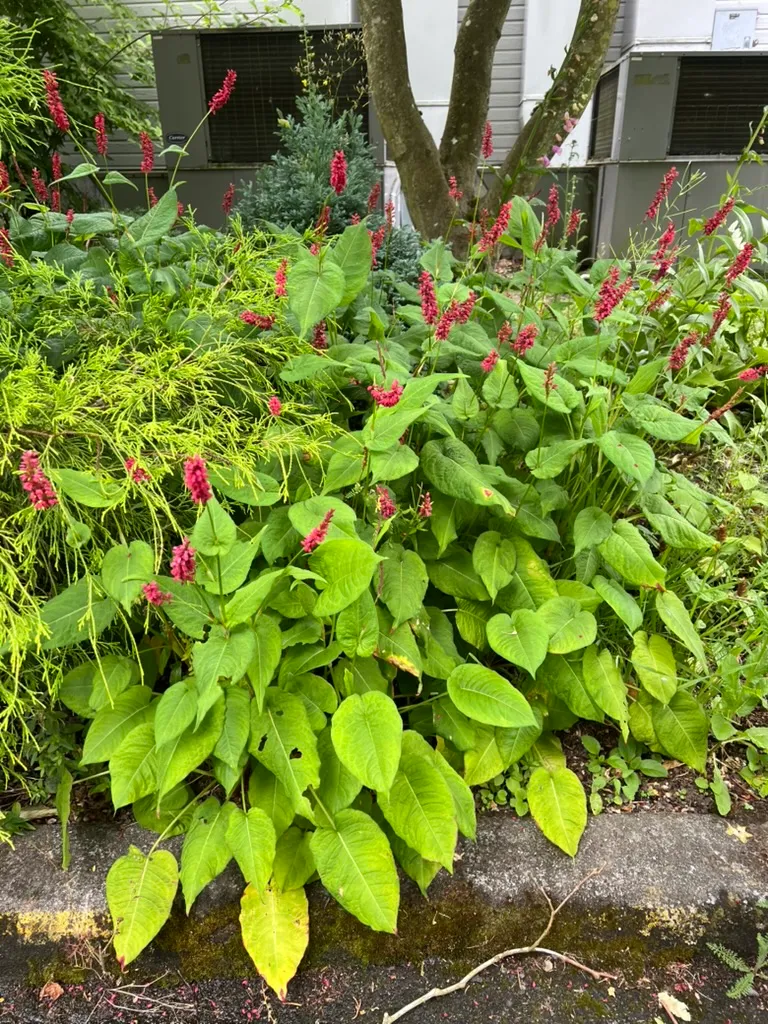
Persicaria amplexicaulis 'Firetail' is a deciduous clump-forming herbaceous perennial reaching 36–48 inches (90–120 cm) tall and 36–48 inches (90–120 cm) wide, with a vigorous upright to bushy habit. Leaves are alternate, lance-shaped to ovate, stem-clasping, 4–8 inches (10–20 cm) long, medium to dark green, with a corrugated surface produced by deeply impressed lateral veins. Stems are sturdy and branching, supporting flower spikes without staking. Flowers are tiny, densely packed into slender tapering spikes 2–3 inches (5–8 cm) long in deep crimson-red with a pure hue shift toward red rather than the warmer scarlet of 'Blotau' (Firetail trade name) or the coral of 'Firedance' — despite the shared 'Firetail' designation in common usage, this cultivar carries the deepest true-red flower color of the commonly cultivated P. amplexicaulis selections. Flowers appear from July through October over a 16-week bloom window, with new spikes emerging continuously across the season without deadheading. Peak flower density falls in August and September. Growth rate is fast; the clump reaches full mature size in 2 growing seasons. The plant spreads through short rhizomes to form an expanding clump contained enough for mixed border use. Hardy to USDA zone 4. Not known to be toxic to pets or humans.
Native Range
Persicaria amplexicaulis (the parent species) is native to the Himalayas — Pakistan, India, Nepal, Bhutan — and southwestern China, occurring in moist mountain meadows, open woodland margins, and stream banks at 6,000–14,000 feet (1,800–4,300 m) elevation.Suggested Uses
Used in mixed perennial borders, woodland edges, rain gardens, stream-side plantings, and moist low-lying positions at 36–48 inch (90–120 cm) spacing. The deep crimson-red spikes pair with yellow-to-orange late-season perennials — Rudbeckia fulgida, Helenium autumnale, Kniphofia cultivars — and with ornamental grasses in bronze, amber, or blue-gray tones such as Panicum virgatum 'Shenandoah', Miscanthus sinensis 'Morning Light', and Schizachyrium scoparium. Mature size at 36–48 inches (90–120 cm) places this cultivar in the mid-to-back-of-border range. The cultivar performs well in partial shade conditions where many sun-loving perennials underperform, suiting woodland-edge positions. The 16-week July-to-October bloom sustains flower presence across the summer-to-autumn transition when many border perennials have stopped flowering. The plant does not grow well in dry soils, sustained drought positions, or hot-dry continental summer climates without supplemental irrigation.How to Identify
Appearance
Size & Dimensions
Height3' - 4'
Width/Spread3' - 4'
Bloom Information
Slender tapering flower spikes 2–3 inches (5–8 cm) long densely packed with tiny deep crimson-red flowers appear on branching stems from July through October over a 16-week window. New flower spikes emerge continuously from the base throughout the season; no deadheading is needed to maintain bloom. Peak flower production falls in August and September. In the Pacific Northwest, the bloom window extends reliably into mid-October before frost.
Detailed Descriptions
Flower Description
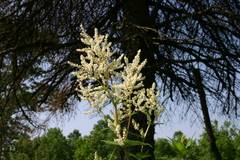
Deep crimson-red; tiny flowers in slender tapering bottlebrush spikes 2-3 inches long on sturdy branching stems; July-October; new spikes emerge continuously from the baseFoliage Description
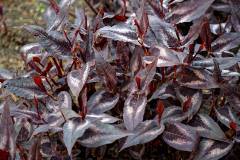
Medium to dark green; alternate, lance-shaped to ovate, stem-clasping, 4-8 inches long; corrugated surface from deeply impressed lateral veinsGrowing Conditions
Sun Requirements
Requires 3-6 hours of direct sunlight daily
• Full Sun: 6+ hours of direct sunlight
• Partial Shade: 3-6 hours of direct sunlight
• Full Shade: Less than 3 hours of direct sunlight
Care & Maintenance
Care Guide
Grow in full sun to partial shade with 3–6 hours of direct light in consistently moist, fertile, humus-rich loam or clay at pH 5.5–7.0. Consistent soil moisture through the growing season drives the cultivar's sustained flowering; plants in dry positions finish flowering by late August rather than continuing into October, and performance declines visibly in sustained drought. Tolerates heavy clay and occasional waterlogging. The cool, moist summers of the Pacific Northwest and similar maritime-influenced temperate climates suit the cultivar; hot, dry continental summers shorten the bloom window. Water deeply once per week during dry periods from May through September. Apply 2–3 inches (5–8 cm) of organic mulch over the root zone in spring. No staking is needed — stems are self-supporting. Hardy to USDA zone 4.Pruning
Cut back all stems to ground level in late autumn after frost or in late winter (February–March) before new growth emerges. No deadheading is needed during the bloom window — new spikes emerge continuously from the base and replace faded ones without intervention. Spent spikes can be removed for tidiness but do not affect subsequent flowering. Divide clumps every 3–4 years in early spring by lifting and separating rhizome sections; replant vigorous outer portions at 36 inch (90 cm) spacing.Pruning Schedule
Prune: March & October
fallearly spring