Persicaria, Genus, amphibia, Species,
- Genus & species
water smartweed
Northern hemisphere: North America, Europe, and northern Asia
Overview
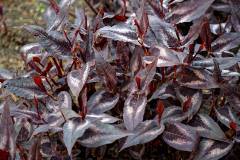
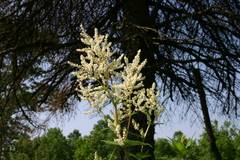
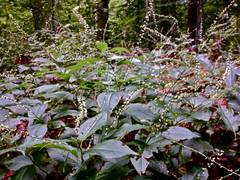
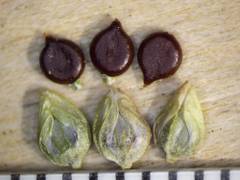
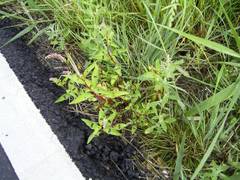
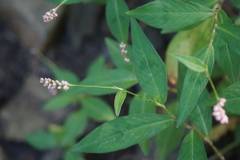
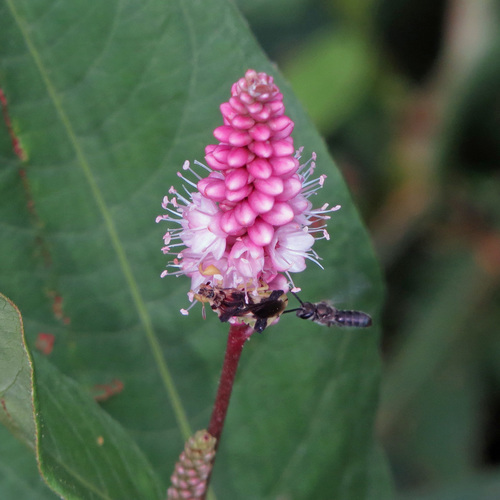
Persicaria amphibia is a rhizomatous perennial of the knotweed family that grows in two distinct forms according to water level. The aquatic form produces stems that float or trail at the surface, rooting at the nodes, with hairless oblong-to-lance-shaped leaves 2-5 inches (5-13 cm) long held flat on the water. The terrestrial form is erect, 8-30 inches (20-75 cm) tall, with hairy, shorter-stalked leaves and a roughened stem. Both forms produce dense cylindrical flower spikes 0.8-1.6 inches (2-4 cm) long packed with rose-pink flowers, borne on stalks above the water or foliage from June to September. The papery sheaths (ocreae) that wrap each stem node are characteristic of the family. Spread is mainly by branching rhizomes, which can form extensive colonies in still and slow-moving water, and seed set is often sparse, particularly in the aquatic form. The plant tolerates seasonal drawdown, switching to the land form as water recedes. Dense colonies can crowd out other marginal vegetation.
Native Range
Native across the cooler northern hemisphere, including much of North America, Europe, and northern and central Asia. It grows in ponds, lake margins, slow rivers, canals, ditches, and seasonally wet meadows, rooting in mud from the waterline to about 10 feet (3 m) depth.Suggested Uses
Used in wildlife ponds, pond and lake margins, rain gardens, and bog gardens for cover and nectar, planted 18-36 inches (45-90 cm) apart or in submerged baskets. Its spreading rhizomes suit large, contained, or naturalised water features rather than small formal pools. Flowers draw bees and hoverflies, and seeds and foliage feed waterfowl.How to Identify
Appearance
Size & Dimensions
Height8" - 2'6"
Width/Spread2' - 4'
Bloom Information
Flowers from June to September, with peak bloom in July and August. Each cylindrical spike holds colour for 2-3 weeks, and a colony produces spikes successively through the season. The aquatic form flowers less freely than the terrestrial form and may not bloom in deep or shaded water.
Detailed Descriptions
Foliage Description
greenGrowing Conditions
Sun Requirements
Requires 4-8 hours of direct sunlight daily
• Full Sun: 6+ hours of direct sunlight
• Partial Shade: 3-6 hours of direct sunlight
• Full Shade: Less than 3 hours of direct sunlight
Care & Maintenance
Care Guide
Grows in full sun to part shade in still or slow-moving fresh water and on saturated ground at the margins. The aquatic form is planted in pond baskets or mud in up to 3-5 feet (0.9-1.5 m) of water, while the land form establishes on wet soil. Spreading rhizomes extend rapidly and can fill a pond margin within a few seasons, so containment in baskets or by a root barrier limits its reach. It needs no feeding in natural water bodies. Few pests affect it, though aphids gather on emergent flower stalks. Foliage dies back to the rhizome in autumn and regrows in spring.Pruning
Cut back faded flower stalks and excess surface growth through summer to hold colonies within bounds. Thin or lift sections of rhizome in spring or autumn to control spread in small ponds. Foliage left in place dies down naturally after the first frosts.Pruning Schedule
Prune: July–September
summerfall
Container Growing
Suitable for container growing
Minimum container size: 3 gallons