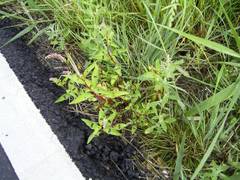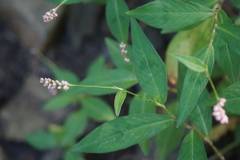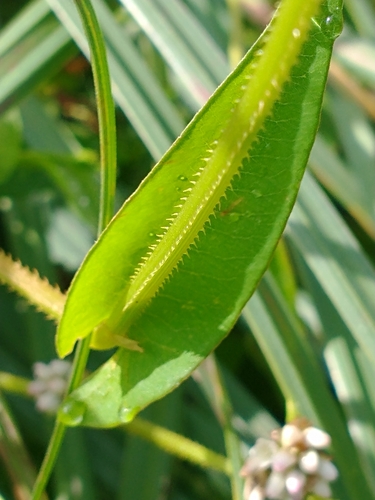
Persicaria, Genus, sagittata, Species,
- Genus & species
arrow-leaved tearthumb
Eastern North America and eastern Asia
SunFull Sun – Part Shade
WaterHigh
Overview
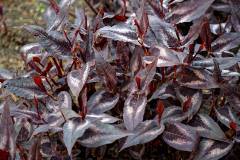
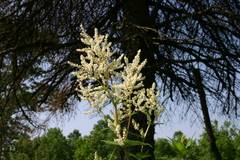
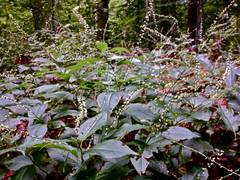
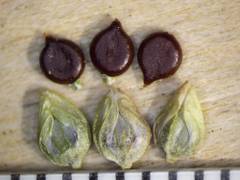
Persicaria sagittata, arrow-leaved tearthumb, is a sprawling annual in the knotweed family with weak, four-angled stems 2-6 feet (60-180 cm) long that lean on other plants for support. The stems and leaf stalks are lined with tiny, downward-pointing prickles that catch on skin and clothing, which gives the plant its common name. The arrow-shaped leaves are 1-3 inches (2.5-7.5 cm) long, with backward-pointing basal lobes. From summer into fall it bears small, tight clusters of pink to white flowers about 0.1 inch (3 mm) across at the stem tips. It grows in wet meadows, marshes, ditches, and the muddy edges of ponds and streams across eastern North America and eastern Asia. As a wetland annual it dies after setting seed and returns from a large seed bank, sometimes forming dense tangles. The clinging, prickly stems can be a nuisance to people moving through wet ground. P. sagittata is grown in wetland restorations and rain gardens and as cover and seed for wetland wildlife.
Native Range
Persicaria sagittata is native to eastern North America, from eastern Canada south to Florida and west to the Great Plains, and also to eastern Asia. It grows in marshes, wet meadows, swamps, ditches, and the margins of ponds and slow streams. It is common in low, wet ground throughout its range.Suggested Uses
Arrow-leaved tearthumb is grown in wetland restorations, rain gardens, and pond and ditch margins for erosion control and wildlife habitat. Its seeds feed waterfowl, marsh birds, and small mammals, and the tangled stems give cover. It grows on consistently wet, sunny sites.How to Identify
Appearance
Size & Dimensions
Height2' - 6'
Width/Spread1' - 3'
Bloom Information
Detailed Descriptions
Flower Description
Pink to whiteFoliage Description
GreenGrowing Conditions
Sun Requirements
Requires 4-12 hours of direct sunlight daily
• Full Sun: 6+ hours of direct sunlight
• Partial Shade: 3-6 hours of direct sunlight
• Full Shade: Less than 3 hours of direct sunlight
Water & Climate
Water Needs