Persicaria, Genus, microcephala, Species, 'Red Dragon', Cultivar,
- Genus & species
- Cultivar
red dragon knotweed
Species native to the Himalayas and western China
Overview
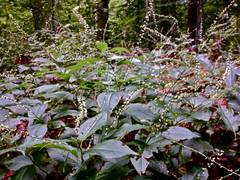
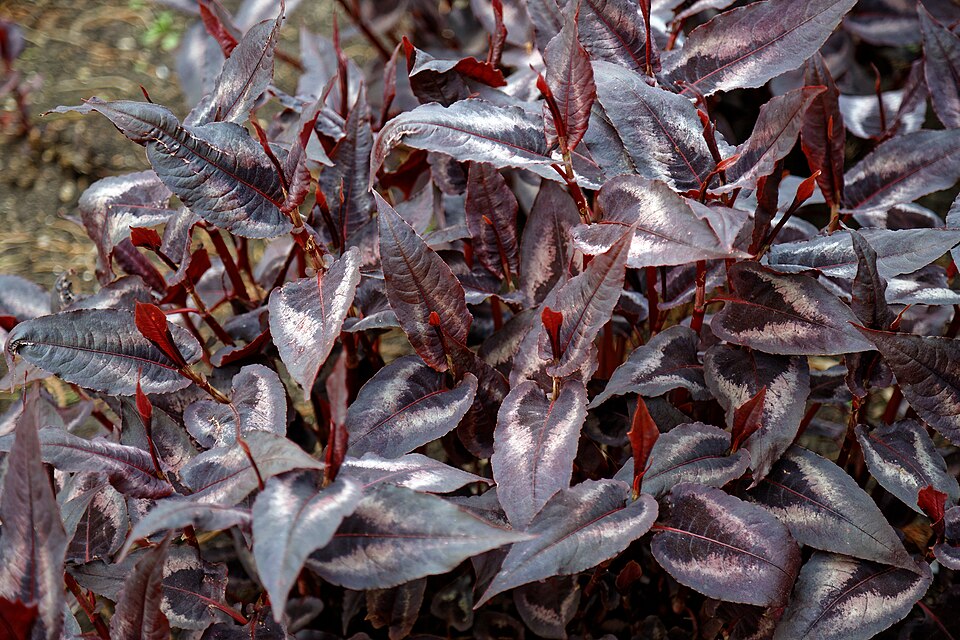
Persicaria microcephala 'Red Dragon' is a deciduous herbaceous perennial reaching 2–4 feet (0.6–1.2 m) tall and 2–3 feet (0.6–0.9 m) wide, with an upright to arching bushy habit on dark red stems. The cultivar is grown principally for its tricolor foliage: alternate pointed-ovate leaves 3–6 inches (8–15 cm) long emerge deep burgundy-purple to maroon-red and carry a silver-gray chevron mark running from the base of the leaf blade along the midrib to about the center, producing a three-zone color pattern of burgundy-purple outer tissue, silver-gray central chevron, and deep red midrib at the apex of each leaf. As leaves mature through the growing season, the outer burgundy-purple fades to olive-green while the silver chevron persists, so plants carry both color phases at once by late summer. Flowers are tiny, white, in small clusters 0.5–1 inch (1.3–2.5 cm) across appearing from July through September; they are a background feature against the foliage display. Growth rate is fast; the clump reaches full mature size in 2 growing seasons. Plants spread by rhizomes at 12–24 inches (30–60 cm) per year under moist fertile conditions and can outcompete neighboring perennials in mixed border plantings without containment. Hardy to USDA zone 5. Not known to be toxic to pets or humans.
Native Range
Persicaria microcephala is native to the Himalayas and western China, occurring on forest margins and moist slopes. 'Red Dragon' is a cultivar selection of the species grown for foliage color.Suggested Uses
Used as a foliage accent in mixed perennial borders, woodland edge plantings, shaded mixed plantings, or large containers at 2–3 foot (0.6–0.9 m) spacing. The tricolor burgundy-silver-green foliage reads at viewing distances of 6–15 feet (1.8–4.5 m), where the chevron pattern resolves visually; at greater distances the leaves register as a uniform dark-red mass. Partial shade positioning produces the strongest color saturation. Rhizome spread at 12–24 inches (30–60 cm) per year rules out positions where the plant would overrun slower-growing neighbors without containment; a buried root barrier of 12 inch (30 cm) depth keeps the clump contained in mixed plantings. The plant does not grow well in full sun (leaf bleaching and scorch), dry soils, or confined garden positions without rhizome containment.How to Identify
Appearance
Size & Dimensions
Height2' - 4'
Width/Spread2' - 3'
Bloom Information
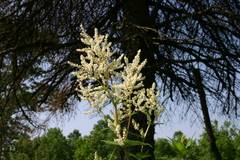
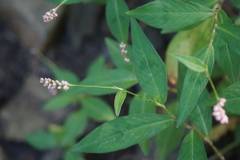
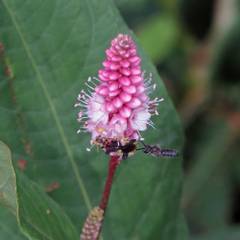
Tiny white flowers appear in small clusters 0.5–1 inch (1.3–2.5 cm) across from July through September over an 8-week window. Flowers are a secondary feature against the tricolor foliage and do not function as an ornamental display on their own.
Detailed Descriptions
Flower Description
Tiny white flowers in small clusters 0.5-1 inch across; July-September; secondary feature against foliage displayFoliage Description
Tricolor: burgundy-purple to maroon-red outer tissue with silver-gray chevron from leaf base along the midrib to the center and deep red midrib at apex; alternate pointed-ovate, 3-6 inches long; on dark red stems; matures to olive-green with silver chevron persistingGrowing Conditions
Sun Requirements
Requires 3-6 hours of direct sunlight daily
• Full Sun: 6+ hours of direct sunlight
• Partial Shade: 3-6 hours of direct sunlight
• Full Shade: Less than 3 hours of direct sunlight
Care & Maintenance
Care Guide
Grow in partial shade with 3–6 hours of direct or filtered light in moist, fertile loam, clay, or silt at pH 5.5–7.5. Partial shade produces the most saturated burgundy-purple leaf color with the strongest silver chevron contrast; full sun bleaches the purple tones toward olive-green and can scorch leaf margins in hot summer conditions, while deep shade reduces the silver chevron brightness and produces a muddier overall appearance. Water deeply once per week during dry periods; the plant tolerates consistent moisture but not sustained drought. Apply 2–3 inches (5–8 cm) of organic mulch over the root zone in spring to retain soil moisture. Plants spread by rhizomes at 12–24 inches (30–60 cm) per year under moist fertile conditions, and a buried root barrier of 12 inch (30 cm) depth contains spread in mixed-border positions where neighboring perennials would be overrun. Cut back all stems in late autumn or in late winter (February–March) before new growth emerges. Hardy to USDA zone 5.Pruning
Cut back all stems to ground level in late autumn or late winter (February–March) before new growth emerges. A mid-season cutback to 6–8 inches (15–20 cm) in late June or early July produces a fresh flush of burgundy-purple new growth that restores the saturated color on plants where mid-summer leaves have faded toward olive-green. Remove unwanted rhizome spread in spring to keep the clump within its intended footprint.Pruning Schedule
Prune: March
early spring
Container Growing
Suitable for container growing
Minimum container size: 5 gallons