Passiflora, Genus, suberosa, Species,
- Genus & species
corkystem passionflower
Overview
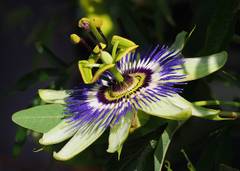
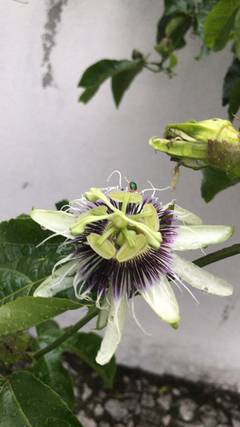
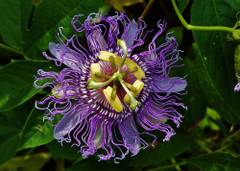
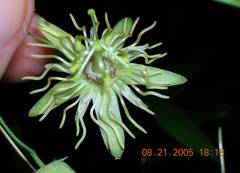
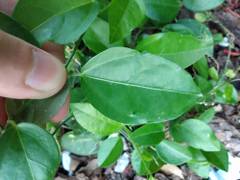
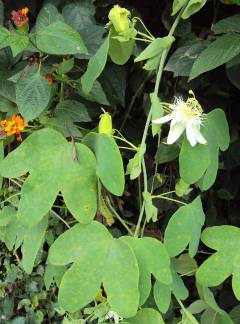
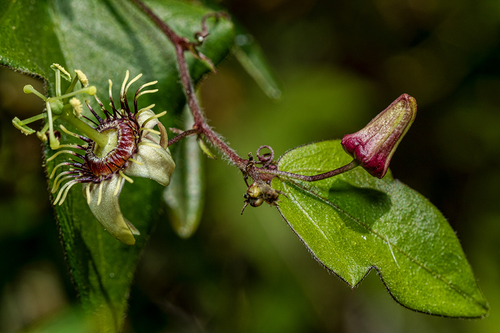
An evergreen climbing vine reaching 10-20 feet (3-6 m) long, climbing by coiling tendrils and developing corky, ridged bark on older stems. Leaves vary from unlobed to three-lobed, 1-4 inches (2.5-10 cm) long, green, with two small glands at the leaf base. Flowers small, 0.5-0.8 inch (12-20 mm) across, greenish-yellow without petals, the corona of slender filaments greenish, opening singly or in pairs from the leaf axils. Flowering occurs spring through autumn and nearly year-round in warm areas. Fruit a round berry 0.3-0.6 inch (8-15 mm) wide, ripening purple-black. Growth is fast, and the vine climbs over shrubs and fences. It spreads by seed dispersed by birds and is regarded as an environmental weed in parts of Australia.
Native Range
Native to the southern United States, the Caribbean, and tropical Central and South America. Widely naturalized in warm regions including coastal Queensland and New South Wales, where it grows in disturbed forest, scrub, and fence lines on a range of soils.Suggested Uses
Grown occasionally on fences and trellises as a fast screening vine, spaced 6-10 feet (1.8-3 m) apart. It functions as a larval food plant in butterfly gardens. Heavy self-seeding and weed status limit its planting near bushland.How to Identify
Appearance
Size & Dimensions
Height10' - 20'
Width/Spread3' - 6'
Bloom Information
Flowers spring through autumn, and nearly year-round in frost-free areas. The small greenish-yellow flowers open singly or in pairs and last a day or two. Bees and small insects visit them. Purple-black berries follow over the warm months.
Detailed Descriptions
Foliage Description
GreenGrowing Conditions
Sun Requirements
Requires 4-9 hours of direct sunlight daily
• Full Sun: 6+ hours of direct sunlight
• Partial Shade: 3-6 hours of direct sunlight
• Full Shade: Less than 3 hours of direct sunlight
Care & Maintenance
Care Guide
Water through the first growing season; established vines tolerate short dry periods and grow in most soils. Grows in full sun to part shade, climbing by tendrils over any nearby support. Self-seeds freely from bird-spread berries and can smother low shrubs. Cut back hard to control its spread, as it regrows quickly from the base. It serves as a larval host for some heliconian butterflies. Few pests trouble it.Pruning
Cut back stems at any time to control spread and remove growth smothering other plants. Remove fruit before it ripens to limit bird-spread seeding. The vine resprouts readily after hard pruning. Thin tangled growth in late winter.Pruning Schedule
Prune: July–August
winter
Container Growing
Suitable for container growing
Minimum container size: 5 gallons