Passiflora, Genus, caerulea, Species,
- Genus & species
blue passion flower
South America (Brazil, Argentina, Paraguay, Uruguay)
Overview
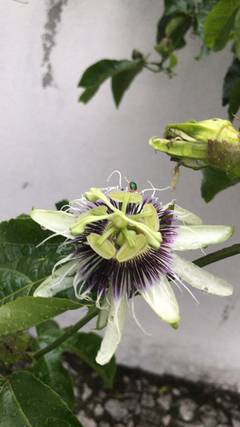
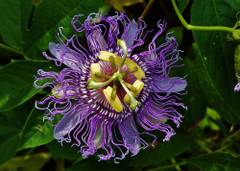
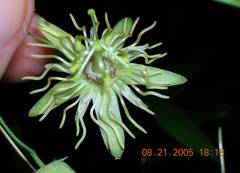
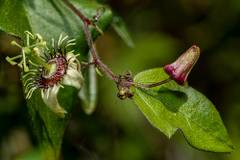
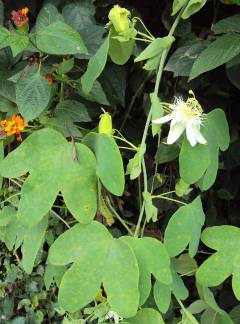
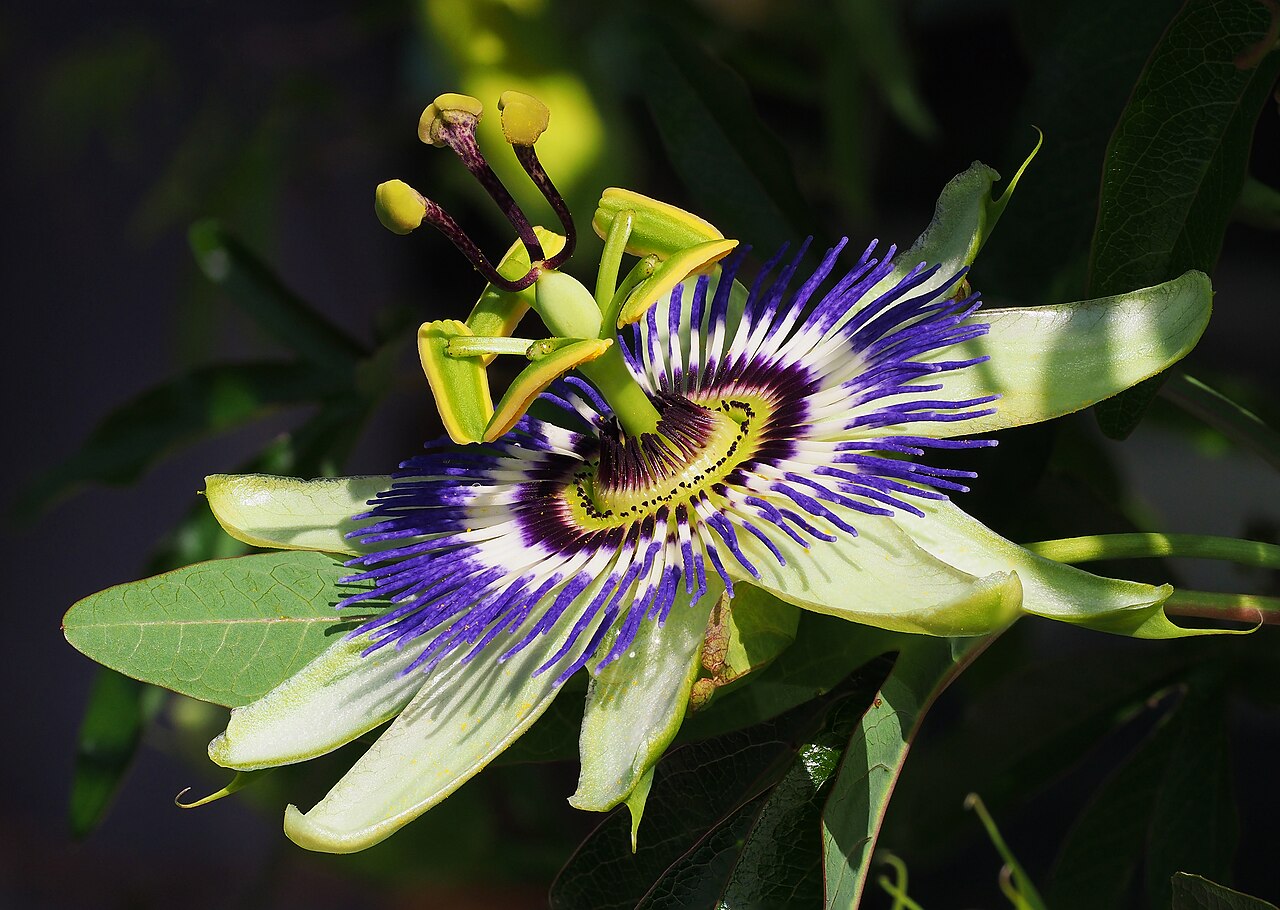
Passiflora caerulea is a vigorous semi-evergreen to deciduous climbing vine reaching 15–30 feet (4.5–9 m) in length, with a twining habit that uses axillary tendrils to attach to trellis, wire, or adjacent plant support. Leaves are alternate, palmately lobed with 5–7 deeply cut lobes, 3–5 inches (8–15 cm) across, dark green. Flowers are 3–4 inches (8–10 cm) across with a compound structure: 10 white to pale pink tepals form the outer ring, inside which a prominent corona of 60–80 filaments radiates in three concentric bands colored blue at the tip, white in the middle, and purple at the base, surrounding a central column bearing 5 green-yellow stamens and 3 stigmas. Flowers open on successive days across the summer — each individual flower lasts 1–2 days, but new buds open in sequence from July through October over a 12–14 week window. Orange-yellow egg-shaped fruit 2–3 inches (5–8 cm) ripen in autumn; the ripe orange flesh is edible though bland, while the unripe green fruit and seeds contain cyanogenic glycosides that cause gastrointestinal upset. Growth rate is fast at 10–15 feet (3–4.5 m) per season. The species tolerates USDA zone 7 winters (to 0°F / –18°C), which is 1–2 zones colder than most cultivated Passiflora — tender species in the genus such as P. edulis and P. coccinea handle zones 9–10 (to 20–30°F / –7 to –1°C). In zone 7 cold winters, above-ground growth dies back and the plant regrows from the roots in spring. Toxic to pets; contains cyanogenic compounds in unripe fruit and seeds.
Native Range
Passiflora caerulea is native to South America — Brazil, Argentina, Paraguay, and Uruguay — occurring on forest edges, thickets, and disturbed open areas.Suggested Uses
Trained on trellises, wire grids, pergolas, or up established host shrubs on south- or west-facing walls in zone 7–10 gardens at 10–15 foot (3–4.5 m) spacing. The compound corona flowers function at close-range viewing distances of 3–10 feet (0.9–3 m), where the blue-white-purple filament banding resolves visually; at longer distances the flower reads as a pale cloud against dark foliage and the corona detail is lost. The 12–14 week bloom from July through October covers the mid-summer-to-autumn transition when most cultivated vines have stopped flowering. In zone 7, expect above-ground dieback in hard winters with regrowth from roots in spring rather than year-round retained structure. The plant does not grow well in climates below zone 7 without root-mulch protection, shaded positions, small structures where the 10–15 feet (3–4.5 m) of annual growth overwhelms the support, or sites without a warm wall for winter buffering.How to Identify
Appearance
Size & Dimensions
Height15' - 30'
Width/Spread10' - 20'
Bloom Information
Flowers 3–4 inches (8–10 cm) across with white to pale pink tepals and a corona of 60–80 filaments banded blue-white-purple appear in succession from July through October over a 12–14 week window. Each individual flower lasts 1–2 days, but the plant opens a continuous series of new buds across the season. Orange-yellow egg-shaped fruit 2–3 inches (5–8 cm) ripen in September–October.
Detailed Descriptions
Flower Description
Compound 3-4 inch flowers with 10 white to pale pink outer tepals, a corona of 60-80 filaments banded blue at tips / white in middle / purple at bases, and 5 green-yellow stamens plus 3 stigmas at center; July-October; followed by orange-yellow 2-3 inch fruit autumnFoliage Description
Dark green; alternate, palmately lobed with 5-7 deeply cut lobes, 3-5 inches acrossGrowing Conditions
Sun Requirements
Requires 6-10 hours of direct sunlight daily
• Full Sun: 6+ hours of direct sunlight
• Partial Shade: 3-6 hours of direct sunlight
• Full Shade: Less than 3 hours of direct sunlight
Care & Maintenance
Care Guide
Grow in full sun with 6 or more hours of direct light against a warm south- or west-facing wall in well-drained loam or sand at pH 6.0–7.5. A warm wall position is essential for reliable flowering and for winter survival at the zone 7 cold limit — the wall retains heat overnight and reduces the duration of below-freezing conditions at the root zone. Water deeply through the first growing season to establish, then water weekly during summer; the plant is drought-tolerant once rooted. Apply 2–3 inches (5–8 cm) of organic mulch over the root zone in autumn to insulate the crown through winter, which improves recovery after hard freezes in zone 7. The vine needs a trellis, wire grid, or established host shrub to climb; tendrils cannot attach to smooth walls without support structure. Growth rate is fast at 10–15 feet (3–4.5 m) per season. In USDA zone 7 cold winters, top growth dies back and the plant regrows from the roots in April–May. Hardy to USDA zone 7 (to 0°F / –18°C).Pruning
Prune in early spring (March–April) after new growth begins and live wood can be distinguished from winter-killed stems. Remove dead growth back to green-stemmed live tissue. Thin congested crossing stems to maintain airflow. The vine tolerates hard cutback to the main framework and regrows the full season's growth within 10–14 weeks. In cold climates, delay cutback until April to avoid removing stems that would have resprouted from dormant buds.Pruning Schedule
Prune: March–April
early spring
Container Growing
Suitable for container growing
Minimum container size: 7 gallons