Passiflora, Genus, pallida, Species,
- Genus & species
corkystem passionvine
Overview
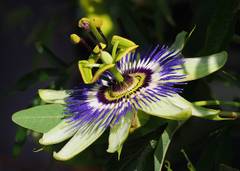
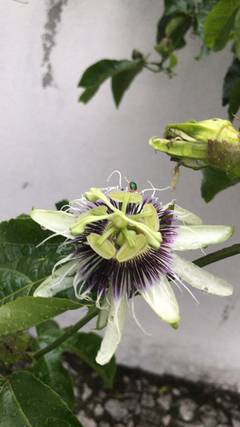
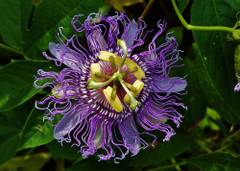
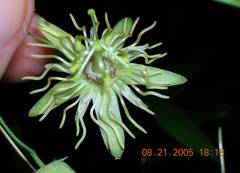
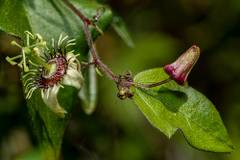
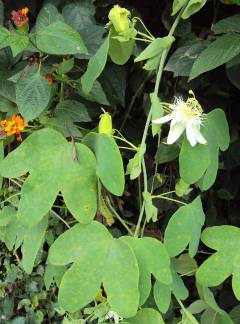
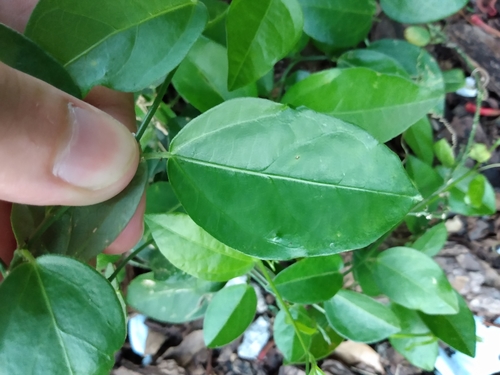
Passiflora pallida is a climbing perennial vine that scrambles 10-20 feet (3-6 m) over supports by means of coiled tendrils, with slender, sometimes corky-ridged older stems. The leaves vary from unlobed and oval to three-lobed, 1.5-4 inches (4-10 cm) long, green and thin, with a pair of small glands near the leaf base. The flowers are 0.8-1.6 inches (2-4 cm) across, greenish-white to pale yellow, with a ring of thread-like filaments over the petals in the structure typical of passionflowers; they open through the warm months. Rounded berries 0.4-0.6 inch (10-15 mm) across follow, ripening from green to dark purple or black, each holding many seeds in a thin pulp. The vine grows in thickets, hammocks, and disturbed ground in warm climates and is killed back by frost. It spreads by seed, often carried by birds, and can climb over shrubs and fences.
Native Range
Native to the warmer parts of the Americas, from Florida and the Caribbean through Mexico and Central America into South America. Grows in coastal hammocks, thickets, and disturbed ground in frost-free and near-frost-free areas.Suggested Uses
Grown on trellises, fences, and arbors in warm-climate gardens, spaced about 3-6 feet (0.9-1.8 m) apart where stems can climb. Planted as a host vine for passionflower-feeding butterflies. Spreads by bird-carried seed and can climb into nearby shrubs.How to Identify
Appearance
Size & Dimensions
Height10' - 20'
Width/Spread3' - 6'
Bloom Information
Flowers through spring, summer, and autumn in frost-free climates, mainly May to October in the northern hemisphere. Flowering follows warm, moist weather and slows in cool conditions. Flowers are followed within weeks by berries that ripen dark.
Detailed Descriptions
Flower Description
Greenish-white to pale yellowFoliage Description
GreenGrowing Conditions
Sun Requirements
Requires 6-10 hours of direct sunlight daily
• Full Sun: 6+ hours of direct sunlight
• Partial Shade: 3-6 hours of direct sunlight
• Full Shade: Less than 3 hours of direct sunlight
Care & Maintenance
Care Guide
Grows in full sun to part shade on free-draining sandy or loamy soil at a pH of about 6.0-7.5, with support for the climbing stems. Needs regular water in dry spells through the growing season and tolerates short dry periods once established. Frost kills the topgrowth, holding the vine to frost-free and near-frost-free climates or to use as a warm-season annual. Stems climb by tendrils and can cover shrubs and fences within a season. Caterpillars of some butterflies feed on the foliage. Self-sows from bird-spread seed into surrounding ground.Pruning
Cut back the climbing stems at the end of the growing season to limit spread and clear frost-damaged growth. Thin tangled stems in late winter to keep the vine open. The plant regrows quickly from the base in warm climates.Container Growing
Suitable for container growing
Minimum container size: 5 gallons