Papaver, Genus, rupifragum, Species,
- Genus & species
Spanish poppy
Overview
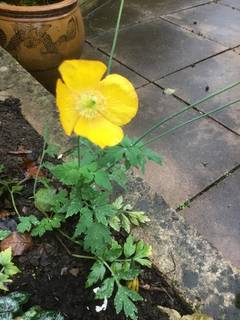
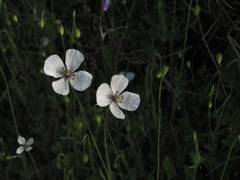
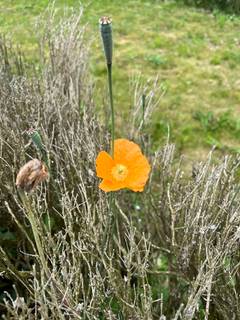
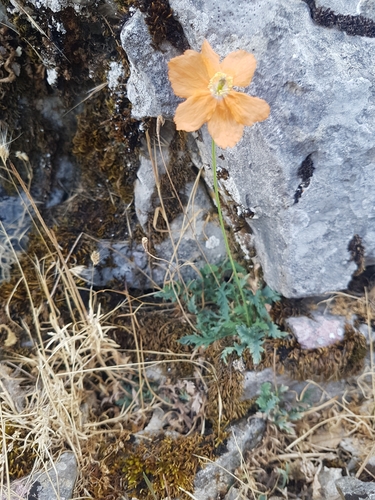
Papaver rupifragum is a short-lived herbaceous perennial poppy in the Papaveraceae family, forming a low basal rosette of grayish-green leaves and sending up slender, wiry flower stems 16-24 inches (40-60 cm) tall. From late spring into autumn the stems carry bowl-shaped flowers 1.5-2.5 inches (4-6 cm) across in shades of apricot to soft orange, often semi-double in cultivated forms. The toothed, hairy rosette leaves stay low while the bare stems lift the flowers well above the foliage. The plant grows from a taproot and is hardy in USDA zones 6 through 9, dying back to the rosette over winter. It needs full sun and sharply drained soil; wet or heavy ground, especially in winter, rots the crown. Individual plants are short-lived, often two to three years, but they self-seed readily and persist through seedlings where the ground is open. The taproot makes established plants hard to move. Bloom continues over a long season if spent flowers are removed before seed sets. Flowers draw bees and other pollinators. Native to rocky cliffs and limestone slopes of southern Spain, it is grown in gravel gardens, dry walls, rock gardens, and sunny borders.
Native Range
Papaver rupifragum is native to rocky cliffs, gorges, and limestone slopes of southern Spain. It grows on dry, stony ground in full sun and is grown in temperate gardens with sharp drainage.Suggested Uses
Grown in gravel gardens, rock gardens, dry stone walls, and sunny borders, spaced 10-12 inches (25-30 cm) apart. The long bloom season suits informal and Mediterranean-style plantings. It self-sows into gravel and wall crevices.How to Identify
Appearance
Size & Dimensions
Height1'4" - 2'
Width/Spread8" - 1'
Colors
Bloom Information
Detailed Descriptions
Flower Description
Apricot to soft orangeFoliage Description
Grayish-greenGrowing Conditions
Sun Requirements
Requires 6-12 hours of direct sunlight daily
• Full Sun: 6+ hours of direct sunlight
• Partial Shade: 3-6 hours of direct sunlight
• Full Shade: Less than 3 hours of direct sunlight
Care & Maintenance
Care Guide
Grows in full sun and gritty, sharply drained soil of low to moderate fertility, including limestone ground. Water needs are low once established, and wet or heavy soil, especially over winter, rots the crown and taproot. In USDA zones 6 through 9 it is cold hardy and dies back to a basal rosette over winter. Plants are short-lived, often two to three years, but self-seed readily to persist. The taproot makes established plants hard to move. Lean soil and sharp drainage keep the rosette firm.Pruning
Spent flower stems are removed through the season to lengthen bloom and limit self-seeding, or left late in the year if seedlings are wanted. The rosette is left intact over winter. No other pruning is needed.Pruning Schedule
Prune: June–September
summerfall
Container Growing
Suitable for container growing
Minimum container size: 2 gallons