Papaver, Genus, atlanticum, Species,
- Genus & species
atlas poppy
Overview
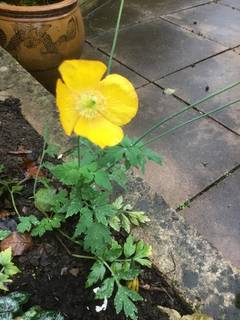
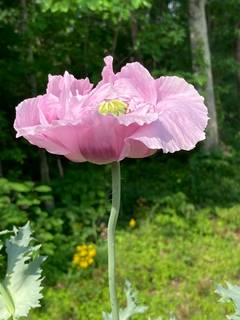
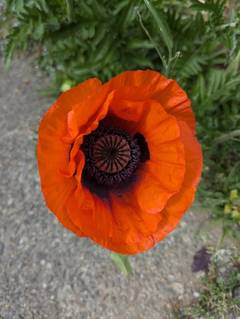
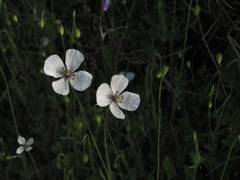
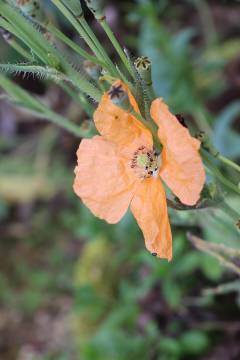
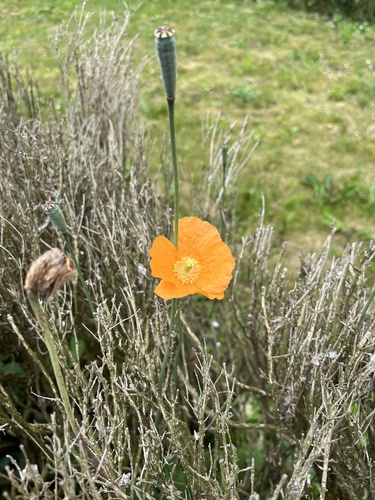
Papaver atlanticum is a short-lived perennial poppy in the Papaveraceae, forming a basal rosette and reaching 12–18 inches (30–45 cm) tall in flower. The grey-green leaves are oblong, lobed to coarsely toothed, and covered in soft hairs, clustered at the base with a few smaller leaves up the stems. Slender, branching stems carry solitary cup-shaped flowers 1.5–2.5 inches (4–6 cm) across, soft orange to apricot, with four crinkled petals around a boss of yellow stamens; single and semi-double forms occur. Flowering is long, from late spring through summer, and each bloom is followed by a small ribbed seed capsule that releases small seed through pores near the top. It is native to the Atlas Mountains of Morocco, on rocky slopes and dry, stony ground. The plant is short-lived but self-seeds freely, so colonies persist by replacement rather than by long-lived individuals, and seedlings can appear in paving and gravel where not wanted. It needs sharp drainage and full sun, and rots in heavy, wet winter soils.
Native Range
Native to the Atlas Mountains of Morocco, on rocky slopes and dry, stony ground. It is grown in gardens well beyond its native range and naturalises on free-draining soils.Suggested Uses
Grown in gravel gardens, dry borders, rock gardens, and the tops of walls on free-draining soil. It self-sows into paving cracks and naturalistic, low-water plantings.How to Identify
Appearance
Size & Dimensions
Height1' - 1'6"
Width/Spread8" - 1'
Bloom Information
Detailed Descriptions
Flower Description
soft orange to apricotFoliage Description
grey-greenGrowing Conditions
Sun Requirements
Requires 6-10 hours of direct sunlight daily
• Full Sun: 6+ hours of direct sunlight
• Partial Shade: 3-6 hours of direct sunlight
• Full Shade: Less than 3 hours of direct sunlight
Care & Maintenance
Care Guide
Grows in full sun on light, sharply drained, gritty or sandy soils of low to moderate fertility. Water needs are low, and established plants tolerate heat and drought. It is raised from seed sown where it is to grow, since the deep taproot resents transplanting. Self-sown seedlings appear around parent plants and can be thinned or moved while very small. Heavy, wet winter soils cause crown rot, so free drainage is needed. It is hardy to roughly USDA zone 6.Pruning
Spent flower stems can be removed to extend bloom and limit self-seeding. Old foliage is tidied in autumn or early spring as new growth appears. Some seed heads can be left in place to allow self-sowing.Container Growing
Suitable for container growing
Minimum container size: 2 gallons