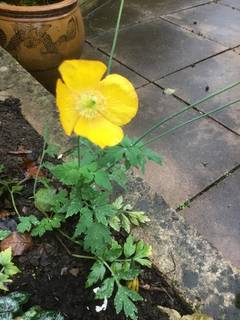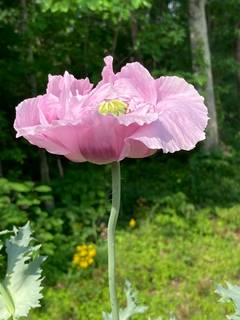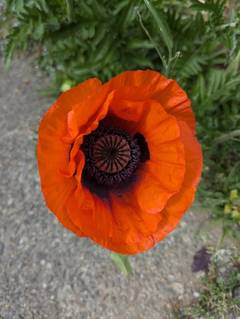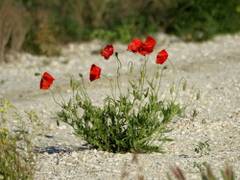
Papaver, Genus, dubium, Species,
- Genus & species
long-headed poppy
Europe, North Africa, and western Asia
SunFull Sun
Overview
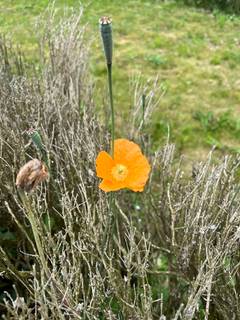
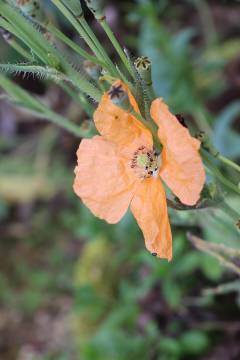
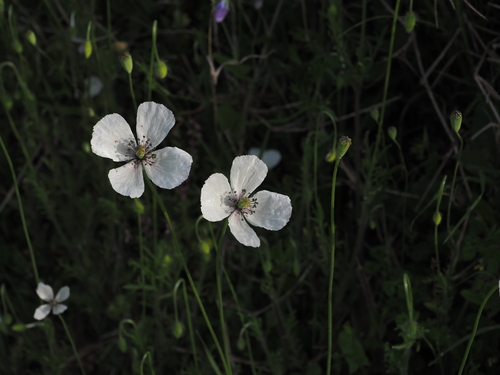
Papaver dubium is an annual poppy of disturbed and cultivated ground, growing 8-24 inches (20-60 cm) tall. The slender, branching stems carry stiff, outward-pointing bristles and bleed a white latex that yellows on contact with air. Leaves are blue-green, deeply pinnately cut into narrow toothed lobes, the lower ones stalked and the upper ones stalkless. Each long flower stalk ends in a nodding bud that lifts as it opens into a single bowl-shaped bloom 1.2-2.8 inches (3-7 cm) across. The four overlapping petals are pale scarlet to orange-red, usually without the black basal blotch seen in the common poppy. Flowering runs from June to August, each flower lasting about a day before the petals drop. The seed capsule is narrow and club-shaped, roughly twice as long as wide and hairless, which gives the plant its common name and separates it from related poppies. All parts contain mildly toxic isoquinoline alkaloids in the milky latex. A pioneer of bare soil, it germinates in autumn or spring, flowers, sheds many small seeds, and dies within the year, leaving a long-lived seed bank behind.
Native Range
Native to Europe, North Africa, and western Asia. It has spread with agriculture to North America, southern Africa, Australia, and other temperate regions, where it grows as a naturalized weed of fields and roadsides.Suggested Uses
Grown in wildflower meadows, cornfield-annual mixes, and informal sunny borders on poor soil. It suits naturalistic and pollinator plantings and gravelly waste ground. It is short-lived and not suited to containers or shady, damp beds.How to Identify
Appearance
Size & Dimensions
Height8" - 2'
Width/Spread6" - 1'
Colors
Bloom Information
Flowers appear from June to August, opening a few at a time over several weeks. Each bloom lasts roughly one day, dropping its petals by evening. Pollination is mainly by bees gathering pollen, after which the upright capsules ripen and shed seed through pores below the cap.
Detailed Descriptions
Flower Description
pale scarlet to orange-redFoliage Description
blue-green to grey-greenGrowing Conditions
Sun Requirements
Requires 6-10 hours of direct sunlight daily
• Full Sun: 6+ hours of direct sunlight
• Partial Shade: 3-6 hours of direct sunlight
• Full Shade: Less than 3 hours of direct sunlight
Water & Climate
Water Needs
Drought Tolerance
Drought tolerant when established
Care & Maintenance
Care Guide
Papaver dubium grows in full sun on light, well-drained soil of low to moderate fertility, tolerating dry, stony, and chalky ground, pH about 6.0-7.5. As an annual it is raised from seed sown directly where it is to flower, since the long taproot does not transplant well. Seed is scattered on bare soil in autumn or early spring and left uncovered, as light aids germination. Plants need little water once established and fade in rich, heavily watered beds where leafier plants overtop them. They self-seed freely, returning year after year on open ground. No staking or feeding is needed.Pruning
No pruning is needed. Spent plants can be pulled once seed has shed, or left standing to self-sow. Clearing seed capsules before they ripen reduces self-seeding in following years.Toxicity Warning
Toxic to pets and humansPlanting Guide
Planting Methods & Timing
Planting Method
direct sow
Direct Sow Timing
autumn or early spring
Days to Maturity
60–90 days
Plant Spacing
6 inches