Papaver, Genus, spp., Multiple species,
- Genus
- Multiple species
poppies
Temperate Europe, Asia, and North Africa
Overview
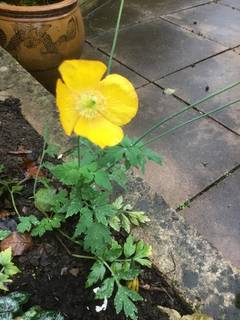
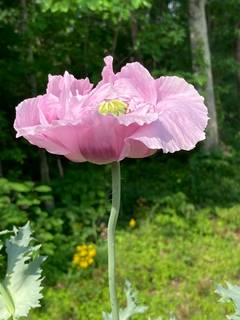
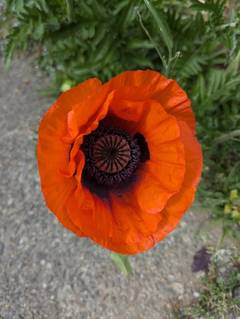
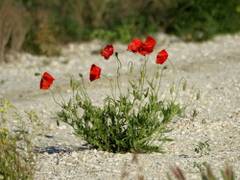
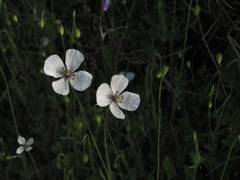
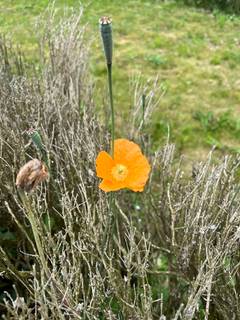
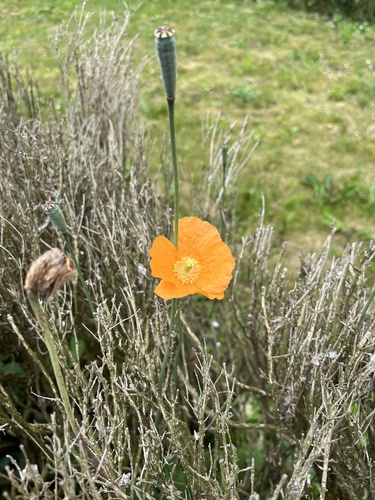
Papaver is a genus of about 70 to 100 species of annual, biennial, and perennial herbs in the poppy family (Papaveraceae), native to temperate Europe, Asia, and North Africa, with a few in other regions. Plants form clumps of lobed or deeply cut, often bristly, blue-green leaves and send up leafless or sparsely leafy stalks 1 to 4 ft (30 to 120 cm) tall, each topped by a single nodding bud that lifts as it opens. The flowers are bowl-shaped with four, sometimes more, thin, crinkled, papery petals in red, orange, pink, white, yellow, or purple, often with a dark blotch at the base, surrounding a ring of dark stamens and a flat-topped seed capsule. Each bloom lasts only a few days, but plants flower over several weeks from late spring into summer. The dry capsule ripens with pores near the rim that shake out tiny seeds like a pepper pot. All species carry a milky or colored latex with alkaloids; the opium poppy (P. somniferum) is the source of morphine and codeine, and its sap and seed pods are toxic and regulated. The genus grows in meadows, fields, and disturbed ground, where annual species such as the corn poppy (P. rhoeas) appear quickly on bare soil.
Native Range
Papaver is native to the temperate Northern Hemisphere, especially Europe, the Mediterranean, and central and western Asia, with a few species in eastern Asia, North America, and the southern continents. Species grow in grassland, alpine scree, fields, roadsides, and disturbed open ground.Suggested Uses
Papaver is grown in borders, meadows, cottage gardens, and gravel plantings for its bowl-shaped flowers, and annual species are sown in wildflower and cornfield mixes. The dried seed capsules are used in arrangements, and the seed of some species is harvested for culinary use.How to Identify
Appearance
Size & Dimensions
Height1' - 4'
Width/Spread6" - 2'
Bloom Information
Papaver blooms from late spring into summer, roughly May to July, with each flower lasting only a few days but the plant opening a succession of buds over several weeks. Annual species flower and set seed in a single season, while perennial species such as oriental poppy (P. orientale) bloom for a few weeks and then go dormant. The seed capsules ripen and scatter seed by midsummer.
Detailed Descriptions
Flower Description
red, orange, pink, white, yellow, or purpleFoliage Description
blue-green to grey-greenGrowing Conditions
Sun Requirements
Requires 6-12 hours of direct sunlight daily
• Full Sun: 6+ hours of direct sunlight
• Partial Shade: 3-6 hours of direct sunlight
• Full Shade: Less than 3 hours of direct sunlight
Care & Maintenance
Care Guide
Papaver grows in full sun on light, well-drained soil at pH 6.0 to 7.5 and tolerates poor, dry, and stony ground. It flowers poorly in shade or rich, wet soil, where the stems grow weak and the roots rot. Annual poppies are grown from seed scattered where they are to flower, since the seedlings transplant poorly, while perennial species form a deep taproot and are slow to re-establish if moved. Most species are hardy across USDA zones 3 to 9, and the perennials die back to the ground after flowering. Little feeding is needed, and the plants self-sow freely on open soil.Pruning
Spent flower stalks are cut after bloom to limit self-seeding, or left in place so the rounded capsules ripen and scatter seed. Oriental poppy foliage is cut to the ground when it yellows and goes dormant in midsummer, and fresh leaves return in autumn. Annual plants are pulled once seed has set.Pruning Schedule
Prune: July
summer
Container Growing
Suitable for container growing