Image 1 of 13
1 / 13
Plant Reference
Papaver, Genus, cambricum, Species,
- Genus & species
Welsh poppy
Western Europe — Wales, Ireland, western England, western France, and the mountains of northwestern Spain and Portugal (the Pyrenees and Cantabrian Mountains); damp shaded rocky slopes, woodland margins, stream banks, and old wall crevices at low to mid elevations; naturalized across Belgium, the Netherlands, Scandinavia, and Pacific Northwest gardens in North America
Overview
Papaver cambricum is a short-lived perennial (or biennial in some settings) in the family Papaveraceae growing 12-18 inches (30-45 cm) tall and wide from a basal clump of deeply pinnately divided bright-green softly hairy foliage, producing a long succession of butter-yellow to golden-orange silky four-petaled flowers on slender wiry stems from late spring through early fall. Individual flowers are 1.5-2 inches (4-5 cm) across with the tissue-paper-thin crinkled petals characteristic of the poppy family and a central boss of yellow stamens, and buds nod downward before opening and then stand erect at anthesis — the nodding-to-erect transition is a small piece of visible behavior that marks each newly opening flower. The species carries an important taxonomic story: it was classified for many decades as Meconopsis cambrica alongside the large blue Himalayan poppies in the genus Meconopsis, but molecular phylogenetic work published in 2011 demonstrated that the Welsh poppy was not closely related to the Asian Meconopsis species and belonged instead to the genus Papaver, and the species was formally transferred back to Papaver cambricum (the name it had originally carried before the 19th-century classification into Meconopsis). The transfer has taken time to propagate through gardening literature and many older references, plant labels, and catalog listings still carry the old name Meconopsis cambrica — gardeners searching for the plant benefit from knowing both names. Individual plants are short-lived, typically completing their lifecycle in 2-4 years, but the species maintains itself perpetually through prolific self-sowing in suitable sites and an established colony carries plants of several age classes simultaneously so the overall garden presence is effectively permanent once established. The self-sowing is both the species' main asset (a planting that renews itself without replanting) and its main limitation (seedlings appear in paths, wall cracks, border fronts, and other places where they may or may not be wanted, and the taproot of established plants makes transplanting difficult). The species does not transplant well because of the taproot, so gardeners add new plants by sowing seed in place or by purchasing young potted nursery plants rather than by dividing and moving established clumps. Welsh poppy is more tolerant of sun, drought, and a wider soil range than the Himalayan Meconopsis species it was once grouped with, and adapts readily to part shade, woodland edges, cottage garden borders, and wall crevices in Pacific Northwest gardens where the cool moist climate and mild winters match its native range. A double-flowered form sold as 'Flore Pleno' exists in both yellow and orange forms and carries longer-lasting flowers with reduced seed production compared to the single-flowered typical form. All parts of the plant contain milky latex with alkaloid content (the Papaveraceae family contains the opium poppy P. somniferum and shares the basic alkaloid chemistry across the family at varying concentrations), and the latex causes skin irritation in sensitive individuals and mild toxicity if ingested in quantity — the plant is not considered a serious poisoning risk but is treated as non-edible. Drought-tolerant once established. Deer-resistant.
Native Range
Papaver cambricum is native to the mountains and uplands of western Europe, with a core range across Wales (for which the species is named — Cambria is the Latin name for Wales), Ireland, western England and Scotland, western France, and the mountain ranges of northwestern Spain and Portugal (the Pyrenees and the Cantabrian Mountains). The species grows in damp shaded rocky slopes, deciduous woodland margins, stream banks, and old limestone wall crevices at low to mid elevations where the cool moist maritime climate of the western European Atlantic coast matches its cultivation requirements. The species has naturalized beyond its native core range across Belgium, the Netherlands, Scandinavia, and other temperate European regions, and has become a common self-seeded plant in Pacific Northwest gardens across British Columbia, Washington, and Oregon where the climate matches the native conditions. P. cambricum was classified for many decades as Meconopsis cambrica based on 19th-century morphological assessments, but molecular phylogenetic work published in 2011 demonstrated that the species was not closely related to the Himalayan and Asian Meconopsis species and belonged properly in Papaver, and the species was formally transferred back to Papaver cambricum. Older gardening literature, plant labels, and catalog listings frequently still carry the old name, and the two names are encountered in practice for the same plant.Suggested Uses
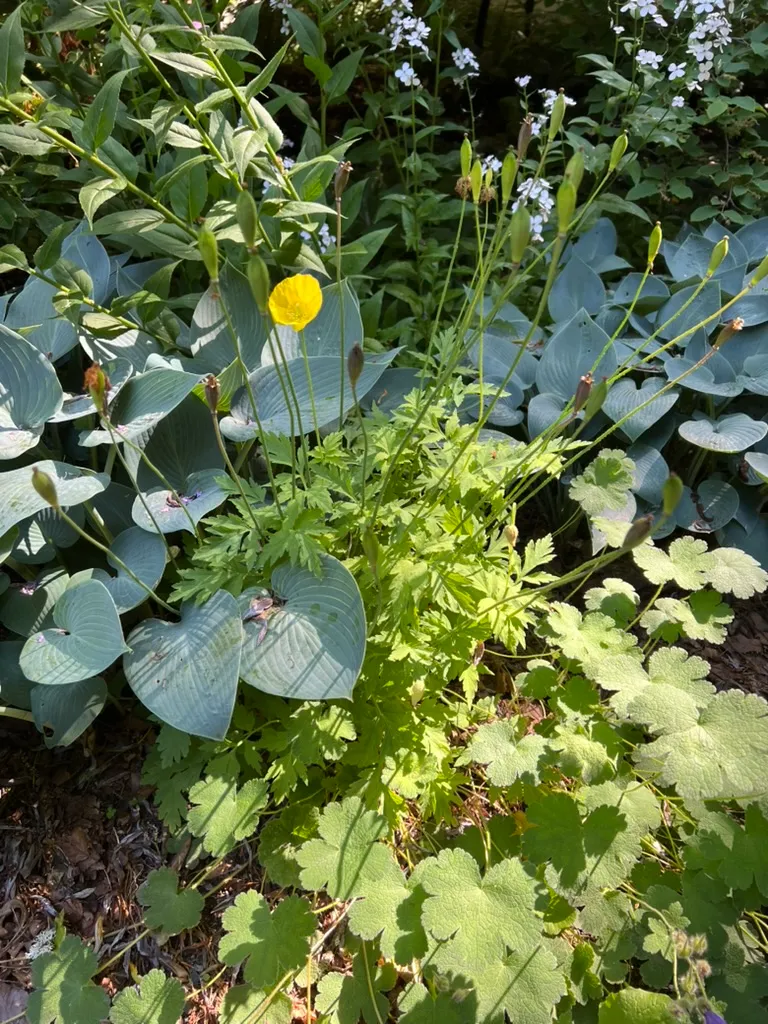
Planted in cottage gardens, informal shade borders, woodland edge plantings, wall crevices and old masonry joints, self-sowing naturalized areas, Pacific Northwest native-adjacent gardens, and rock gardens in zones 5-9, spaced 12-18 inches (30-45 cm) apart for initial planting while recognizing that the long-term colony shape is determined by self-sowing rather than by initial spacing. The long 18-week bloom succession of butter-yellow to golden-orange flowers gives the species a role in shaded and semi-shaded plantings where most other perennials produce short bloom windows, and the continuous replacement of short-lived individual flowers maintains color across the full late-spring-through-fall season in a planting. Combined with Geranium species (hardy geraniums), Alchemilla mollis (lady's mantle), Pulmonaria (lungwort), Digitalis purpurea (foxglove), and early ferns in naturalistic shade border plantings where the self-sowing lifecycle and the informal appearance align with the design intent. The 'Flore Pleno' double-flowered form is a practical choice for formal plantings where the typical form's prolific self-sowing is unwanted. Not suited to formal bedding schemes where the short-lived individual plants and the self-sowing colonies conflict with controlled planting layouts, tidy low-maintenance plantings where volunteer seedlings in paths and border fronts create ongoing weeding work, heavy summer-irrigation zones where the dry-tolerant nature of the species leads to root rot in consistently wet soil, or gardens where deadheading is not practical as routine maintenance.How to Identify
Appearance
Size & Dimensions
Height1' - 1'6"
Width/Spread1' - 1'6"
Bloom Information
Butter-yellow to golden-orange silky four-petaled flowers 1.5-2 inches (4-5 cm) across open on slender wiry stems from May through September in zones 5-9, lasting approximately 18 weeks as a continuous succession rather than a single peak bloom window. Peak flowering in most gardens runs through May and June with continuing flushes through summer and into early fall, and individual flowers last only 2-3 days but are replaced continuously across the long bloom season so the overall display maintains near-constant flowering presence during the active growth period. Prolific self-sowing means that an established colony carries plants of various ages simultaneously and the overall bloom display is extended by the staggered flowering of young and mature plants in the same planting. Deadheading spent flowers before the seed capsules mature moderates self-seeding pressure and extends the flowering period further, though some seed set is needed to maintain the colony through the natural death of the short-lived individual plants.
Detailed Descriptions
Flower Description
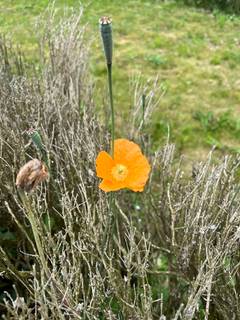
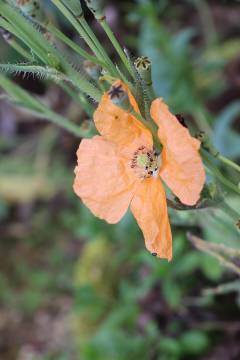
butter-yellow to golden-orange; solitary four-petaled flowers 1.5-2 inches (4-5 cm) across with tissue-paper-thin silky crinkled petals and a central boss of yellow stamens, held on slender wiry stems above the basal foliage; buds nod downward before opening and the flowers stand erect at anthesisFoliage Description
bright green; deeply pinnately divided, slightly hairy, softly textured leaves 6-10 inches (15-25 cm) long forming a low basal clump from which the slender flowering stems rise; foliage yellows and dies back with the onset of summer heat in hot climates and persists longer in cool moist settingsGrowing Conditions
Sun Requirements
Tolerates up to 8 hours of direct sunlight daily
• Full Sun: 6+ hours of direct sunlight
• Partial Shade: 3-6 hours of direct sunlight
• Full Shade: Less than 3 hours of direct sunlight
Care & Maintenance
Care Guide
Plant in reasonably fertile moist to well-drained soil with a pH of 5.5-7.5 in partial shade to full sun (0-8 hours of direct sun); tolerated soil types include loam, sand, clay, and rocky substrates, and the species handles a wider range of soils than most other garden poppies. Welsh poppy is adaptable and tolerates dry shade, poor soils, and cracks in walls and paving where it self-seeds readily. Water during the first establishment season; mature plants tolerate modest drought because the taproot system draws water from below the surface. The species does not transplant well because the taproot is damaged easily by lifting, so new plants are added by sowing seed in place in fall or early spring, or by purchasing young potted nursery plants for planting before the taproot develops in the container. Self-sowing drives the colony dynamics: individual plants are short-lived (typically 2-4 years) and the colony perpetuates itself through abundant self-sown seedlings that appear in surrounding ground throughout the growing season. Gardeners in Pacific Northwest settings find the species naturalizing prolifically by self-seeding and expanding beyond the original planting area, and control within a formal planting is done by removing unwanted seedlings while they are small and easily pulled before the taproot develops. All parts of the plant contain milky latex with mild alkaloid content, and the latex causes skin irritation in sensitive individuals; the plant is treated as non-edible and carries a mild toxicity if ingested in quantity but is not considered a serious poisoning risk. Deer avoid the foliage. The double-flowered form 'Flore Pleno' has longer-lasting flowers and reduced seed production compared to the single-flowered typical form, and is a practical choice for formal plantings where the self-sowing of the typical form is unwanted.Pruning
Spent flowers are deadheaded by removing the developing seed capsule before it matures to extend the flowering period and moderate self-seeding pressure. Complete deadheading prevents all seed set, which is appropriate in formal plantings where self-sowing is unwanted, while partial deadheading maintains colony-perpetuating seed production while reducing volunteer seedlings in unwanted positions. Individual plants are removed after they complete their lifecycle in 2-3 years, and the colony perpetuates itself from self-sown seedlings that are thinned to desired density in spring. The typical form self-sows prolifically and the 'Flore Pleno' double-flowered form self-sows much less because of the reduced seed production, so the pruning schedule differs between the two forms with the typical form requiring more active deadheading in a formal garden setting.Pruning Schedule
Prune: June–September
summerfall