Dryopteris, Genus, spp., Multiple species,
- Genus
- Multiple species
mixed hardy ferns
Worldwide; commonly cultivated species native to Europe, East Asia, and North America
Overview
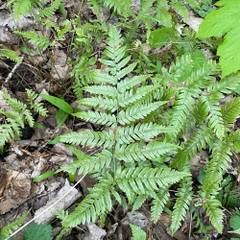
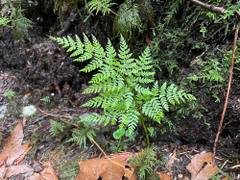
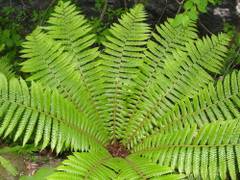
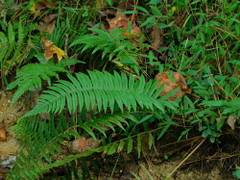
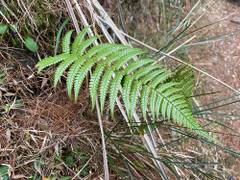
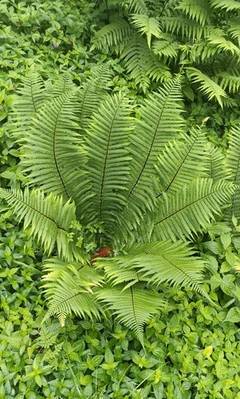
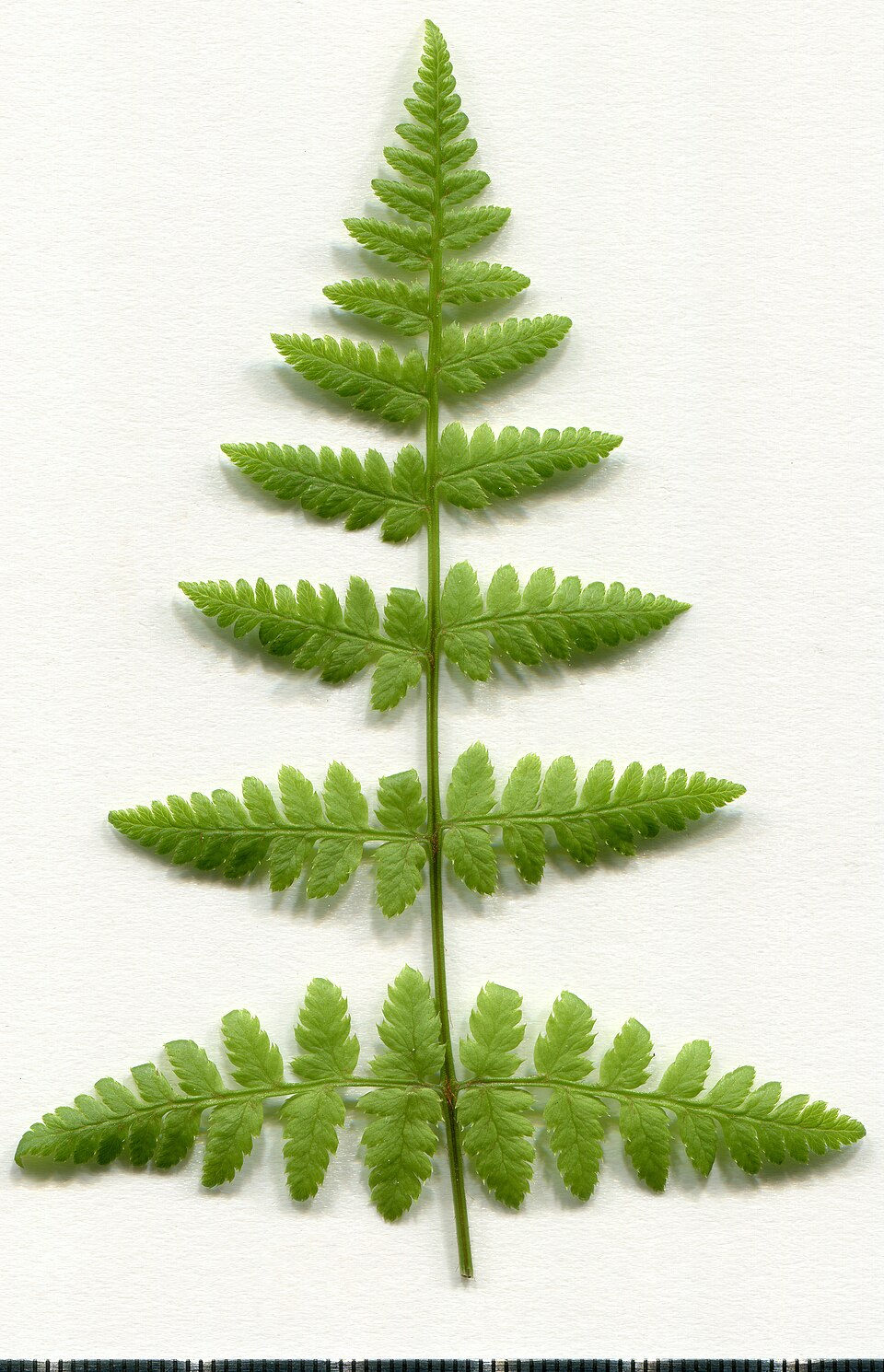
Dryopteris (wood ferns) is a genus of approximately 250-300 species of terrestrial ferns. Commercial mixed offerings typically contain 3-5 species drawn from D. filix-mas (male fern), D. erythrosora (autumn fern), D. marginalis (marginal wood fern), D. affinis (golden-scaled male fern), and D. wallichiana (Wallich's wood fern), among others. Plants form upright to vase-shaped crowns of arching fronds 18-48 inches (45-120 cm) tall with similar spread depending on species; most cultivated species reach 24-36 inches (60-90 cm). Fronds are once or twice pinnately divided with finely cut pinnules and emerge from a central crown in spring as coiled fiddleheads. New growth varies by species: copper-orange in D. erythrosora, silver-blue in D. wallichiana, and pale green in most others, maturing to mid or deep green by midsummer. Sori (spore-bearing structures) appear on frond undersides in summer as small round dots arranged in two rows along each pinna midrib. Foliage is deciduous in zones 3-6 and semi-evergreen in zones 7-9. Crown rot may develop in waterlogged winter soils, particularly in D. erythrosora in zones 7-9 with heavy clay. Crowns expand outward by short rhizomes 1-2 inches (2.5-5 cm) per year, forming dense colonies after 5-7 years.
Native Range
Genus distributed worldwide with concentration in temperate Northern Hemisphere; species commonly grown in mixed assortments include D. filix-mas from Europe and Asia, D. erythrosora from East Asia (China, Japan, Taiwan), D. marginalis from eastern North America, and D. affinis from Atlantic Europe. Habitats range from deciduous woodlands and stream banks to shaded rocky slopes at 100-8,000 feet (30-2,440 m) elevation.Suggested Uses
Used in shade gardens, woodland borders, and along the north sides of buildings at 24-36 inch (60-90 cm) spacing. Container culture is possible in pots of at least 3 gallons (11 L) with consistent moisture; smaller containers dry out too quickly for sustained growth. The mixed-species format produces visual variation in frond color and texture across a planting and is commonly used as understory groundcover beneath deciduous trees.How to Identify
Appearance
Size & Dimensions
Height1'6" - 4'
Width/Spread1'6" - 3'
Bloom Information
Ferns do not flower; reproduction occurs through spores. Spores ripen on frond undersides from June through September depending on species and produce free-living gametophytes when they germinate on consistently moist substrate. The visible plant is the spore-producing sporophyte generation.
Detailed Descriptions
Foliage Description
Mid to deep green; some species emerge copper-orange or silver-blueGrowing Conditions
Sun Requirements
Tolerates up to 4 hours of direct sunlight daily
• Full Sun: 6+ hours of direct sunlight
• Partial Shade: 3-6 hours of direct sunlight
• Full Shade: Less than 3 hours of direct sunlight
Care & Maintenance
Care Guide
Crowns are planted with the rhizome top at soil level in spring or early fall, in soil amended with 2-3 inches (5-8 cm) of compost or leaf mold to a depth of 6 inches (15 cm). Weekly water during the first growing season supports establishment; settled plants tolerate 1-2 weeks without rain in shade but frond margins crisp brown during prolonged dry summers. An annual mulch of 2 inches (5 cm) of leaf mold or shredded bark applied in late fall replicates the woodland litter layer the genus has evolved with. Crown rot develops in heavy wet soil in zones 7-9 winters; raised plantings or coarse-textured beds reduce incidence. Slug injuries appear as ragged holes in young fronds in spring; damage is mostly cosmetic on settled crowns. Plants remain in place 10-15 years without division; clumps may be lifted and split in early spring if propagation is desired.Pruning
Old fronds turn brown after the first hard frost in deciduous-zone climates and can be cut to 2-3 inches (5-8 cm) above the crown in late fall or early spring before new fiddleheads emerge. In zones 7-9 where some species remain evergreen, brown or weather-damaged fronds are cut at the base in early spring as new growth begins. No mid-season pruning is required; broken or damaged fronds can be removed at the stipe base individually.Pruning Schedule
Prune: March & November
early springfall
Container Growing
Suitable for container growing
Minimum container size: 3 gallons