Dryopteris, Genus, wallichiana, Species,
- Genus & species
Wallich's wood fern
Himalayas (Nepal, India, Bhutan, Tibet) extending to Mexico, Central America, and Hawaii (moist mountain forests at 5,000-12,000 feet)
Overview
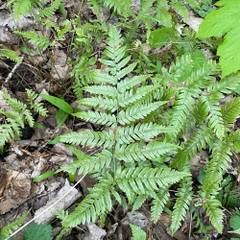
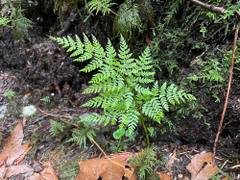
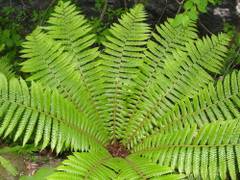
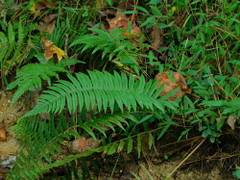
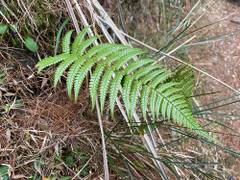
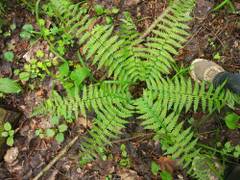
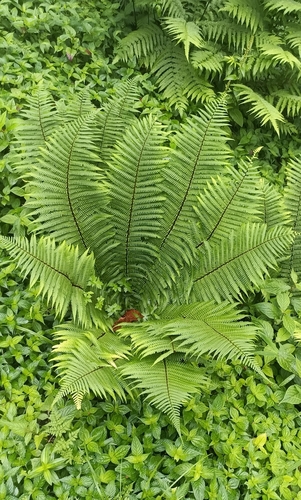
Dryopteris wallichiana is a large upright vase-shaped semi-evergreen fern in the wood-fern family (Dryopteridaceae) reaching 36–48 inches (90–120 cm) tall with a spread of 24–36 inches (60–90 cm). This Himalayan species carries one of the larger mature sizes in cultivated wood ferns and has a more architectural silhouette than the smaller Dryopteris species used in shade gardens. Bipinnate fronds are 36–48 inches (90–120 cm) long and 8–12 inches (20–30 cm) wide, dark green, held stiffly upright in a symmetrical vase-shaped crown. New fiddleheads and young fronds emerge covered in dense dark brown to near-black scales along the rachis, which produces a bold contrast between the dark hairy rachis and the bright yellow-green expanding pinnae. This bicolor effect (dark rachis against yellow-green new growth) persists for 3–4 weeks and is the primary ornamental feature of the species. Fronds darken to deep green as they mature through the growing season. Semi-evergreen: fronds persist through mild winters. Growth rate is moderate to slow. Hardy to zone 5.
Native Range
Dryopteris wallichiana is native to the Himalayas (Nepal, India, Bhutan, Tibet), extending south to Mexico, Central America, and Hawaii, where it occurs in moist mountain forests at 5,000–12,000 feet (1,500–3,600 m). The species is named for Nathaniel Wallich, the Danish-born botanist who served as superintendent of the Calcutta Botanical Garden in the early 19th century.Suggested Uses
Grown as a specimen fern or in shade borders at 24–36 inch (60–90 cm) spacing. The large size and bold vase-shaped architecture place this species in prominent shade-garden positions where the scale matches the composition intent. The dark-rachis-against-yellow-green-new-growth display is the key spring feature and reads clearly from close range where the bicolor effect carries full visual weight. Pairing with Hosta cultivars, Astilbe, and lower-growing ferns builds a layered vertical shade-garden composition. The plant functions as a visual anchor in woodland-garden compositions. Full-sun positions, dry soils, exposed windy sites, and small residential gardens where the 3–4 foot spread cannot be accommodated are not suitable given the size, shade-adapted structure, and wind sensitivity.How to Identify
Appearance
Size & Dimensions
Height3' - 4'
Width/Spread2' - 3'
Bloom Information
Ferns do not flower. Sori appear as round clusters on the undersides of fertile fronds in summer. The primary ornamental display is the spring emergence: dark near-black scaled fiddleheads unfurl to reveal bright yellow-green pinnae against the dark hairy rachis, producing a bicolor effect that persists for 3–4 weeks before chlorophyll development greens the pinnae.
Detailed Descriptions
Foliage Description
Dark green mature fronds; yellow-green new growth against dark near-black rachis scalesGrowing Conditions
Sun Requirements
Requires 2-4 hours of direct sunlight daily
• Full Sun: 6+ hours of direct sunlight
• Partial Shade: 3-6 hours of direct sunlight
• Full Shade: Less than 3 hours of direct sunlight
Care & Maintenance
Care Guide
Grows in partial to full shade in moist well-drained humus-rich soil at pH 5.5–7.0, tolerating loam. Hardy to zone 5. Consistent moisture is required through the growing season. The yellow-green new growth color reads most vividly in spring when cool temperatures slow the chlorophyll-greening transition. Sheltering the plant from strong winds preserves the large fronds from mechanical damage; the 3–4 foot frond length is vulnerable to wind tearing at exposed sites. Old tattered fronds are removed in late winter before new fiddleheads emerge. No serious pest or disease problems. Deer-resistant.Pruning
Old tattered fronds are removed in late winter before the new fiddleheads emerge. No other maintenance is required. Dark-scaled fiddleheads are never cut back — the dark-rachis-against-yellow-green display is the species primary spring ornamental feature.Pruning Schedule
Prune: February–March
winterearly spring
Container Growing
Suitable for container growing
Minimum container size: 7 gallons