Dryopteris, Genus, expansa, Species,
- Genus & species
coast shield fern
Circumboreal — northern North America (Alaska to Newfoundland south to California and the Appalachians), Europe, and Asia; moist conifer forests, stream banks, rocky slopes
Overview
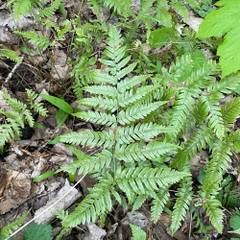
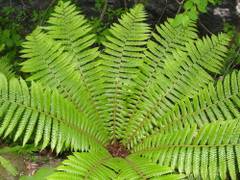
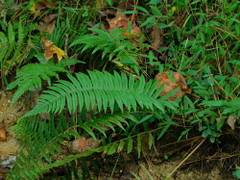
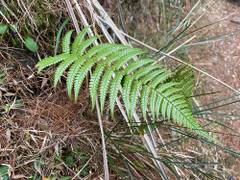
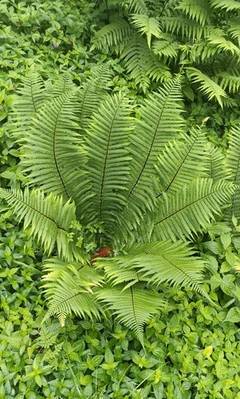
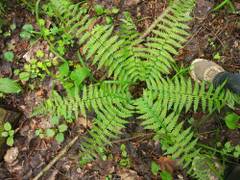
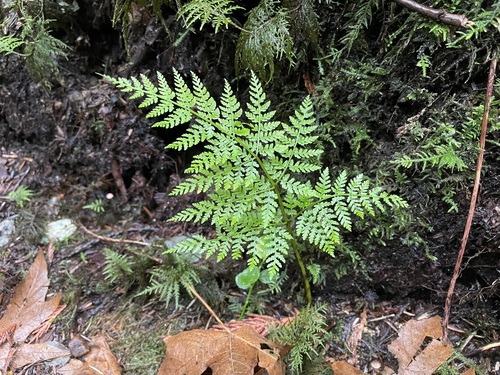
Dryopteris expansa (spreading wood fern, northern buckler fern) is a native semi-evergreen fern growing 18–48 inches (45–120 cm) tall and 24–36 inches (60–90 cm) wide. Broad triangular tripinnate (3× pinnately compound) fronds 12–36 inches (30–90 cm) produce a lacy texture — the tripinnate dissection is finer than D. filix-mas (male fern, bipinnate / 2× pinnate) or Polystichum munitum (sword fern, once-pinnate). The triangular frond outline (widest at the base) further separates D. expansa from the lance-shaped (widest in the middle) fronds of D. filix-mas. Round sori with kidney-shaped indusia appear on the frond undersides. The species belongs to Dryopteridaceae. Semi-evergreen: fronds persist through mild winters but collapse in hard frost — tattered fronds are removed in early spring before new fiddleheads unfurl. Circumboreal distribution: native across northern North America (Alaska to Newfoundland, south to California and the Appalachians), Europe, and Asia, growing in moist conifer forests, stream banks, and rocky slopes. Consistent moisture in shade is required — the fronds brown and desiccate in drought or sun exposure, which is the principal cultural limitation. Non-toxic. Deer-resistant. Hardy in zones 3–9.
Native Range
Circumboreal — native across northern North America (Alaska south through British Columbia, Washington, Oregon, California; Rocky Mountains; east to Newfoundland and the Appalachians), Europe, and Asia, growing in moist conifer forests, stream banks, and rocky slopes.Suggested Uses
Used in shade borders, woodland gardens, stream-bank plantings, and in containers of at least 5 gallons (19 L), spaced 24–36 inches (60–90 cm). The lacy tripinnate fronds and broad triangular outline supply texture in shaded sites. Companion to sword fern (Polystichum munitum), hostas, and bleeding hearts (Dicentra). Non-toxic. Deer-resistant. Zones 3–9.How to Identify
Appearance
Size & Dimensions
Height1'6" - 4'
Width/Spread2' - 3'
Reproduction
Reproduces by spores in round sori with kidney-shaped indusia on frond undersides. The lacy tripinnate fronds from spring through fall are the seasonal feature. Semi-evergreen — fronds persist in mild winters.
Detailed Descriptions
Foliage Description
Medium to dark green; broad triangular; tripinnate (3x pinnately compound); 12-36 inches (30-90 cm); lacy texture; semi-evergreenGrowing Conditions
Sun Requirements
Requires 1-3 hours of direct sunlight daily
• Full Sun: 6+ hours of direct sunlight
• Partial Shade: 3-6 hours of direct sunlight
• Full Shade: Less than 3 hours of direct sunlight
Care & Maintenance
Care Guide
Grows in full shade to partial shade with 1–3 hours of direct light. Soil pH 5.0–7.0 in well-drained loam or peat with consistent moisture. The fronds brown and desiccate in drought or direct sun exposure. Semi-evergreen: fronds persist through mild winters but collapse in hard frost. Remove tattered fronds in early spring (March) before new fiddleheads unfurl. Non-toxic. Deer-resistant. Suitable for zones 3–9.Pruning
Remove tattered old fronds in early spring (March) before new fiddleheads unfurl. No other pruning is needed. Divide congested clumps every 3–4 years in spring by separating the crown.Pruning Schedule
Prune: March
early spring
Container Growing
Suitable for container growing
Minimum container size: 5 gallons