Leptospermum, Genus, scoparium, Species,
- Genus & species
Mānuka
New Zealand and south-eastern Australia
Overview
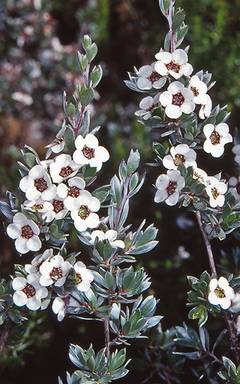
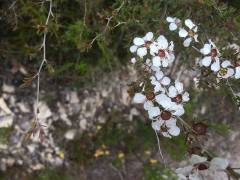
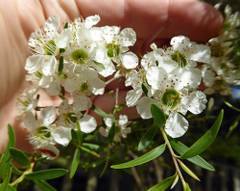
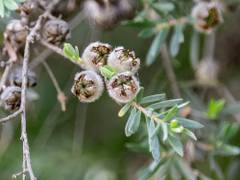
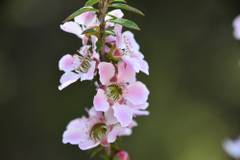
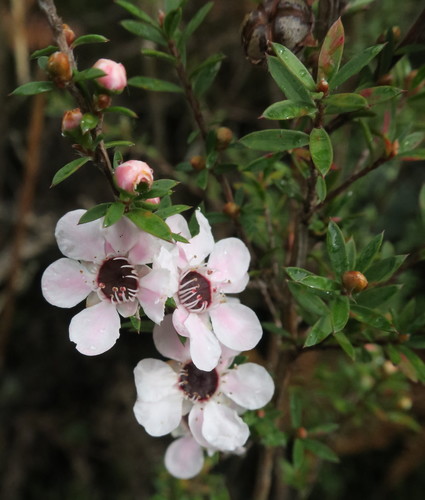
Leptospermum scoparium is an evergreen shrub to small tree reaching 6-16 feet (2-5 m) tall and 5-10 feet (1.5-3 m) wide, with an upright, densely branched habit. Small narrow leaves are 0.2-0.5 inch (5-12 mm) long, stiff and sharply pointed, aromatic when crushed, and often bronze-tinged in cold weather. Five-petalled flowers 0.3-0.5 inch (8-12 mm) across are white in the wild form and pink to deep red in cultivated selections, borne singly along the stems. Flowering is concentrated in spring and early summer. Woody seed capsules follow and persist on the stems for one to several years, releasing seed after fire or branch death. Growth is moderate to fast, with plants reaching flowering size within 2-3 years. The species is the main nectar source for manuka honey. Plants are typically short-lived, declining after 10-20 years, and the stiff foliage can be sharp to handle.
Native Range
Native to New Zealand and south-eastern Australia, including Tasmania, Victoria, and New South Wales. Grows in heathland, scrub, forest margins, and disturbed ground, from coastal sites to mountain slopes, often on poor, moist soils.Suggested Uses
Planted as an informal hedge, screen, and specimen shrub in native and coastal gardens, spaced 3-6 feet (1-1.8 m) apart. Cultivars with colored flowers are used in mixed borders and containers. The stiff, sharp foliage limits placement beside paths and seating.How to Identify
Appearance
Size & Dimensions
Height6' - 16'
Width/Spread5' - 10'
Bloom Information
Flowers mainly in spring and early summer (September to December in its native range), with some cultivars flowering over a longer period. The main display lasts about four to six weeks. Cultivated double-flowered forms hold their flowers longer than the single wild form.
Detailed Descriptions
Flower Description
white to pink or redFoliage Description
green to bronze-greenGrowing Conditions
Sun Requirements
Requires 5-8 hours of direct sunlight daily
• Full Sun: 6+ hours of direct sunlight
• Partial Shade: 3-6 hours of direct sunlight
• Full Shade: Less than 3 hours of direct sunlight
Care & Maintenance
Care Guide
Grows in full sun to light shade in moist, well-drained, slightly acidic soils. Water through the first one to two years to establish; mature plants tolerate short dry spells but flower more freely with steady moisture. Tolerates frost to about 14F (-10C) depending on provenance. Scale insects and webbing caterpillars can affect foliage, and the species is prone to root rot in poorly drained soil. Trim lightly after flowering to maintain density. Plants are short-lived, usually replaced after 10-20 years.Pruning
Trim lightly after flowering each year to maintain a dense, compact form, cutting only into green growth. Cutting back into bare older wood often fails to reshoot. Remove dead and damaged stems as they appear.Pruning Schedule
Prune: December–January
summer
Container Growing
Suitable for container growing
Minimum container size: 7 gallons