Leptospermum, Genus, spp., Multiple species,
- Genus
- Multiple species
tea trees
Australia, New Zealand, and Southeast Asia
Overview
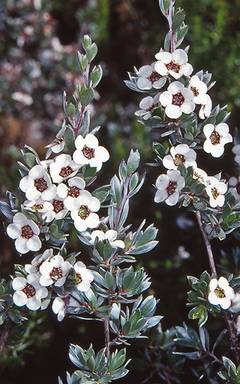
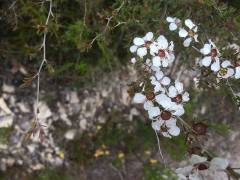
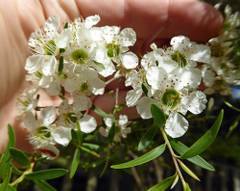
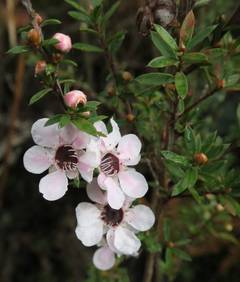
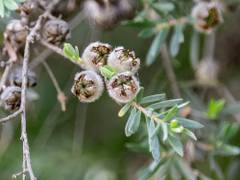
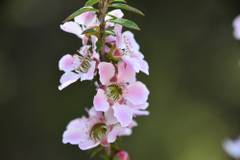
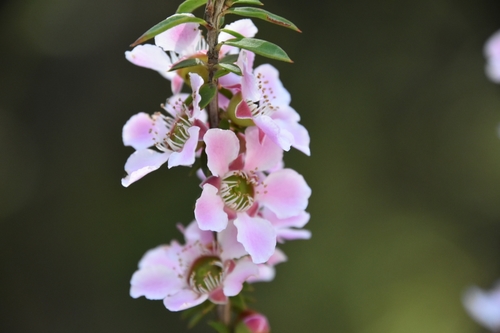
Leptospermum is a genus of about 85 species of evergreen shrubs and small trees in the myrtle family (Myrtaceae), native mainly to Australia with a few species in New Zealand and Southeast Asia. Plants range from low spreading shrubs 0.3 m (1 ft) high to trees of 8 m (26 ft), most clothed in small, narrow, aromatic leaves that release a scent when crushed. The five-petalled flowers are 0.5-2.5 cm (0.2-1 in) wide, white, pink, or red, often with a darker central disc, and open in great numbers in spring and early summer. Woody seed capsules follow and may stay closed on the stems for years until fire or death of the branch releases the seed. The genus includes L. scoparium, the manuka whose nectar yields manuka honey, and L. laevigatum, a coastal tea tree used for shelter. Plants tolerate wind, salt, and poor, sandy or acidic soils, but most are damaged by hard frost and grow poorly in heavy, wet clay. Bloom is heavy but brief, and old plants can grow leggy and bare at the base.
Native Range
Leptospermum is native chiefly to Australia, where species occur in every state across heath, woodland, swamp margins, and coastal scrub, with a few species reaching New Zealand and Southeast Asia.Suggested Uses
Grown as flowering shrubs, low hedges, windbreaks, and coastal screens, with prostrate forms used as bank and groundcover plantings. L. scoparium cultivars are planted for spring flower colour and for bee forage. Plants are spaced 1-2 m (3-6.5 ft) apart in hedging.How to Identify
Appearance
Size & Dimensions
Height1' - 26'
Width/Spread3' - 15'
Bloom Information
Most species flower heavily in spring and early summer, smothering the stems in small flowers for 3-6 weeks. Some species carry a lighter scattering of bloom at other times of year. Flowering is followed by woody capsules that can remain closed for several seasons.
Detailed Descriptions
Flower Description
white, pink, or redFoliage Description
green to grey-green, some bronzeGrowing Conditions
Sun Requirements
Requires 6-10 hours of direct sunlight daily
• Full Sun: 6+ hours of direct sunlight
• Partial Shade: 3-6 hours of direct sunlight
• Full Shade: Less than 3 hours of direct sunlight
Water & Climate
Water Needs
Drought Tolerance
Drought tolerant when established
Care & Maintenance
Care Guide
Most species grow in full sun on free-draining, sandy, or gravelly soils that are neutral to acidic, and tolerate wind, coastal salt, and drought once established. They grow poorly in heavy, wet, or limy soils, where root rot and chlorosis set in. Frost tolerance differs across the genus: alpine species endure hard frost, while many lowland and coastal species are damaged below about -5 C (23 F). Plants need little feeding and reshoot poorly from old bare wood, so a light annual trim keeps them dense. Pests are few, though scale, webbing caterpillars, and root rot in wet ground can cause dieback.Pruning
A light trim just after flowering keeps plants bushy and removes the spent flowers and developing capsules. Cuts are kept within green, leafy growth because plants reshoot poorly from bare old wood. Hard renovation is risky and often kills the plant.Pruning Schedule
Prune: December
summer
Container Growing
Suitable for container growing
Minimum container size: 5 gallons