Leptospermum, Genus, namadgiensis, Species,
- Genus & species
Namadgi tea tree
Southeastern Australia (Namadgi National Park, ACT, adjacent NSW; alpine/subalpine 3000-6000 ft / 900-1800 m; rocky exposed sites)
Overview
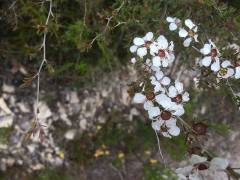
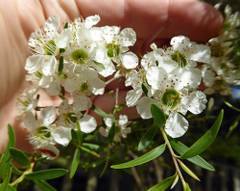
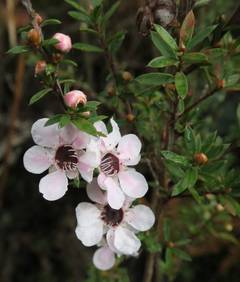
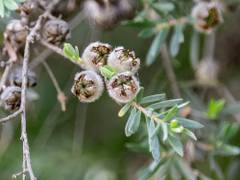
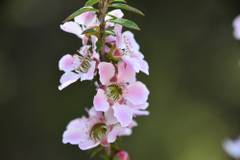
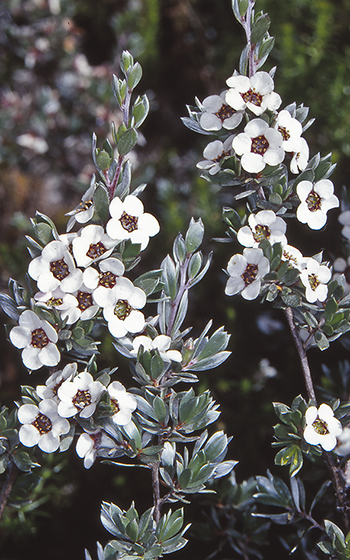
Leptospermum namadgiensis is a compact evergreen shrub reaching 3–5 feet (0.9–1.5 m) tall with a spread of 3–5 feet (0.9–1.5 m). This Australian tea tree species from the Namadgi National Park area of the Australian Capital Territory carries cold-hardiness rare among Leptospermum species, which positions it as one of the reliable options for gardens at the cold edge of the genus' cultivation range. Small aromatic needle-like to narrowly elliptic leaves 0.2–0.4 inches (5–10 mm) long run dark green to bronze-green and crowd densely along the wiry stems, forming a narrow-textured foliage character across the shrub. Five-petaled white to pale pink flowers 0.3–0.5 inches (8–13 mm) across open singly along the stems in profusion from May through June, and the bloom density carries the species' primary ornamental value during the late-spring flowering window. Persistent woody cup-shaped seed capsules 0.2 inches (5 mm) across remain on the stems after bloom and read as secondary ornamental features through the post-flowering season. Mature stems develop flaky gray-brown bark. Growth rate is slow to moderate. Hardy to zone 7.
Native Range
Leptospermum namadgiensis is native to the alpine and subalpine regions of southeastern Australia—specifically the Namadgi National Park area of the Australian Capital Territory and adjacent high-country regions of New South Wales, growing at 3,000–6,000 feet (900–1,800 m) elevation in rocky exposed sites. The high-altitude provenance gives the species greater cold tolerance than lowland Australian tea trees, which translates directly to zone-7 garden hardiness in North American and European cultivation.Suggested Uses
Planted in rock gardens, Mediterranean-style gardens, coastal plantings, and containers of at least 5 gallons (19 L) at 3–4 foot (0.9–1.2 m) spacing in zone-7-and-warmer gardens. The compact evergreen habit with narrow-textured foliage carries year-round structural value in small-garden positions, and the zone-7 cold tolerance extends the tea tree group into cooler climates where most Leptospermum scoparium cultivars fail to overwinter. Persistent woody seed capsules read as a post-bloom ornamental feature that continues the species' display through late summer and autumn. Heavy clay soils, wet winter sites, deep shade, and exposed cold sites below zone 7 are poor fits for the species.How to Identify
Appearance
Size & Dimensions
Height3' - 5'
Width/Spread3' - 5'
Bloom Information
Five-petaled white to pale pink flowers 0.3–0.5 inches (8–13 mm) across open singly along the stems in heavy profusion from May through June. The combined bloom load across the dense stem coverage creates a visually continuous white-flowered mass through the 4–6 week bloom window. Persistent woody seed capsules follow the flowers and remain on the shrub for multiple years, carrying secondary structural interest through later seasons.
Detailed Descriptions
Flower Description
White to pale pink; five-petaled 0.3-0.5 inches; profuse along stems; persistent woody capsules followFoliage Description
Dark green to bronze-green; tiny needle-like to narrowly elliptic 0.2-0.4 inches; aromatic; densely arrangedGrowing Conditions
Sun Requirements
Requires 6-10 hours of direct sunlight daily
• Full Sun: 6+ hours of direct sunlight
• Partial Shade: 3-6 hours of direct sunlight
• Full Shade: Less than 3 hours of direct sunlight
Care & Maintenance
Care Guide
Full sun in well-drained acidic to neutral soil (pH 5.5–7.0) matches the species' cultivation needs. Hardy to zone 7 (0°F / −18°C). Sharp drainage is non-negotiable—the species does not tolerate waterlogged or heavy clay soils, and wet winter conditions cause root rot more reliably than winter cold does. Alpine provenance carries the species through zone-7 winter cold, but cold drying winds in exposed zone-7 positions cause foliage desiccation; sheltered southern or eastern exposures reduce that wind stress. Drought tolerance runs strong once the plant is established, and the species fits Mediterranean climate plantings with minimal summer irrigation.Pruning
Light pruning immediately after flowering (June–July) maintains compact shape and removes spent inflorescences where desired. Moderate cutback into leafy wood is tolerated, but cutting into bare woody stems does not regenerate—Leptospermum species as a group do not sprout reliably from old wood, so pruning stays within the current year's green growth. Tip-pruning encourages dense bushy growth and supports the species' naturally mounded habit.Pruning Schedule
Prune: June–July
summer
Container Growing
Suitable for container growing
Minimum container size: 5 gallons