Leptospermum, Genus, lanigerum, Species,
- Genus & species
woolly teatree
Overview
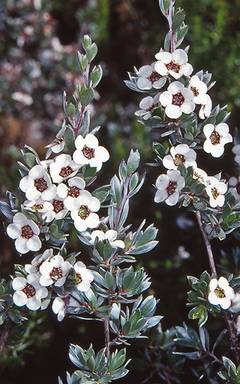
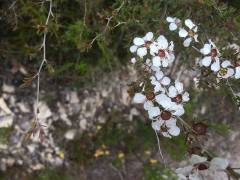
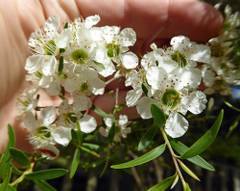
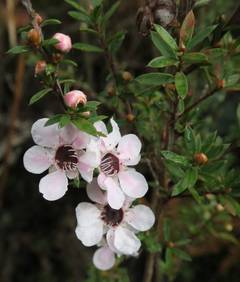
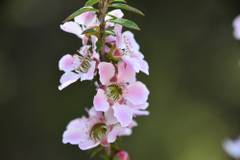
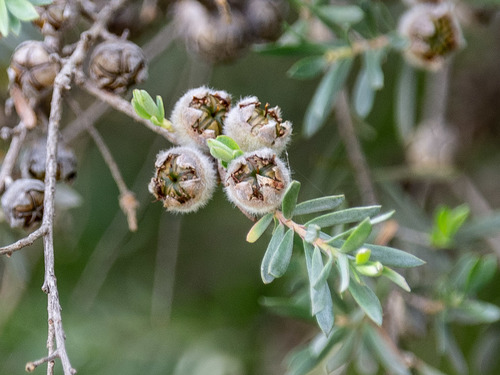
Leptospermum lanigerum is an evergreen shrub or small tree 6-20 feet (2-6 m) tall, with an upright to spreading habit and fibrous, grey, peeling bark. The small leaves are 0.2-0.6 inch (5-15 mm) long, grey-green, and covered in silky white hairs that give the foliage and young stems a woolly, silvery look. White flowers 0.4-0.6 inch (10-15 mm) across, each with five rounded petals and a green central disc, open along the stems in spring and early summer. Woody capsules 0.2-0.3 inch (5-8 mm) wide follow and stay on the branches for some time. Growth is moderate to fast on moist sites, and the plant tolerates wet, poorly drained ground and short flooding. It grows more slowly and stays shrubby on dry sites, and old plants can become bare and twiggy at the base.
Native Range
Native to southeastern Australia, including Tasmania, Victoria, New South Wales, and South Australia. Grows along streams, on swamp margins, and in wet heath and forest on moist to waterlogged, often peaty soils.Suggested Uses
Planted as a screen, windbreak, and wet-soil shrub in gardens and revegetation, spaced 5-10 feet (1.5-3 m) apart, and used along dams and creek lines. Suits wet, poorly drained sites where many shrubs fail. The silvery foliage and white flowers suit informal native screens and bird-habitat plantings.How to Identify
Appearance
Size & Dimensions
Height6' - 20'
Width/Spread5' - 12'
Bloom Information
Detailed Descriptions
Foliage Description
grey-greenGrowing Conditions
Sun Requirements
Requires 6-10 hours of direct sunlight daily
• Full Sun: 6+ hours of direct sunlight
• Partial Shade: 3-6 hours of direct sunlight
• Full Shade: Less than 3 hours of direct sunlight
Care & Maintenance
Care Guide
Grows in full sun to part shade on moist to wet soils and tolerates waterlogging and brief flooding better than most teatrees. Water young plants through the first two summers; established plants withstand both wet ground and short dry spells. On dry sites growth slows and the canopy thins. Frost-hardy to about 18°F (-8°C) once established. Myrtle rust can affect new growth in humid areas, causing yellow pustules and shoot dieback. Old plants can become bare at the base, and a hard prune after flowering renews dense growth.Pruning
Tip-prune after flowering to keep the plant dense and bushy, and cut back harder to renew old, bare stems. The plant reshoots from cut stems and from the base. Spent capsule-laden stems can be trimmed to tidy the shrub.Pruning Schedule
Prune: December–January
summer