Leptospermum, Genus, continentale, Species,
- Genus & species
prickly tea-tree
Overview
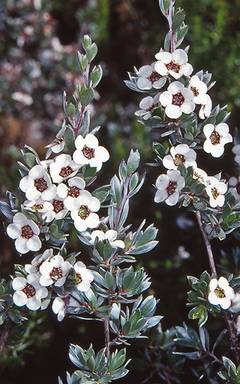
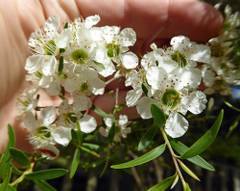
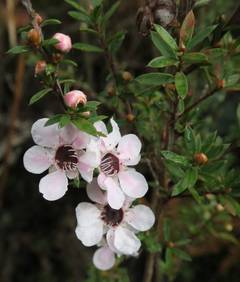
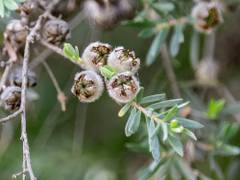
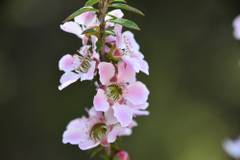
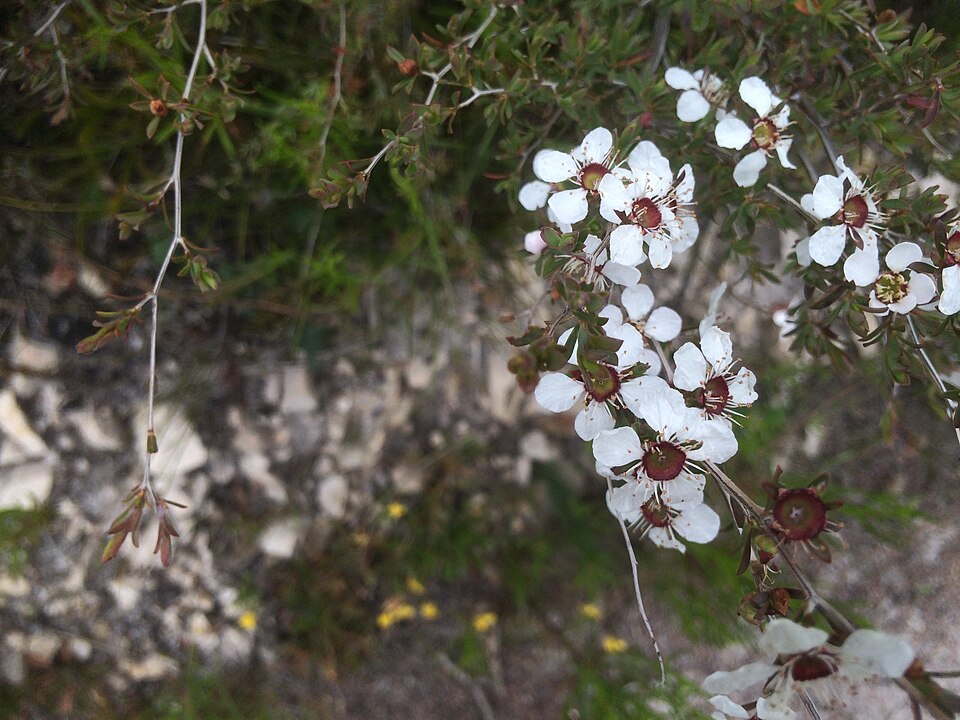
Leptospermum continentale, the prickly tea-tree, is an erect evergreen shrub in the myrtle family reaching 3-10 feet (1-3 m) tall and 5-8 feet (1.5-2.5 m) wide. The wiry stems carry small, narrow leaves 0.2-0.5 inch (5-12 mm) long that taper to a sharp point and are aromatic when crushed. From spring into summer, white five-petalled flowers about 0.4-0.6 inch (10-15 mm) across line the branches, each with a ring of stamens around a green central cup. Woody capsules follow and persist on the stems for a time before shedding. The species grows in heath, swamp margins, and open forest on sandy, peaty, and clay soils across south-eastern Australia, tolerating both seasonal wetness and dry spells once established. The sharp-tipped foliage gives shelter to small birds. Growth is dense and twiggy, and like other tea-trees it is slow to reshoot if cut hard into bare old wood.
Native Range
Leptospermum continentale is native to south-eastern Australia, occurring in South Australia, Victoria, New South Wales, and Tasmania. It grows in heath, swampy flats, and open forest on sandy, peaty, or clay soils, often where the ground is wet in winter.Suggested Uses
Grown as an informal hedge, screen, or habitat shrub in native and damp gardens, and used to stabilise the margins of ponds and drainage lines. Suited to sites that are seasonally wet but dry later in the year. Spaced 4-6 feet (1.2-1.8 m) apart in screen plantings.How to Identify
Appearance
Size & Dimensions
Height3' - 9'10"
Width/Spread5' - 8'
Bloom Information
Detailed Descriptions
Foliage Description
grey-green, sharp-pointedGrowing Conditions
Sun Requirements
Requires 6-10 hours of direct sunlight daily
• Full Sun: 6+ hours of direct sunlight
• Partial Shade: 3-6 hours of direct sunlight
• Full Shade: Less than 3 hours of direct sunlight
Care & Maintenance
Care Guide
Grows in full sun to light shade on sandy, peaty, or clay soils that are neutral to acidic, and tolerates ground that is wet in winter and dry in summer. Regular water through the first one to two years settles the roots, after which established plants handle dry spells. Low-phosphorus native fertilizer in early spring supports growth, while high-phosphorus feeds harm the roots. The shrub keeps a denser habit in open, airy positions, which also lowers fungal leaf spotting. It tolerates a wider range of soil moisture than many tea-trees, suiting damp spots that drain in summer.Pruning
Light trimming after flowering keeps the shrub bushy and removes spent capsules. Cutting back into the current season growth is tolerated, but pruning into bare older wood often fails to reshoot. Trimming is usually done in late summer once the main flush fades.Pruning Schedule
Prune: January–February
summer
Container Growing
Suitable for container growing
Minimum container size: 7 gallons