Leptospermum, Genus, petersonii, Species,
- Genus & species
Lemon-scented tea tree
Coastal Queensland and northern New South Wales, Australia
Overview
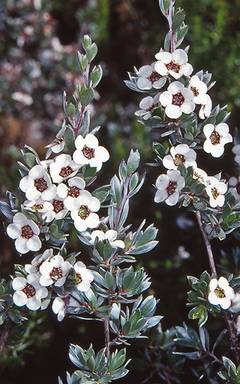
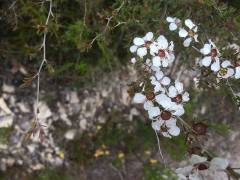
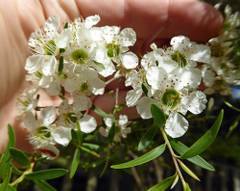
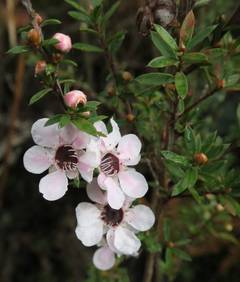
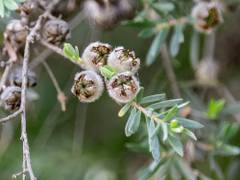
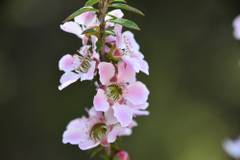
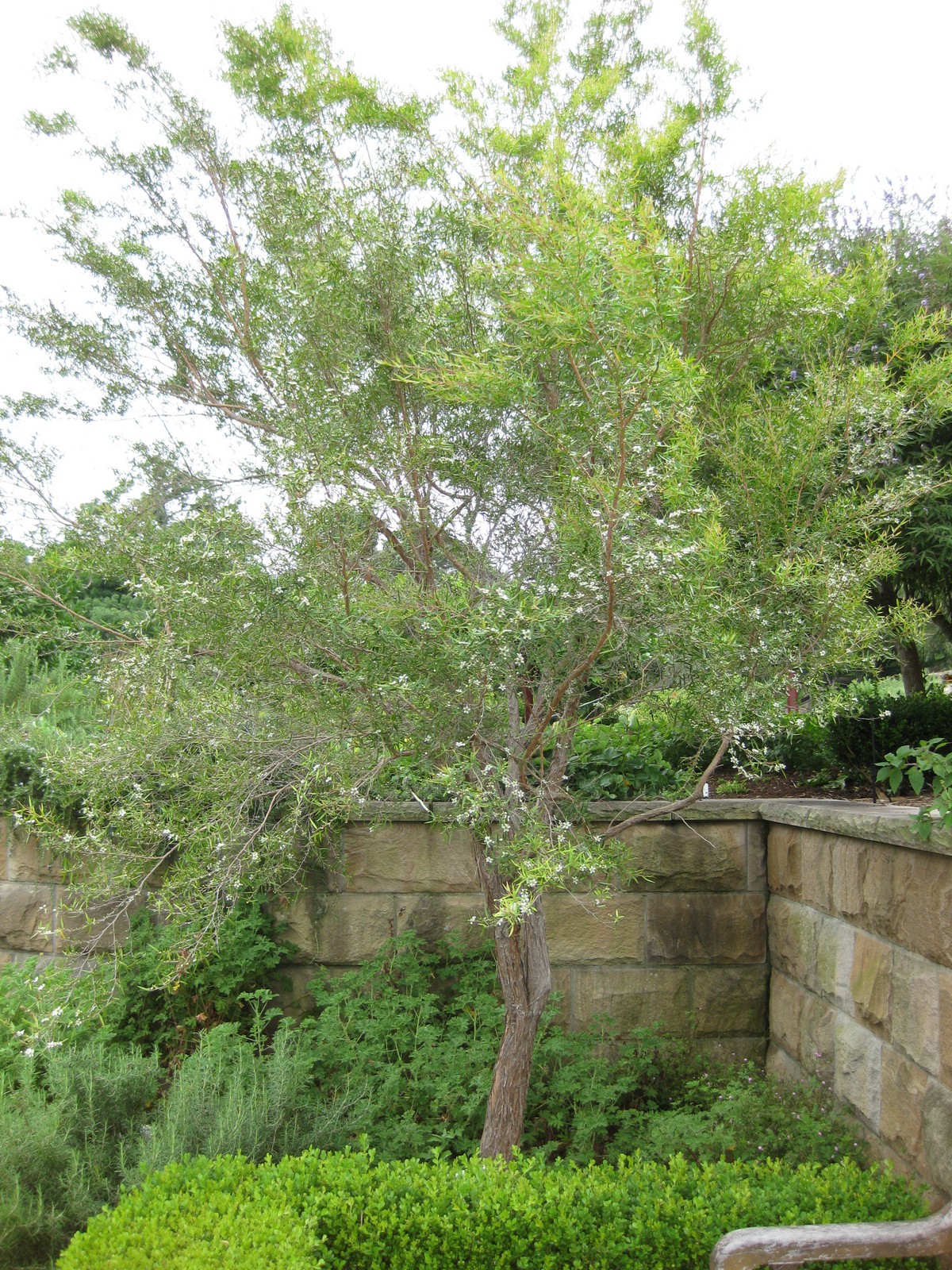
Leptospermum petersonii is an evergreen shrub or small tree 10-20 feet (3-6 m) tall and 8-12 feet (2.4-3.7 m) wide, with slender arching branches over fibrous grey-brown bark that sheds in narrow strips. Leaves are alternate, narrow-lanceolate, 0.75-1.5 inches (2-4 cm) long and 0.1-0.2 inch (3-5 mm) wide, mid-green with a pointed tip, and bronze-pink on new growth. Crushing a leaf releases a strong lemon scent from the citral and citronellal in the leaf oil, and the species is grown commercially for that oil. White five-petalled flowers 0.4-0.6 inch (10-15 mm) across open singly or in pairs in the leaf axils over six to eight weeks in late spring and summer, followed by woody capsules 0.2 inch (5 mm) across that stay on the stems for several years. The species is susceptible to myrtle rust, which raises yellow spore masses on new growth and kills successive flushes on affected plants. Cutting into bare older wood produces no regrowth, so a plant left to outgrow its space cannot be reduced without permanent gaps. Young plants are damaged by frost below about 28 F (-2 C). Hardy in USDA zones 9-11.
Native Range
Leptospermum petersonii is native to eastern Australia, along the coast and near-coastal ranges from southeastern Queensland to northern New South Wales. It grows on rocky slopes, exposed headlands, and the margins of subtropical rainforest, usually on shallow soils over sandstone or granite. It has naturalised outside that range in parts of southern Africa and on Pacific islands where it was planted for oil production.Suggested Uses
Grown as a clipped hedge and windbreak at 5-8 feet (1.5-2.4 m), as a small specimen tree in courtyards, and in coastal gardens exposed to salt wind, spaced 3-5 feet (90-150 cm) apart for hedging. Leaves are steam-distilled for lemon-scented oil and steeped fresh as a herbal tea. Container culture works in pots of 15 gallons (57 L) or larger using a low-phosphorus native potting mix.How to Identify
Appearance
Size & Dimensions
Height10' - 20'
Width/Spread8' - 12'
Bloom Information
Flowering runs six to eight weeks, between October and January in the southern hemisphere and between April and July in northern hemisphere plantings. Flowers form in the axils of the previous season growth, so clipping a hedge in late winter removes most of the bloom. Individual flowers last five to seven days and drop their petals cleanly. Honeybees, native bees, and hoverflies work the open flowers, which hold nectar on an exposed disc.
Detailed Descriptions
Foliage Description
Mid-green, narrow and pointed, bronze-pink on new growthGrowing Conditions
Sun Requirements
Requires 6-12 hours of direct sunlight daily
• Full Sun: 6+ hours of direct sunlight
• Partial Shade: 3-6 hours of direct sunlight
• Full Shade: Less than 3 hours of direct sunlight
Care & Maintenance
Care Guide
Six or more hours of direct sun produces dense growth and full flowering, while part shade gives an open plant with thin bloom. The species grows in free-draining sandy, rocky, or loamy soil at pH 5.5-7.0, tolerates poor and shallow ground, and fails where water stands after rain. Established plants run three to four weeks without water, and irrigation of about 0.5 inch (1.3 cm) per week through the first two summers settles the root system. Phosphorus above roughly 3 percent in a fertiliser damages the roots, so native-plant formulations or a light spring compost mulch are what the species takes. Coastal salt wind is tolerated, and plants on exposed sites hold a tighter form than those in shelter. Air movement through the canopy lowers myrtle rust pressure, and infected shoots are cut out and bagged rather than composted.Pruning
Clipping is done straight after flowering, taking no more than one-third of the current season growth and leaving green foliage on every cut shoot. The species does not reshoot from bare inner wood, so cuts that expose old stems leave lasting holes in a hedge. Two clips a year, one after flowering and one in early autumn, hold a hedge at 5-8 feet (1.5-2.4 m). Dead and rust-affected shoots are taken out at their base at any time of year.Pruning Schedule
Prune: July–August
summer
Container Growing
Suitable for container growing
Minimum container size: 15 gallons