Lathyrus, Genus, pratensis, Species,
- Genus & species
meadow pea
Europe, North Africa, and temperate Asia
Overview
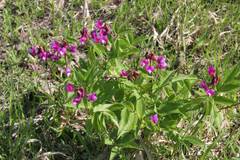
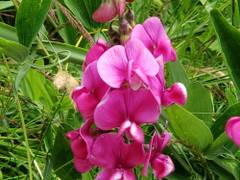
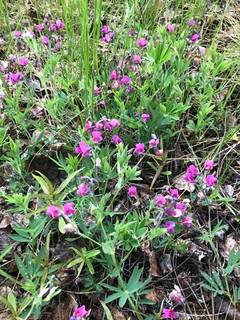
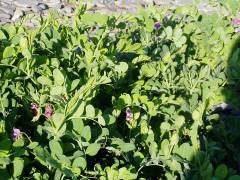
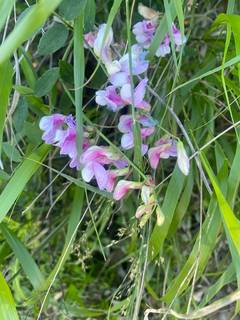
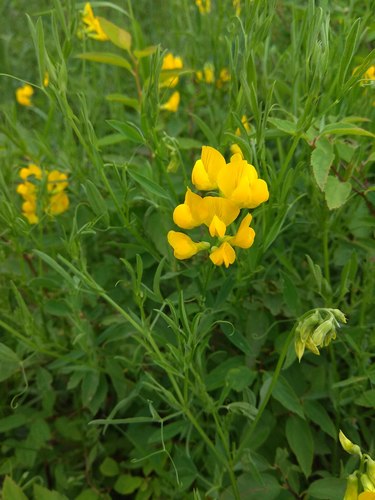
Lathyrus pratensis is a scrambling herbaceous perennial in the legume family (Fabaceae), with weak stems climbing 24–47 inches (60–120 cm) over surrounding vegetation by means of branched tendrils. Each leaf bears a single pair of narrow, lance-shaped leaflets 1–2 inches (2.5–5 cm) long, with the leaf axis ending in a tendril and a pair of large arrow-shaped stipules at the base. From May to August it produces long-stalked clusters of 5–12 yellow pea flowers, each about 0.6 inch (15 mm) across. The flowers give way to flattened black seed pods 1–1.4 inches (25–35 mm) long containing several seeds. It spreads by both seed and creeping rhizomes, forming loose colonies in grassland. As a legume it fixes nitrogen and persists in unimproved meadows, hedge banks, and roadside verges. The seeds contain compounds that are toxic in quantity, as in other Lathyrus species. Its scrambling habit has no self-supporting structure, so it leans on grasses and other plants for support. It dies back in winter and regrows from the rootstock in spring.
Native Range
Native to Europe, North Africa, and temperate Asia, and widely naturalized elsewhere. It grows in unimproved grassland, meadows, hedgerows, and along ditches and roadsides on neutral to calcareous soils.Suggested Uses
Used in wildflower meadows, naturalized grassland, and hedge-bank plantings where it scrambles through grasses. Suited to nitrogen-poor soils as a legume that supports pollinators. Grown in conservation mixes for bumblebees, which work its yellow flowers.How to Identify
Appearance
Size & Dimensions
Height2' - 3'11"
Width/Spread1' - 2'
Colors
Bloom Information
Blooms from late May to August, with most flowers opening in June and July. Each flower cluster lasts about two weeks, and a colony flowers in long succession. Pods ripen from green to black through late summer.
Detailed Descriptions
Foliage Description
blue-greenGrowing Conditions
Sun Requirements
Requires 4-8 hours of direct sunlight daily
• Full Sun: 6+ hours of direct sunlight
• Partial Shade: 3-6 hours of direct sunlight
• Full Shade: Less than 3 hours of direct sunlight
Care & Maintenance
Care Guide
Grows in full sun to light shade on moist, well-drained soils with a neutral to alkaline pH of 6.0–8.0. It tolerates a wide range of grassland soils and needs support from surrounding plants or a low framework to climb. No feeding is needed, as the plant fixes its own nitrogen. The creeping rhizomes spread steadily, so it suits naturalized areas rather than confined borders. Growth is cut back at the end of the season once seed has set. Hardy in USDA zones 4 to 8.Pruning
Growth is cut to ground level in late autumn after seed set, as the top dies back naturally. Shearing in midsummer after the first flush can prompt a smaller second flowering. Pods removed before they ripen reduce self-seeding in managed settings.Pruning Schedule
Prune: October–November
fall