Lathyrus, Genus, latifolius, Species,
- Genus & species
broad-leaved sweet pea
Central and southern Europe and northwestern Africa
Overview
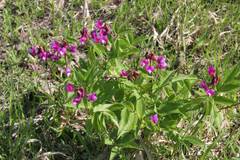
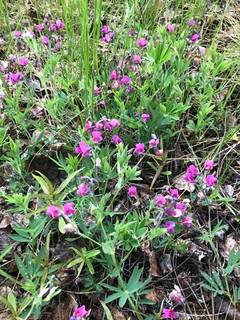
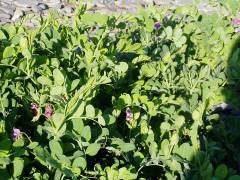
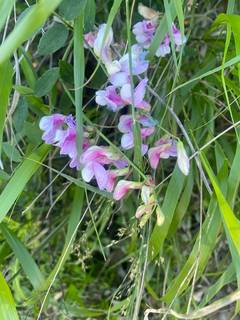
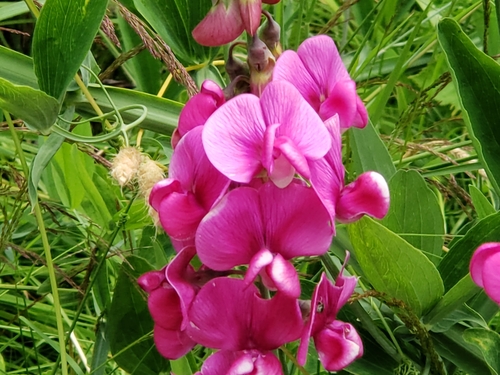
Lathyrus latifolius is a climbing or scrambling perennial growing 6-9 feet (1.8-2.7 m) long, with winged stems that clamber over supports by branched tendrils at the leaf tips. Each leaf has a single pair of lance-shaped to oval leaflets 2-4 inches (5-10 cm) long, blue-green, with broad leafy wings running down the stem and stalk. Clusters of 5-15 pea-like flowers, each about 1 inch (2.5 cm) across, appear from June to September in rose-pink, magenta, or white, without the scent of the annual sweet pea. Flat seed pods 2-4 inches (5-10 cm) long follow, splitting to release hard round seeds. Plants grow from a deep, tough rootstock and self-seed, returning and spreading year after year. The seeds contain compounds that are toxic if eaten in quantity. It dies back to the rootstock in winter and resprouts in spring. Once established it is hard to remove because of the deep roots and persistent seed.
Native Range
Native to central and southern Europe and northwestern Africa, on banks, scrub, woodland edges, and rocky slopes. Widely naturalized in North America and elsewhere, where it grows on roadsides, railway banks, and waste ground.Suggested Uses
Used on trellises, fences, arbors, and banks, and as a scrambling cover on slopes, spaced 18-24 inches (45-60 cm) apart. Suits cottage gardens and informal plantings where its spread and self-seeding are acceptable. Cut stems last well in water, though the flowers lack the scent of annual sweet peas.How to Identify
Appearance
Size & Dimensions
Height6' - 9'
Width/Spread2' - 4'
Colors
Bloom Information
Detailed Descriptions
Flower Description
rose-pink, magenta, or whiteFoliage Description
blue-greenGrowing Conditions
Sun Requirements
Requires 4-9 hours of direct sunlight daily
• Full Sun: 6+ hours of direct sunlight
• Partial Shade: 3-6 hours of direct sunlight
• Full Shade: Less than 3 hours of direct sunlight
Care & Maintenance
Care Guide
Grows in full sun to light shade in average, well-drained soil and tolerates poor and dry ground once established. As a legume, it fixes nitrogen and needs little feeding. A trellis, fence, or other support carries the climbing stems, or plants can scramble over a bank as a groundcover. Self-seeds freely and spreads from a deep rootstock, so it can move beyond its space; removing seed pods before they ripen limits spread. Cut plants back hard in late autumn or early spring. No serious pests trouble it, though powdery mildew can appear in late summer.Pruning
Cut the whole plant back to near ground level in late autumn or early spring, as it flowers on new growth. Deadhead through the season to prolong bloom and reduce self-seeding. Remove unwanted seedlings while small, as the deep roots make older plants hard to pull.Container Growing
Suitable for container growing
Minimum container size: 5 gallons