Lathyrus, Genus, hirsutus, Species,
- Genus & species
hairy vetchling
Europe, North Africa, and western Asia
SunFull Sun
Overview
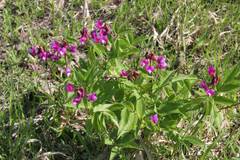
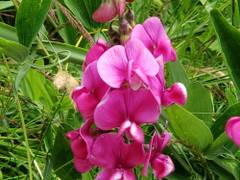
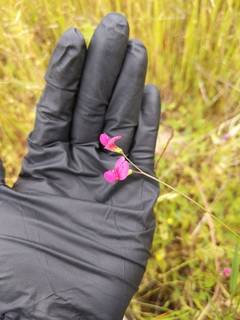
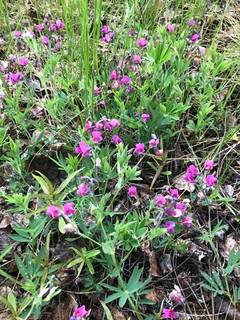
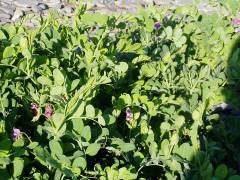
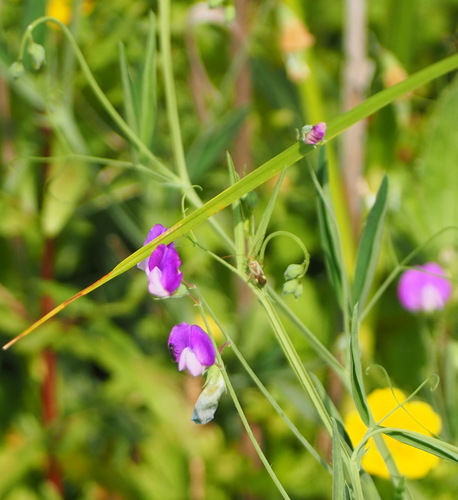
Lathyrus hirsutus is a climbing annual legume with slender, winged stems reaching 1-3 feet (30-90 cm), clinging to supports by branched tendrils at the leaf tips. Each leaf bears a single pair of narrow leaflets 1-2.5 inches (2.5-6 cm) long below the tendril. From late spring into summer it produces pea-like flowers about 0.5 inch (12 mm) long, one or two on a stalk, with a pale blue to purple upper petal and a pink to crimson keel, creating a two-toned look. The flowers give way to flattened pods 1-1.5 inches (2.5-4 cm) long that are covered in stiff bristly hairs, the feature behind the hairy vetchling name. L. hirsutus is native to Europe and western Asia and has naturalized across the southern United States and elsewhere, growing in fields, roadsides, pastures, and disturbed ground. It fixes nitrogen through root nodules and has been grown as a forage and cover crop. The seeds contain compounds that are toxic in quantity to livestock and people, which limits its use as food. As an annual it dies after seeding and returns only from seed, and it can spread weedily on disturbed land.
Native Range
Lathyrus hirsutus is native to Europe, North Africa, and western Asia, and has naturalized widely in the southern United States and other temperate regions. It grows in fields, pastures, roadsides, and disturbed open ground.Suggested Uses
L. hirsutus is grown as a cover crop and forage legume and appears in wildflower and pollinator plantings for its two-toned spring flowers. Its nitrogen fixation improves soil on fallow ground. The toxic seeds and weedy reseeding make it suited to managed cover plantings rather than beds near grazing animals.How to Identify
Appearance
Size & Dimensions
Height1' - 3'
Width/Spread1' - 2'
Bloom Information
L. hirsutus flowers from late spring into summer, roughly May through July, with small two-toned pea-like blooms on slender stalks. Bees and other insects visit and pollinate the flowers. Bristly flattened pods follow and dry to release the hard seeds by late summer.
Detailed Descriptions
Foliage Description
GreenGrowing Conditions
Sun Requirements
Requires 6-10 hours of direct sunlight daily
• Full Sun: 6+ hours of direct sunlight
• Partial Shade: 3-6 hours of direct sunlight
• Full Shade: Less than 3 hours of direct sunlight
Water & Climate
Water Needs
Drought Tolerance
Drought tolerant when established
Care & Maintenance
Care Guide
L. hirsutus grows in full sun on a range of well-drained soils with a pH of 6.0-7.5, tolerating sand, loam, and clay. As an annual legume it fixes its own nitrogen and needs no feeding, establishing quickly from seed sown in autumn or early spring. It tolerates drought once rooted but climbs more readily with a fence, trellis, or neighboring plants for its tendrils. Rich soil and ample water produce lush growth but more foliage than flower. It self-sows freely and can spread into surrounding ground. Aphids and powdery mildew occasionally appear but rarely cause harm.Pruning
L. hirsutus needs no pruning. Spent stems can be cleared after the pods dry, though leaving some pods allows the reseeding it depends on. Cutting back stems before seed set limits its spread onto open ground.Toxicity Warning
Toxic to pets and humansPlanting Guide
Planting Methods & Timing
Planting Method
direct sow
Direct Sow Timing
Autumn or early spring
Days to Maturity
90–120 days
Plant Spacing
6 inches