Lathyrus, Genus, nissolia, Species,
- Genus & species
grass vetchling
Europe, North Africa, and western Asia
SunFull Sun
Overview
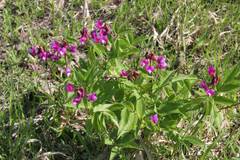
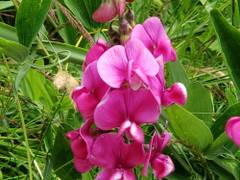
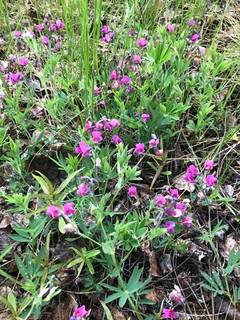
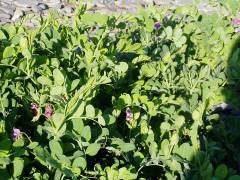
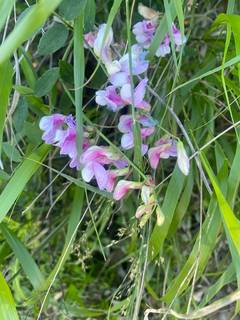
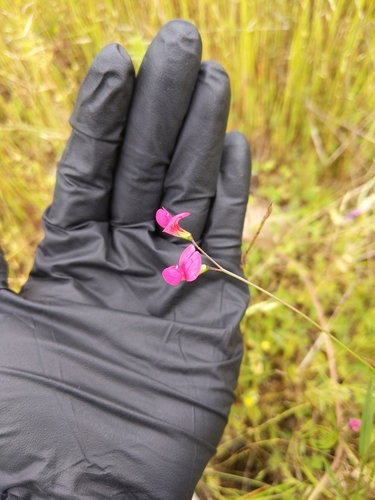
Lathyrus nissolia is an annual legume growing 8-36 inches (20-90 cm) tall on slender, hairless or sparsely hairy stems. The plant lacks the compound leaves and climbing tendrils found in most Lathyrus species; instead, its leaves are reduced to flattened, grass-like phyllodes 2-6 inches (5-15 cm) long and up to 0.2 inch (5 mm) wide, giving non-flowering plants the look of a grass. Solitary flowers appear on long stalks from the leaf axils, each 0.3-0.5 inch (8-13 mm) long, crimson to rose-pink, with the standard, wing, and keel petals of a typical pea flower. Flowering occurs in early summer. Narrow cylindrical seed pods follow, 1.2-2.4 inches (3-6 cm) long, ripening from green to pale brown and holding several rounded seeds. The stems are erect to scrambling but do not climb, and plants grow as scattered individuals rather than dense stands, so the thin phyllodes create limited ground cover. Germination occurs in autumn or spring, and the plant completes its life cycle within a single year, dying after seed set.
Native Range
Native to western, central, and southern Europe, extending into North Africa and western Asia. Grows in rough grassland, hedge banks, roadsides, and disturbed ground, often on clay soils, from sea level to about 1,000 feet (300 m).Suggested Uses
Grown in wildflower meadows, conservation grassland, and naturalistic plantings on poor soils. Suited to informal areas where its scattered habit and grass-like growth blend with other meadow species. Less often used in formal borders because of its sparse form and short flowering season.How to Identify
Appearance
Size & Dimensions
Height8" - 3'
Width/Spread4" - 1'
Bloom Information
Flowers from May to July across most of its range, with peak bloom in June. Individual plants flower over 3-5 weeks. In cooler northern sites flowering may begin in late May and extend into early July. Each flower lasts a few days before forming a pod.
Detailed Descriptions
Flower Description
crimson to rose-pinkFoliage Description
grey-greenGrowing Conditions
Sun Requirements
Requires 6-12 hours of direct sunlight daily
• Full Sun: 6+ hours of direct sunlight
• Partial Shade: 3-6 hours of direct sunlight
• Full Shade: Less than 3 hours of direct sunlight
Water & Climate
Water Needs
Drought Tolerance
Drought tolerant when established
Care & Maintenance
Care Guide
Grows in full sun on free-draining soils and tolerates poor, low-nutrient ground typical of its native grassland. As a legume it fixes atmospheric nitrogen through root nodules and needs no supplementary feeding. Plants are raised from seed sown in autumn or early spring, and scarification can improve germination of the hard-coated seeds. Once established it needs no watering in temperate climates and completes growth within one season. It self-seeds where soil is left undisturbed, though seedling numbers stay low compared with more vigorous vetches. Slugs may graze young seedlings in damp conditions.Pruning
No pruning is required. As an annual, the plant dies after seed set, and dead stems can be cleared in late summer or autumn. Leaving the seed pods in place allows self-seeding for the following year.Toxicity: Not assessed
UnknownPlanting Guide
Planting Methods & Timing
Planting Method
direct sow
Direct Sow Timing
Autumn or early spring
Plant Spacing
6 inches