Rosa, Genus, banksiae, Species,
- Genus & species
lady banks rose
Overview
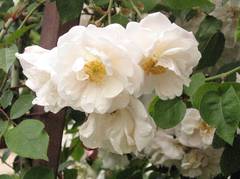
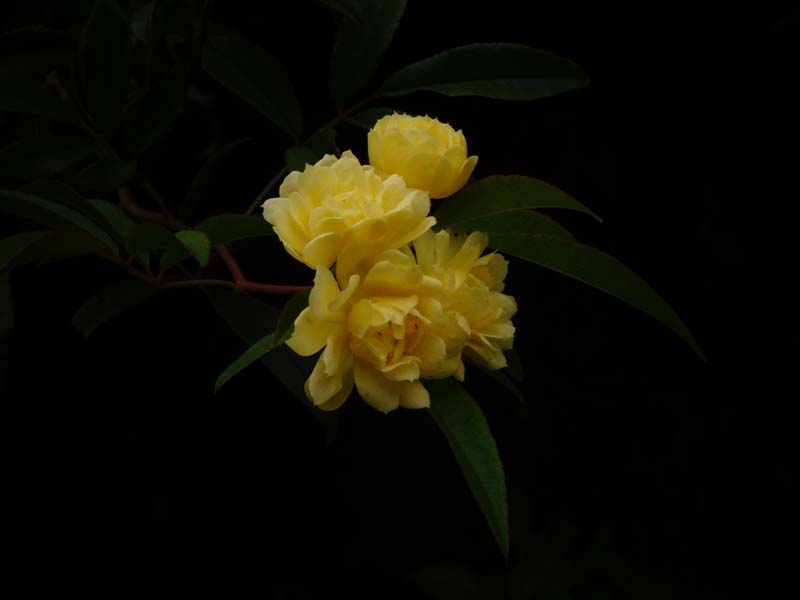
Rosa banksiae is a vigorous evergreen to semi-evergreen climbing rose reaching 20-30 feet (6-9 m) when supported, with stems extending 15-25 feet (4.5-7.5 m) across a structure. Stems are slender and flexible, mostly thornless or carrying very few small thorns concentrated near leaf nodes. Leaves are pinnately compound with 3-7 lance-shaped leaflets 1-3 inches (2.5-7.5 cm) long; foliage remains green in zones 8-11 and partly drops in zones 7-8. Flowers form in clustered corymbs of 3-15 small blossoms; individual flowers measure 0.5-1 inch (1-2.5 cm) across in both the white and yellow forms. The white form (R. banksiae var. banksiae) carries double white flowers with a strong violet-like scent; the yellow form 'Lutea' carries double pale yellow flowers with mild fragrance. Bloom occurs in a single major flush in spring on second-year wood. Plants are not reliably hardy below 10°F (-12°C); top growth dies back to ground level in zones 6-7, reducing bloom in the following spring. Hips do not develop on the double-flowered forms. Lifespan 50-100 years in zones 8-11 with continuous support.
Native Range
Rosa banksiae is native to central and western China, occurring in mountain valleys, scrub, and forest edges of Gansu, Henan, Hubei, Sichuan, and Yunnan provinces at 1,600-7,200 feet (500-2,200 m) elevation. The species was introduced to European and North American horticulture from the early 19th century onward.Suggested Uses
Used to cover pergolas, arbors, walls, and large trees with adequate structural support; mature plants weigh 200-400 pounds (90-180 kg) when wet. Spaced 15-20 feet (4.5-6 m) apart along walls and fences. The thornless habit suits entryways and pathways where snagging would be a concern with thorny climbers; containers are not suitable due to mature size and root spread.How to Identify
Appearance
Size & Dimensions
Height20' - 30'
Width/Spread15' - 25'
Bloom Information
Blooms once per year in spring, March through May depending on latitude and zone, with peak bloom in April in zones 8-9 and May in zones 7-8. Individual blooms last 5-7 days; total bloom period extends 3-5 weeks. Bloom occurs on second-year wood, so plants do not bloom the year of planting. Repeat bloom does not occur after the spring flush.
Detailed Descriptions
Flower Description
White or pale yellow depending on formFoliage Description
Medium to bright greenGrowing Conditions
Sun Requirements
Requires 6-10 hours of direct sunlight daily
• Full Sun: 6+ hours of direct sunlight
• Partial Shade: 3-6 hours of direct sunlight
• Full Shade: Less than 3 hours of direct sunlight
Care & Maintenance
Care Guide
Water 1 inch (2.5 cm) weekly through the first growing season; established plants tolerate 3-4 weeks without rain in zones 8-10 but bloom decreases under prolonged drought. Apply 2-3 inches (5-7.5 cm) of organic mulch annually to retain moisture. Plants tolerate full sun in zones 6-8 and morning sun with afternoon shade in zones 9-11 where summer heat causes leaf scorch. Soil pH 6.0-7.5 with good drainage is required; root rot develops in poorly drained sites. Plants are largely free of black spot, mildew, and rust seen on other roses; aphids may colonize new growth in spring without lasting damage. Lifespan 50-100 years in zones 8-11 on a stable support structure.Pruning
Prune immediately after spring bloom finishes, removing dead, weak, or crossing canes and shaping the plant to its support. Pruning later in the year removes the next season's flower buds, which form on second-year wood. Hard rejuvenation pruning every 5-7 years keeps the plant within bounds and reduces bloom for one to two seasons after the cut. Light tip pruning of long whips can be done at any time without affecting bloom production.Pruning Schedule
Prune: May–June
late spring