Image 1 of 7
1 / 7
Plant Reference
Juniperus, Genus, sabina, Species, 'Tamariscifolia', Cultivar,
- Genus & species
- Cultivar
tam juniper
Species native to mountains of central and southern Europe (Alps, Pyrenees, Carpathians, Balkans) and central Asia; cultivar of garden origin with centuries-long cultivation history in European nursery trade
Overview
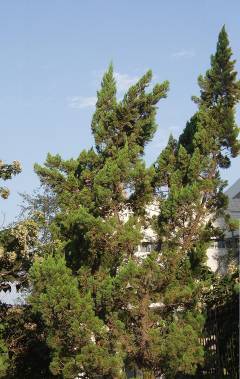
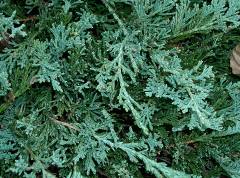
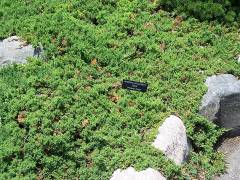
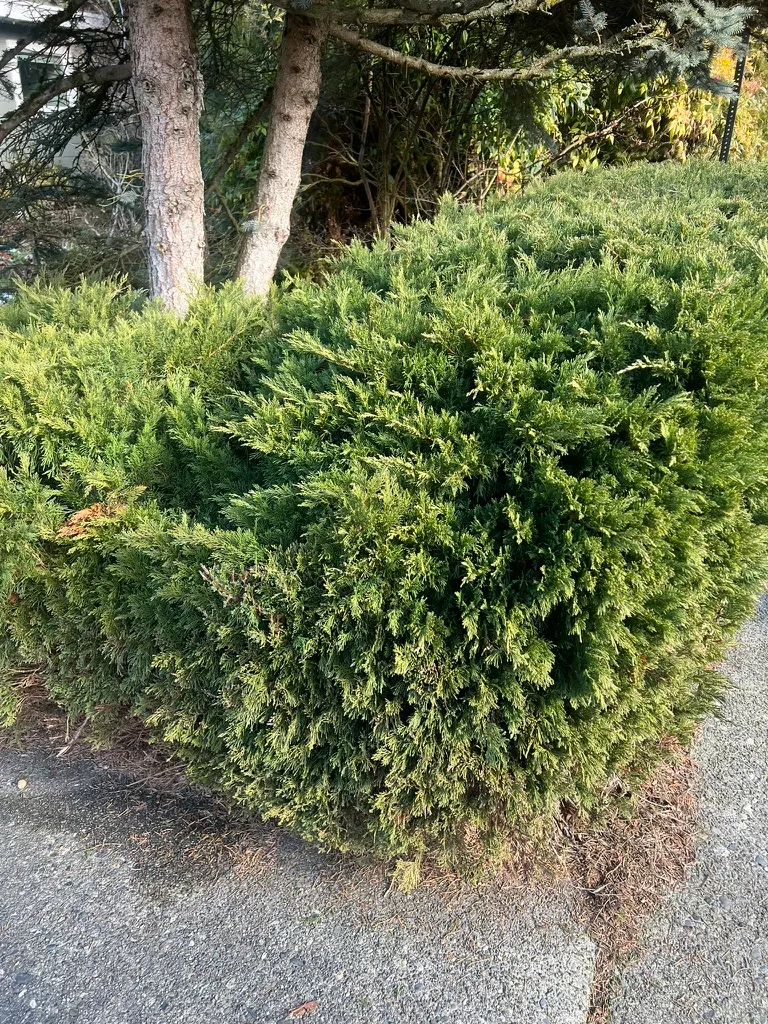
Juniperus sabina 'Tamariscifolia' is a low spreading evergreen coniferous shrub in the cypress family Cupressaceae growing 1.5-3 feet (45-90 cm) tall and 6-10 feet (1.8-3 m) wide on horizontally layered arching branches that produce a soft feathery mounding silhouette. The specific cultivar epithet 'Tamariscifolia' is from Latin tamaricis (of tamarisk) and folia (leaves) and refers to the resemblance of the cultivar's soft scale-like foliage to the leaves of tamarisk (Tamarix species) — the common name tamarix juniper records the same resemblance. Leaves are primarily scale-like adult foliage (appressed, in opposite decussate pairs) mixed with some awl-shaped juvenile needles near the branch tips on young growth, densely packed on the arching branches to produce a soft feathery textural effect across the canopy surface. Limitation: all parts of the plant — foliage, stems, cones, and the pungent volatile oils released when the plant tissue is damaged — contain the terpene compounds sabinyl acetate and sabinol (collectively savin oil), and ingestion is severely toxic to humans, livestock, cats, dogs, and horses with documented fatalities from accidental ingestion and with a long historical record of use as an abortifacient in European folk medicine that also killed the women who took the preparations. The savin-oil scent released when the foliage is crushed is the diagnostic field test that confirms the species and separates J. sabina from the non-toxic J. horizontalis and J. communis. Unlike the Asian J. chinensis and the North American J. scopulorum and J. virginiana, J. sabina is NOT an alternate host for cedar-apple rust (Gymnosporangium juniperi-virginianae) — plantings adjacent to apple or crabapple orchards do not carry the disease-transmission risk that limits siting of the other junipers. The cultivar tolerates extreme cold through USDA zone 3, prolonged drought once established, alkaline and chalky soils up to pH 8.5 (the native range includes limestone and dolomitic mountain slopes), sustained wind, and salt spray in coastal plantings. Juniper tip blight (Phomopsis juniperovora) and spider mites in hot dry summer conditions are the primary pest and disease pressures. Deer-resistant.
Native Range
The species type Juniperus sabina is native to the mountains of central and southern Europe (the Alps, Pyrenees, Carpathians, and Balkan ranges) and across central Asia, growing on rocky slopes, cliffs, and dry mountain pastures at middle to high elevations on limestone, dolomite, and other alkaline bedrock. The cultivar 'Tamariscifolia' is of garden origin and has centuries of cultivation history in the European nursery trade — the cultivar is among the older named juniper selections in western horticulture.Suggested Uses
Used as a low spreading evergreen ground cover, slope stabilization planting on well-drained banks (including alkaline or rocky banks that reject many other ground covers), large-scale mass planting in commercial landscape margins, and xeric-garden anchor at 72-120 inch (180-300 cm) spacing between plants in USDA zones 3 through 7. The soft feathery bright green to blue-green scale-like evergreen foliage, the horizontally layered arching branch architecture, the broad alkaline and rocky soil tolerance (including pH through 8.5), the very low water needs once established, the cold hardiness through USDA zone 3, and the absence of cedar-apple rust alternate-host status (which limits siting of the Asian and North American juniper species) combine to make 'Tamariscifolia' a foundation low-spreading juniper for cold-climate xeric landscapes, alkaline-soil banks, and commercial slope plantings. Narrow planting positions with less than 6 feet of lateral space are unsuitable because of the 6-10 foot mature spread. Households with children, pets, or grazing livestock that may access the foliage or cones should account for the severe savin-oil toxicity of all plant parts; foundation plantings where children or pets regularly play are better served by the non-toxic J. horizontalis cultivars.How to Identify
Appearance
Size & Dimensions
Height1'6" - 3'
Width/Spread6' - 10'
Colors
Foliage Colors
Fall Foliage Colors
Reproduction
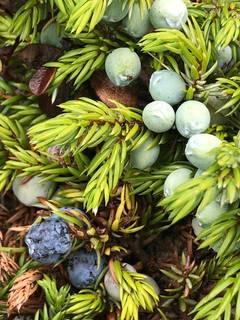
Male plants bear small yellow pollen cones at the branch tips in spring across a 2-week wind-pollinated release period, and female plants bear small round dark blue berry-like seed cones 0.2-0.3 inch (5-8 mm) across covered in a waxy glaucous bloom that ripen over the second year after pollination. Wind-pollinated.
Detailed Descriptions
Foliage Description
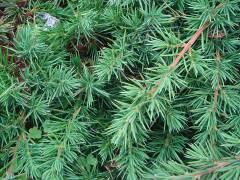
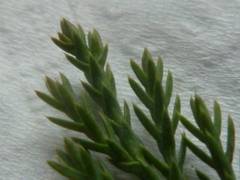
bright green to blue-green with primarily scale-like adult foliage (appressed, in opposite decussate pairs) mixed with some awl-shaped juvenile needles near the branch tips on young growth; the foliage is densely packed on horizontally layered arching branches and produces a soft feathery textural effect across the canopy surface; crushed foliage releases a pungent savin-oil scent (from the sabinyl acetate and sabinol terpene compounds that also produce the species' toxicity); evergreen year-roundGrowing Conditions
Sun Requirements
Requires 6-12 hours of direct sunlight daily
• Full Sun: 6+ hours of direct sunlight
• Partial Shade: 3-6 hours of direct sunlight
• Full Shade: Less than 3 hours of direct sunlight
Care & Maintenance
Care Guide
Site in full sun with 6-12 hours of direct sun per day in well-drained soil of almost any type — loam, sand, rocky, or chalk — across a broad pH range of 5.5-8.5. Very low water needs once established; the cultivar tolerates prolonged summer drought and is well-suited to xeric landscape design. All parts contain savin-oil terpenes (sabinyl acetate and sabinol) and are severely toxic to humans, livestock, cats, dogs, and horses if ingested — the crushed-foliage scent is the diagnostic field test for the species. Unlike the Asian J. chinensis and the North American J. scopulorum and J. virginiana, the cultivar is NOT an alternate host for cedar-apple rust, and apple or crabapple orchards adjacent to the planting do not face the disease-transmission risk that limits siting of the other juniper species. Juniper tip blight (Phomopsis juniperovora) and spider mites in hot dry summer conditions are the primary pest and disease pressures. The spreading canopy reaches 6-10 feet (1.8-3 m) wide at maturity and requires the full allowance of lateral space. Deer-resistant. Hardy in USDA zones 3-7.Pruning
Pruning is done in early spring (March or April) to control the lateral spread or to remove damaged branches; most plantings accept the natural spreading habit without intervention. Junipers do not regenerate from bare wood — pruning cuts must be made back to a junction with a green lateral branch rather than into leafless interior stems, because cuts into leafless wood will not produce new foliage and will leave a permanent brown gap in the canopy. Shearing is avoided for the same reason. Selective removal of individual branches back to a green-lateral junction is the method that preserves the layered architectural habit while controlling outward spread.Pruning Schedule
Prune: March–April
early spring