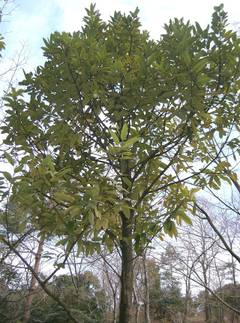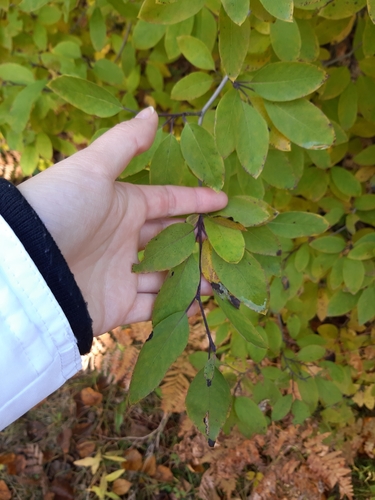
Ilex, Genus, mucronata, Species,
- Genus & species
mountain holly
Overview
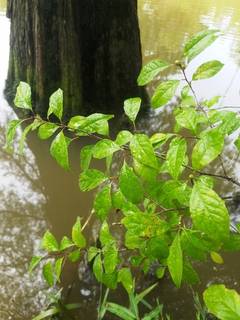
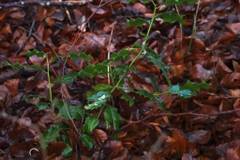
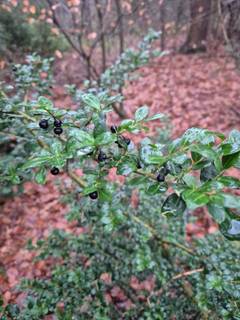
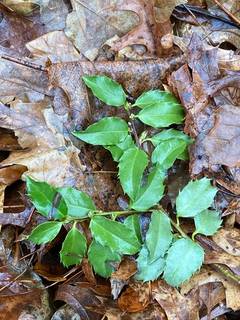
Ilex mucronata is a deciduous shrub in the holly family reaching 6-10 feet (1.8-3 m) tall and 5-8 feet (1.5-2.4 m) wide, with an upright, multi-stemmed habit and slender gray branches. The alternate leaves are elliptic to oblong, 1-2 inches (2.5-5 cm) long, medium green, with a small bristle-like point at the tip, turning yellow before dropping in autumn. It is dioecious to polygamo-dioecious: small greenish-white flowers on thread-like stalks 0.4-1 inch (1-2.5 cm) long open in May and June. Female plants produce dull red, berry-like drupes about 0.25 inch (6 mm) across that ripen in late summer. I. mucronata grows in acidic bogs, swamp margins, and moist coniferous woods across northeastern North America. It requires consistently moist to wet, acidic soil and declines on dry sites or in alkaline conditions. Because fruit set depends on separate male and female plants, isolated specimens produce no fruit. Formerly classified as Nemopanthus mucronatus, it is separated from most other hollies by its long flower stalks and the slender point on each leaf. Growth is slow to moderate, and the shrub tolerates winter cold to USDA zone 3 but not prolonged drought or compacted urban soils.
Native Range
Ilex mucronata is native to northeastern North America, from Newfoundland and Quebec west to Minnesota and south through the Appalachian Mountains to West Virginia. It occurs in cool, acidic wetlands including bogs, swamps, and the margins of ponds and streams.Suggested Uses
Ilex mucronata is used in rain gardens, bog plantings, and naturalized wetland borders, and along pond and stream margins. Its red fruit draws birds in late summer and autumn. It is spaced 5-6 feet (1.5-1.8 m) apart in informal massings.How to Identify
Appearance
Size & Dimensions
Height6' - 10'
Width/Spread5' - 8'
Bloom Information
Small greenish-white flowers open in May and June, shortly after the leaves expand. Male and female flowers occur on separate plants, so only female specimens set fruit, and only when a male plant grows nearby. The bloom is brief, lasting about three weeks.
Detailed Descriptions
Foliage Description
Medium green, turning yellow in autumnGrowing Conditions
Sun Requirements
Requires 4-8 hours of direct sunlight daily
• Full Sun: 6+ hours of direct sunlight
• Partial Shade: 3-6 hours of direct sunlight
• Full Shade: Less than 3 hours of direct sunlight
Care & Maintenance
Care Guide
Ilex mucronata grows in consistently moist to wet, acidic soil with a pH of 4.5-6.0, in full sun to part shade. It establishes in boggy ground, rain gardens, and pond margins where drier-soil shrubs fail, but it declines on dry or alkaline sites. The roots do not tolerate drought once established and need supplemental water during dry spells. Fruit production requires both a male and a female plant within pollinating distance. It needs little fertilizer, and a spring mulch of pine needles or leaf litter maintains soil acidity and moisture. Cold is tolerated to USDA zone 3 without winter protection.Pruning
Ilex mucronata needs little pruning and forms a rounded, multi-stemmed shape on its own. Dead or crossing branches can be removed in late winter before new growth begins. Because flowers form on the previous season's wood, heavy late-spring pruning reduces that year's fruit set.Pruning Schedule
Prune: February–March
early spring