Ilex, Genus, latifolia, Species,
- Genus & species
lusterleaf holly
Japan and eastern China; warm-temperate broadleaf evergreen forests at low to moderate elevations
Overview
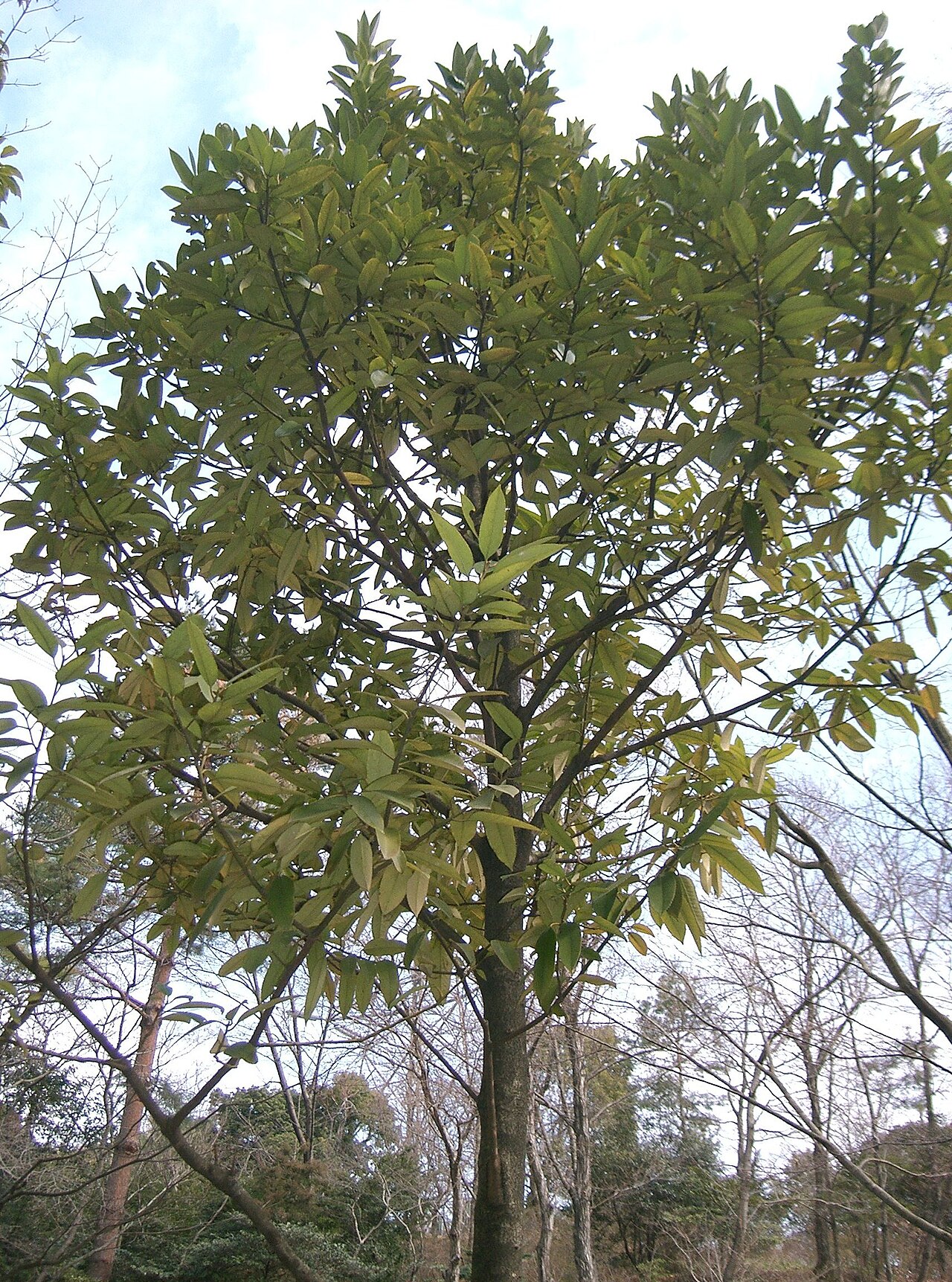
Ilex latifolia is a broadly pyramidal evergreen tree reaching 20–30 feet (6–9 m) tall and 15–20 feet (4.5–6 m) wide. Leaves are dark green, glossy, leathery, oblong to elliptic, 4–8 inches (10–20 cm) long and 1.5–3 inches (4–8 cm) wide, with small, evenly spaced marginal teeth rather than the sharp spines of Ilex aquifolium. The leaf dimensions exceed those of most other cultivated hollies, which typically carry leaves 1–3 inches (2.5–8 cm) long, and the leaf texture and outline resemble Magnolia grandiflora. The species is dioecious; female trees produce dense clusters of red berries 0.3 inch (8 mm) across that ripen in autumn and persist through winter when a compatible male is within pollination range. The trunk develops smooth gray bark. Growth rate is moderate. Hardy in USDA zones 7–9. Cold tolerance is lower than in Ilex aquifolium (zone 6) and Ilex crenata (zone 5), the 20–30 foot (6–9 m) mature height needs substantial space, and berry production requires a male pollinator within pollination range.
Native Range
Ilex latifolia is native to Japan and eastern China, in warm-temperate broadleaf evergreen forests at low to moderate elevations.Suggested Uses
Planted as a specimen tree, evergreen screen, or large hedge at 15–20 foot (4.5–6 m) spacing. The large leaf size and dense evergreen canopy produce a bold visual presence in zone 7–9 gardens, combining with other large-leaf evergreens such as Magnolia grandiflora and Rhododendron species in woodland plantings. The smoother-toothed leaves are less hazardous to handle than the sharp spines of Ilex aquifolium. The mature height of 20–30 feet (6–9 m) and spread of 15–20 feet (4.5–6 m) exceed the space available in small gardens, the species is not hardy below USDA zone 7, and berry production requires a compatible male pollinator.How to Identify
Appearance
Size & Dimensions
Height20' - 30'
Width/Spread15' - 20'
Bloom Information
Produces small greenish-yellow flowers in dense axillary clusters in May and June. Bloom duration is 3 weeks. Flowers are secondary in visual impact to the foliage and bark. Female trees with a compatible male pollinator develop dense clusters of red berries 0.3 inch (8 mm) across that ripen in autumn and persist through winter.
Detailed Descriptions
Flower Description
Small greenish-yellow flowers in dense axillary clusters; female trees develop dense clusters of red berries 0.3 inch (8 mm) across persisting through winterFoliage Description
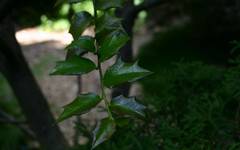
Glossy dark green, leathery, oblong to elliptic, 4–8 inches (10–20 cm) long and 1.5–3 inches (4–8 cm) wide; small evenly spaced marginal teethGrowing Conditions
Sun Requirements
Requires 4-8 hours of direct sunlight daily
• Full Sun: 6+ hours of direct sunlight
• Partial Shade: 3-6 hours of direct sunlight
• Full Shade: Less than 3 hours of direct sunlight
Care & Maintenance
Care Guide
Plant in full sun to partial shade in moist, well-drained loam at pH 5.0–6.5. Hardy in USDA zones 7–9; cold drying winter winds cause leaf burn and tip dieback in zone 7, so a sheltered position or windbreak supports foliage retention. Heat and humidity tolerance is higher than in Ilex aquifolium, and the species holds dense foliage in southeastern US and coastal Pacific Northwest conditions where English holly often declines. A compatible male holly within pollination range is required for berry production on female trees. Water through dry periods during the first two growing seasons to support establishment.Pruning
Prune to shape in late winter before new growth begins. The broadly pyramidal form develops with little intervention, and pruning is generally limited to removing damaged or crossing branches. Lower branches may be removed from established specimens over several seasons to expose the smooth gray bark. Hard renovation pruning is tolerated but recovery spans 2–3 growing seasons.Pruning Schedule
Prune: February
winter