Image 1 of 9
1 / 9
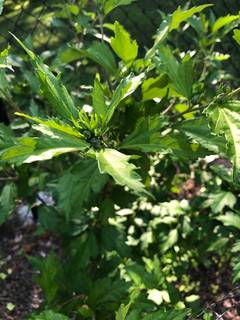
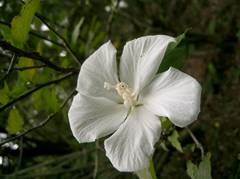
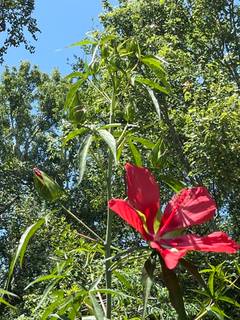
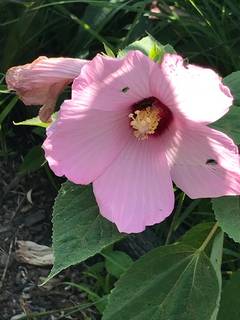
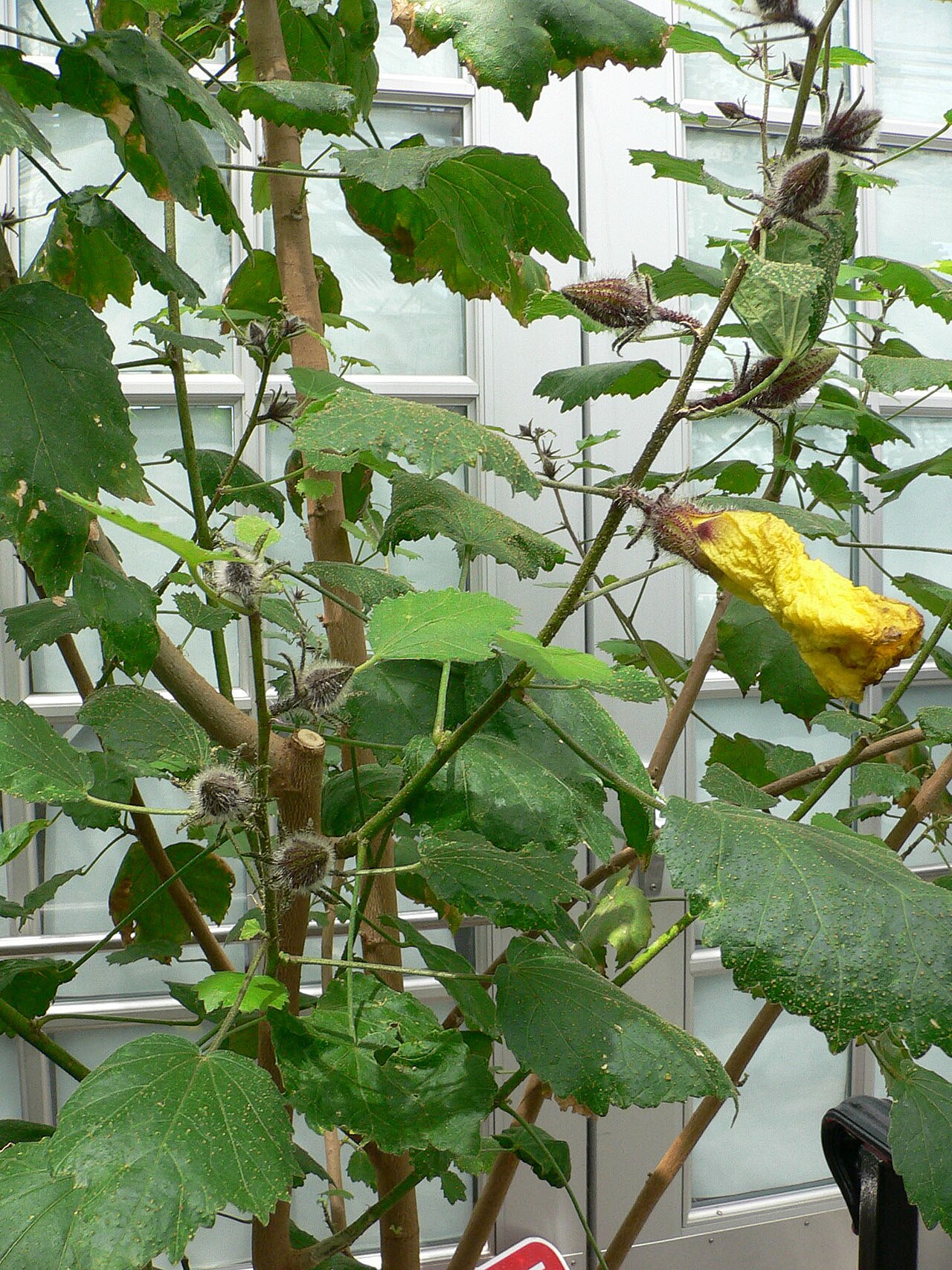
© Pictures taken by Raul654 around Washington DC on May 7, 2005., some rights reserved (CC-BY-SA) · Wikimedia Commons
Hibiscus, Genus, brackenridgei, Species,
- Genus & species
Hawaiian yellow hibiscus
Overview
Hibiscus brackenridgei is a sprawling shrub to small tree 10-30 feet (3-9 m) tall and 8-15 feet (2.4-4.5 m) wide, with slender arching branches and sparsely hairy stems. Leaves are palmately three- to seven-lobed, 2-6 inches (5-15 cm) across, medium green, and shed during extended dry periods. Flowers are yellow throughout, 4-6 inches (10-15 cm) in diameter, with five overlapping petals that sometimes carry a maroon blotch at the base and a projecting staminal column 1-1.5 inches (2.5-4 cm) long. Each flower opens at dawn and drops the same evening, and a plant carries a succession of them from January through May. Fruit is an ovoid capsule about 0.8 inch (2 cm) long splitting into five valves that release hairy brown seeds. Two subspecies are recognized: subsp. brackenridgei on Maui, Molokai, Lanai, and Hawaii island, and subsp. mokuleianus on Oahu and Kauai. The species occupies dry lowland forest and shrubland, a habitat reduced to fragments by fire and grazing, and it is listed as endangered under the United States Endangered Species Act. Chinese rose beetle feeding perforates the leaves through warm wet months, and plants are short-lived at 10-15 years.
Native Range
Hibiscus brackenridgei is endemic to the Hawaiian Islands, growing in dry forest and shrubland between 400 and 2,600 feet (120-800 m) elevation. Records cover Kauai, Oahu, Molokai, Lanai, Maui, and Hawaii island, though surviving wild populations amount to a few hundred plants across scattered sites. It was designated the state flower of Hawaii in 1988.Suggested Uses
Grown in dryland native gardens, coastal landscapes, and roadside plantings in Hawaii at spacings of 10-12 feet (3-3.7 m). Used in leeward dry forest restoration alongside Erythrina sandwicensis and Sida fallax. Container culture in pots of 15 gallons (57 L) or larger allows patio and conservatory growing outside the tropics.How to Identify
Appearance
Size & Dimensions
Height10' - 30'
Width/Spread8' - 15'
Bloom Information
Flowering runs January through May and peaks in February and March at the close of the cooler wet months. Individual flowers open at dawn and abscise by the following morning, so the display rests on a continuous succession of buds. A mature plant opens 5-20 flowers a day at peak. Capsules ripen 6-8 weeks after pollination and split while still on the plant.
Detailed Descriptions
Flower Description
Bright yellow, sometimes with a maroon blotch at the petal baseFoliage Description
Medium greenGrowing Conditions
Sun Requirements
Requires 6-12 hours of direct sunlight daily
• Full Sun: 6+ hours of direct sunlight
• Partial Shade: 3-6 hours of direct sunlight
• Full Shade: Less than 3 hours of direct sunlight
Care & Maintenance
Care Guide
Hibiscus brackenridgei grows in full sun on free-draining soils at pH 6.0-8.0, including rocky and calcareous substrate, and declines where soils stay saturated. Established plants tolerate 4-6 dry months and shed leaves rather than wilt. Irrigation is limited to the establishment period and to prolonged drought in container culture, since overwatering in humid low-light conditions brings on root rot. Hardiness runs to USDA zones 10-11, with foliage damage below 32F (0C). Chinese rose beetle (Adoretus sinicus) skeletonizes leaves overnight in warm wet weather, and aphids and whitefly colonize soft new growth. Plants live 10-15 years and are replaced from seed or semi-hardwood cuttings.Pruning
Pruning is carried out in late spring once flowering finishes, cutting the previous season growth back by about one third to hold the sprawling habit within 8-15 feet (2.4-4.5 m). Flowers form on new wood, so late-summer and autumn cuts remove the following season buds. Dead and crossing branches are taken back to the base at the same time. Renewal cuts into wood over 2 inches (5 cm) in diameter regenerate slowly.Pruning Schedule
Prune: May–June
late springsummer
Container Growing
Suitable for container growing
Minimum container size: 15 gallons