Hibiscus, Genus, arnottianus, Species,
- Genus & species
Hawaiian white hibiscus
Overview
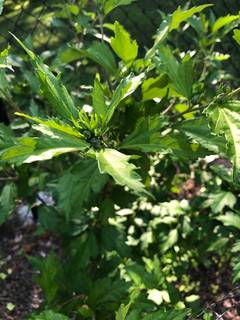
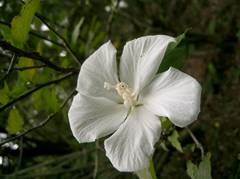
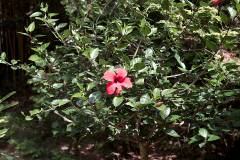
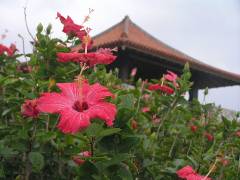
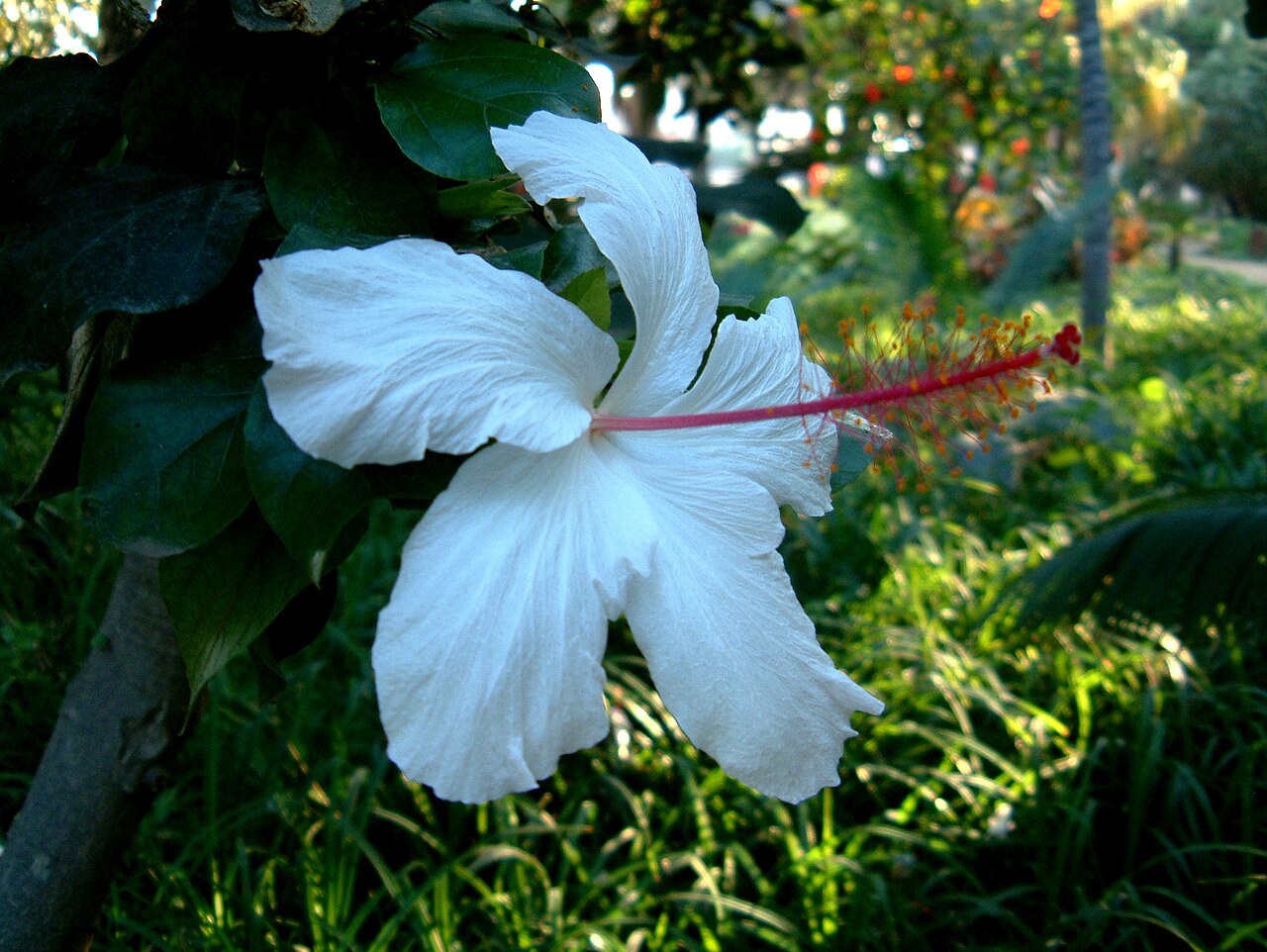
Hibiscus arnottianus is an evergreen shrub to small tree 6-30 feet (2-9 m) tall and 6-15 feet (1.8-4.5 m) wide, with smooth gray bark and an upright, open framework. Leaves are ovate to elliptic, 2-6 inches (5-15 cm) long, glossy dark green, with red-tinged veins and petioles and a smooth or shallowly toothed margin. Flowers are white, 4-6 inches (10-15 cm) across, with five broad petals and a staminal column 3-5 inches (7.5-12.5 cm) long that is usually pink to red and projects well past the petal tips. The flowers carry a light scent, a trait absent from most Hibiscus species, which is why this plant appears in the parentage of many scented modern hibiscus hybrids. Each flower opens at dawn and closes by evening, and plants flower through the year with a spring peak. Three subspecies are recognised: subsp. arnottianus in the Waianae Range of Oahu, subsp. punaluuensis in the Koolau Range, and subsp. immaculatus on Molokai, which carries a white staminal column and is listed as endangered. Plants live 10-20 years, and Chinese rose beetle and aphids feed heavily on soft growth in humid gardens.
Native Range
Hibiscus arnottianus is endemic to the Hawaiian Islands and occurs naturally only on Oahu and Molokai. It grows in mesic and wet forest and on gulch slopes between 1,000 and 3,300 feet (300-1,000 m), where annual rainfall runs 60-150 inches (1,500-3,800 mm). Subspecies immaculatus is confined to a small area of northern Molokai.Suggested Uses
Grown as a specimen shrub, informal hedge, and screen in Hawaiian and subtropical gardens at spacings of 8-10 feet (2.4-3 m). Used in mesic forest restoration on Oahu and Molokai, and in breeding programmes as the source of scent in modern hibiscus hybrids. Container culture in pots of 15 gallons (57 L) or more allows growing under glass outside the tropics.How to Identify
Appearance
Size & Dimensions
Height6' - 30'
Width/Spread6' - 15'
Bloom Information
Flowering continues through the year with the heaviest output between February and June. Individual flowers open at dawn and close by evening, lasting a single day, and a mature plant opens 3-15 flowers a day at peak. Capsules ripen over 6-8 weeks and split into five valves releasing hairy brown seeds. Plants begin flowering 2-4 years from seed or 12-18 months from cuttings.
Detailed Descriptions
Flower Description
White with a pink to red staminal columnFoliage Description
Glossy dark green with red-tinged veinsGrowing Conditions
Sun Requirements
Requires 4-10 hours of direct sunlight daily
• Full Sun: 6+ hours of direct sunlight
• Partial Shade: 3-6 hours of direct sunlight
• Full Shade: Less than 3 hours of direct sunlight
Care & Maintenance
Care Guide
Hibiscus arnottianus grows in full sun to half shade with 4-10 hours of direct light, in free-draining loam or rocky volcanic soil at pH 5.5-7.0. It requires steady moisture rather than seasonal drought, and 40-100 inches (1,000-2,500 mm) of annual rainfall or the irrigation equivalent maintains flowering. Hardiness runs to USDA zones 9b-11, with foliage damage below 30F (-1C) and root death below 25F (-4C). Balanced fertilizer every 8-10 weeks through the warm season sustains continuous flowering, while high-nitrogen feeding produces leafy growth carrying fewer flowers. Chinese rose beetle skeletonizes leaves overnight in warm wet weather, and aphids, whitefly, and hibiscus erineum mite colonize soft shoots. Plants are renewed every 10-20 years, and grafting onto vigorous rootstock is common practice in humid lowland gardens.Pruning
Plants are pruned in early spring ahead of the main flush, cutting the previous season growth back by one quarter to one third to hold the framework compact. Flowers form on new wood, so pruning after midsummer removes the following flush. Water shoots from the base are thinned to 3-5 stems. Cuts into wood over 2 inches (5 cm) in diameter regenerate slowly and often die back.Pruning Schedule
Prune: February–March
early spring
Container Growing
Suitable for container growing
Minimum container size: 15 gallons