Hibiscus, Genus, coccineus, Species,
- Genus & species
scarlet rose mallow
Southeastern United States (from Georgia south through the Atlantic and Gulf coastal plains to Florida and west to Alabama and Louisiana); freshwater marsh, swamp, and wet-meadow habitats with consistently saturated soil and full-sun exposure.
Overview
Hibiscus coccineus is scarlet rose mallow (also called Texas star hibiscus), a native southeastern North American wetland perennial in the mallow family (Malvaceae) growing 48-72 inches (120-180 cm) tall and 36-48 inches (90-120 cm) wide. The species name 'coccineus' is Latin for 'scarlet' or 'deep crimson' and references the brilliant scarlet-red flower color that distinguishes the species from the pink-and-white-flowered relatives in the broader genus. The flower form is the species' principal field-identification character: brilliant scarlet-red 5-petaled star-shaped flowers 5-6 inches (12-15 cm) across with narrow separated petals that do not overlap — producing a five-pointed star flower form completely different from the wide overlapping-petal dinner-plate flower form that Hibiscus moscheutos (rose mallow) produces, and recognizable at viewing distance as a distinct flower-form profile within the genus. Each flower carries the typical Malvaceae floral architecture of a long staminal column projecting from the flower center bearing numerous yellow stamens and a five-branched stigma at the column tip; the staminal column is shared with cotton (Gossypium), okra (Abelmoschus esculentus), and other Malvaceae genera and is a family-diagnostic floral character. The foliage is the species' second principal field-identification character: dark green deeply palmately divided leaves with 5-7 narrow lance-shaped lobes that radiate from a common central point on the leaf petiole, producing a leaf form that resembles cannabis foliage at viewing distance and that frequently produces double-takes from passersby unfamiliar with the species. The deeply divided cannabis-resembling foliage distinguishes the species from the broader-leaved H. moscheutos (which produces ovate undivided leaves) at the foliage-level field-identification scale and is one of the species' most memorable physical traits. The bloom season runs from July through October across a 10-week active flowering window — the long bloom season is among the longer-running flower displays in the native eastern North American perennial flora and the species supplies sustained warm-season color across the late summer and fall. The species is a hummingbird specialist: the brilliant scarlet-red color and the long tubular floral architecture combine to attract hummingbirds intensely, and the species is among the principal native hummingbird-attracting perennials in the southeastern North American native flora. Native to freshwater marsh and swamp habitats of the southeastern United States, the species' wet-substrate physiology means cultivation success depends on consistent moisture: the species performs reliably in pond-margin, rain-garden, and consistently moist border positions and struggles in dry exposed positions. The species emerges late in spring (often May to June, after most border perennials have already initiated growth) from a deep rootstock that survives winter dormancy; gardeners mark the planting location to avoid spring-cleanup damage to the late-emerging rootstock. Hardy to zone 6 with reliable performance across zones 6-10. The species is non-toxic to humans and pets.
Native Range
Hibiscus coccineus is native to the southeastern United States with a continuous native range across Georgia, Florida, Alabama, southern South Carolina, and southern Louisiana. The species occurs in freshwater marshes, cypress swamps, wet-meadow positions, streambank habitats, pond margins, and consistently saturated wetland positions across the southeastern coastal plain native range, where the warm-summer climate, the consistently saturated substrate, and the full-sun exposure of the freshwater wetland habitat create the cultivation conditions the species evolved with. The species has been introduced into ornamental cultivation broadly across the eastern and central United States and is grown in rain gardens, pond-margin plantings, and wet-meadow restoration projects across zones 6-10 where the wet-substrate cultivation requirement can be met.Suggested Uses
Used in rain gardens, pond-margin and streambank plantings, freshwater wetland restoration projects, hummingbird gardens, native-plant gardens, and wet-meadow positions where the wet-substrate cultivation requirement can be met. The species is a hummingbird-attracting native perennial and the brilliant scarlet-red color combined with the long tubular floral architecture combine to attract hummingbirds intensely; gardeners interested in hummingbird support plant the species specifically for the principal pollinator role. The cannabis-resembling deeply palmately divided foliage is a recurring conversation feature in cultivated landscapes — passersby unfamiliar with the species often double-take at the foliage form. The 10-week bloom season supplies sustained warm-season color across the late summer and fall garden. The species pairs with companion wet-substrate native perennials including Hibiscus moscheutos (the rose-pink and white-flowered relative with the contrasting dinner-plate flower form), Lobelia cardinalis (cardinal flower, the other principal native scarlet-red hummingbird-attracting wet-soil perennial), Iris versicolor (blue flag iris), Eutrochium (Joe-Pye weed), and Eupatorium perfoliatum (boneset) for a multi-species wet-meadow native composition where the Hibiscus coccineus scarlet star flowers contrast with the magenta-purple Joe-Pye, the white boneset, the blue iris, and the scarlet-tubular cardinal flower companion blooms.How to Identify
Appearance
Size & Dimensions
Height4' - 6'
Width/Spread3' - 4'
Colors
Bloom Information
Brilliant scarlet-red 5-petaled star-shaped flowers 5-6 inches (12-15 cm) across open at the upper-stem axillary positions from July through October across a 10-week active flowering window. Each flower opens early in the morning and remains open through the day, with individual flowers lasting 1-2 days before withering — the apparent continuous bloom across the 10-week window is produced by the sequential opening of new flowers each day from the upper-stem axillary buds. Each flower carries the typical Malvaceae long staminal column projecting from the flower center bearing numerous yellow stamens and a five-branched stigma at the column tip. Pollination is principally by hummingbirds (the brilliant scarlet-red color and the long tubular floral architecture are characteristic of hummingbird-pollinated flowers across the broader angiosperm flora) and secondarily by butterflies and large bees; the hummingbird-attracting role places the species at the top of native-perennial recommendations for hummingbird gardens across the southeastern and central United States.
Detailed Descriptions
Flower Description
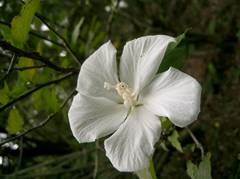
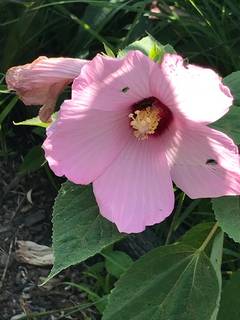
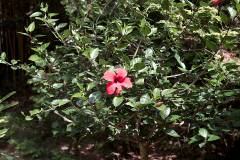
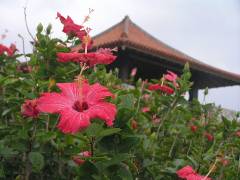
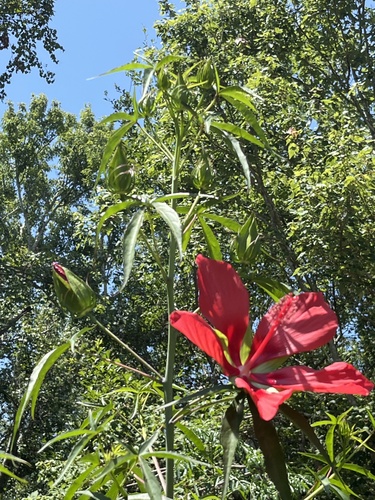
Brilliant scarlet-red, 5-petaled, star-shaped, 5-6 inches (12-15 cm) across; the five petals are narrow and separated rather than overlapping, producing a five-pointed star flower form completely different from the wide overlapping-petal dinner-plate flower form that Hibiscus moscheutos produces; a long staminal column projects from the center of each flower carrying numerous yellow stamens and a five-branched stigma at the column tip — the typical Malvaceae floral architecture shared with cotton, okra, and other Malvaceae generaFoliage Description
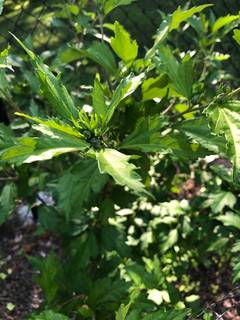
Dark green; deeply palmately divided into 5-7 narrow lance-shaped lobes that radiate from a common central point on the leaf petiole, producing a leaf form that resembles cannabis foliage at viewing distance and that frequently produces double-takes from passersby unfamiliar with the species; the deeply divided leaf form distinguishes the species from the broader-leaved Hibiscus moscheutos (which produces ovate undivided leaves) at the foliage-level field-identification scaleGrowing Conditions
Sun Requirements
Requires 5-10 hours of direct sunlight daily
• Full Sun: 6+ hours of direct sunlight
• Partial Shade: 3-6 hours of direct sunlight
• Full Shade: Less than 3 hours of direct sunlight
Care & Maintenance
Care Guide
Plant in full sun with at least 6 hours of direct light. Wet to consistently saturated soil at pH 5.5-7.5 supports the species reliably; the species' freshwater wetland native habitat reflects a strong physiological preference for consistent moisture, and the species struggles or fails in dry exposed positions where the soil dries between waterings. Watering is essentially continuous because the species' wet-substrate physiology depends on consistent soil moisture; the species tolerates standing water seasonally and grows well in pond-margin, rain-garden, and consistently moist-border positions where wet conditions are the planting-site default. Fertilization is generally not needed because the species is adapted to mineral-rich freshwater wetland substrate. The species emerges late in spring (often May to June, after most border perennials have already initiated growth), and gardeners mark the planting location with a label or marker to avoid accidental spring-cleanup damage to the dormant rootstock; cleanup of standing dead stems is delayed until late spring when new growth confirms the rootstock survived winter. Cut the standing dead stems to ground level after frost in fall or in late spring before new growth emerges. The species is hardy to zone 6 with reliable performance across zones 6-10. Hummingbird gardens benefit from the species' principal pollinator-attraction role; the brilliant scarlet-red color and the long tubular floral architecture combine to attract hummingbirds intensely.Pruning
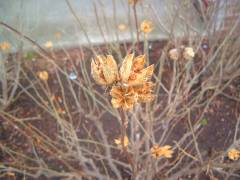
Cut the standing dead stems to ground level either after frost in fall or in late spring before new growth emerges from the dormant rootstock. The species emerges late in spring (often May to June), and early-spring cleanup risks accidentally damaging the late-emerging rootstock if the planting location is not clearly marked — gardeners label or mark the planting location to identify the dormant position through the late-emergence period.Pruning Schedule
Prune: March
early spring