Hibiscus, Genus, syriacus, Species, 'Diana', Cultivar,
- Genus & species
- Cultivar
diana rose of sharon
Species native to China and India; Diana developed U.S. National Arboretum, Washington D.C.
Overview
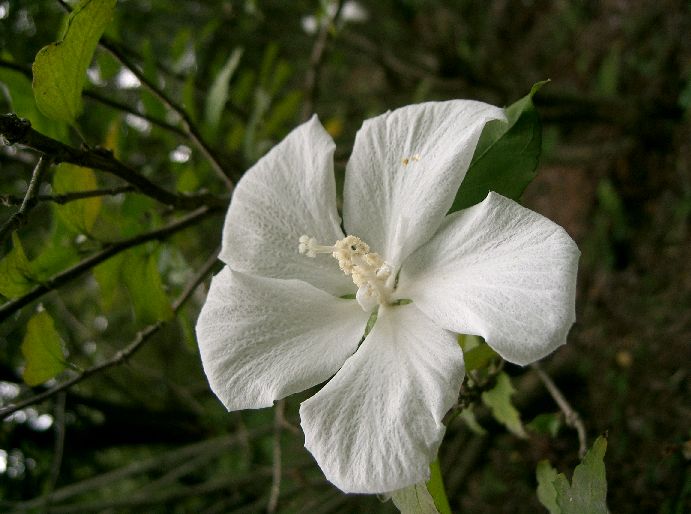
Hibiscus syriacus 'Diana' is an upright, vase-shaped, deciduous shrub reaching 8–12 feet (2.4–3.6 m) tall with a spread of 6–8 feet (1.8–2.4 m). This cultivar, developed at the U.S. National Arboretum, produces large, pure white, single flowers 4–5 inches (10–13 cm) across that remain open at night (unlike most rose of Sharon cultivars, which close in evening). The flowers have broad, overlapping, slightly ruffled petals with no eye zone—a clean, solid white. Flowers appear from July through September on current-season growth. 'Diana' is a triploid cultivar, producing few to no viable seeds—reducing the self-seeding problem that makes the species invasive in some regions. The foliage is medium green, coarsely toothed, 3-lobed. Leafs out late in spring (May). Growth rate is moderate. Hardy to zone 5.
Native Range
Hibiscus syriacus is native to China and India (despite the species name syriacus, which incorrectly suggests Syria). 'Diana' was developed at the U.S. National Arboretum, Washington, D.C.Suggested Uses
Planted as a specimen, hedge, or screen at 6–8 foot (1.8–2.4 m) spacing. The late bloom (July–September) fills a gap when few other shrubs flower. The triploid nature (near-seedless) avoids the self-seeding invasiveness of the species—important in regions where H. syriacus self-seeds aggressively. Functions as an informal hedge. The late leafing (May) leaves bare stems visible longer than most deciduous shrubs. Not suitable for impatient gardeners (slow to leaf out), very cold zones below 5, or waterlogged soils.How to Identify
Appearance
Size & Dimensions
Height8' - 12'
Width/Spread6' - 8'
Bloom Information
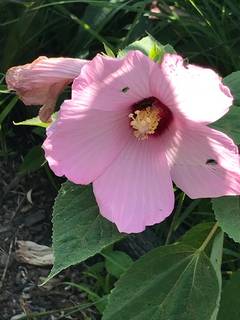
Single flowers 4–5 inches (10–13 cm) across, pure white with broad overlapping petals, no eye zone, from July through September. Individual flowers last 1–2 days. Flowers remain open at night (unlike most cultivars). Bloom duration is 8–10 weeks on current-season growth.
Detailed Descriptions
Flower Description
Pure white; single 4-5 inches; broad overlapping petals; no eye zone; open at nightFoliage Description
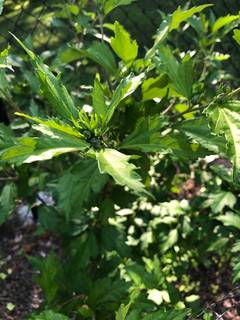
Medium green, coarsely toothed, 3-lobed; late to leaf out (May)Growing Conditions
Sun Requirements
Requires 6-10 hours of direct sunlight daily
• Full Sun: 6+ hours of direct sunlight
• Partial Shade: 3-6 hours of direct sunlight
• Full Shade: Less than 3 hours of direct sunlight
Care & Maintenance
Care Guide
Plant in full sun in average to moist, well-drained soil. Hardy to zone 5. Leafs out very late in spring (May)—do not assume dead. Blooms on current-season growth—can be pruned hard in late winter without losing flowers. Tolerates heat, humidity, and a range of soil conditions including clay and alkaline.Pruning
Prune in late winter to early spring before new growth. Blooms on current-season wood, so hard pruning in spring increases flower size while reducing total number. Can be trained as a single-trunk small tree or left as a multi-stemmed shrub. Remove any suckers to maintain form.Pruning Schedule
Prune: February–March
late spring