Hibiscus, Genus, denudatus, Species,
- Genus & species
rock hibiscus
Southwestern United States and northern Mexico deserts
Overview
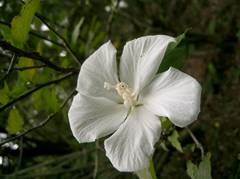
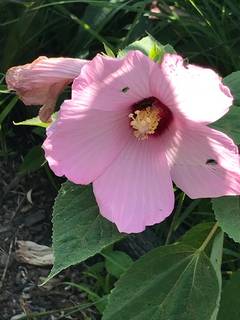
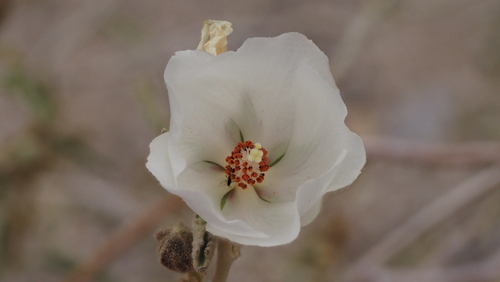
Hibiscus denudatus is a small, woody-based subshrub in the mallow family, forming a loose, rounded mound 1–2 feet (30–60 cm) tall and wide on slender, brittle stems. The small grey-green leaves are 0.4–1 inch (1–2.5 cm) long, oval with toothed margins, and covered in minute star-shaped hairs that give them a soft, felted surface. The flowers are 0.75–1.5 inches (2–4 cm) across, with five overlapping pale lavender to pinkish-white petals, each marked with a deep red to maroon spot at the base that forms a dark eye around the central column. Flowering can occur through much of the year in mild deserts, with peaks after rainfall in spring and autumn. It grows on dry, rocky slopes, washes, and desert flats of the southwestern United States and northern Mexico, generally below 4,000 feet (1,200 m). The plant is sparse and open in habit, with widely spaced foliage. It withstands intense heat and drought but is sensitive to frost and to wet, poorly drained soils.
Native Range
Hibiscus denudatus is native to the deserts of the southwestern United States and northern Mexico, including the Sonoran, Mojave, and Chihuahuan deserts of California, Arizona, New Mexico, Texas, and adjacent Mexican states.Suggested Uses
It is used in desert and rock gardens, xeric borders, and container plantings in frost-prone areas. It grows among boulders and gravel mulch in low-water landscapes.How to Identify
Appearance
Size & Dimensions
Height1' - 2'
Width/Spread1' - 2'
Colors
Bloom Information
Flowering can occur in any month under mild desert conditions, with the heaviest bloom in spring and again after summer or autumn rains. Individual flowers last about a day. Bloom slows during the coldest and driest periods.
Detailed Descriptions
Flower Description
pale lavender to pink with maroon centerFoliage Description
grey-greenGrowing Conditions
Sun Requirements
Requires 6-12 hours of direct sunlight daily
• Full Sun: 6+ hours of direct sunlight
• Partial Shade: 3-6 hours of direct sunlight
• Full Shade: Less than 3 hours of direct sunlight
Care & Maintenance
Care Guide
Hibiscus denudatus grows in full sun on sharply drained rocky, sandy, or gravelly soils. Once established it withstands extreme heat and prolonged drought and needs only occasional deep watering. It is sensitive to frost and is grown outdoors only in mild-winter desert regions or kept in containers elsewhere. Light watering during warm weather extends the bloom, but wet or poorly drained soil causes root rot. Heavy feeding produces weak, leggy growth rather than denser form.Pruning
Light tip-pruning in spring encourages branching and a fuller shape. Dead or frost-damaged stems are removed once new growth resumes. The brittle stems break easily, so handling is kept to a minimum.Pruning Schedule
Prune: March
early spring
Container Growing
Suitable for container growing
Minimum container size: 3 gallons