Hibiscus, Genus, trionum, Species,
- Genus & species
Flower-of-an-hour
Africa, Mediterranean, and central Asia
SunFull Sun
Overview
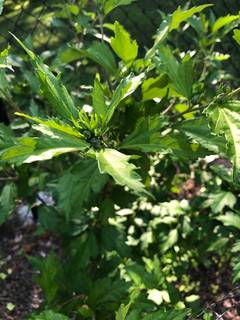
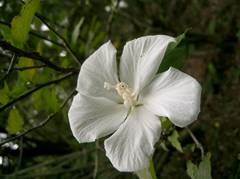
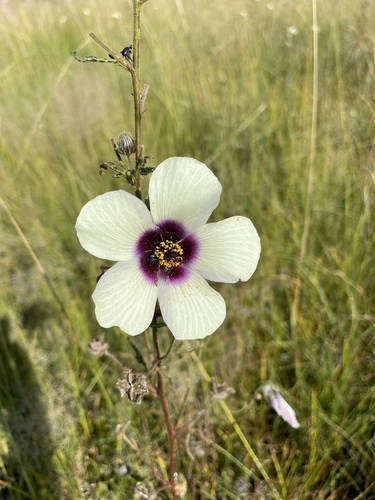
Hibiscus trionum is an annual in the mallow family growing 8-24 inches (20-60 cm) tall with a spreading, branching, somewhat sprawling habit and bristly stems. The leaves are 1-3 inches (2.5-7.5 cm) long and deeply cut into three to five narrow, toothed lobes. The flowers are 1-1.5 inches (2.5-4 cm) across with five pale cream to yellow petals and a dark maroon to purple center surrounding a column of stamens; each flower opens for only a few hours, usually in the morning, before closing, which gives the plant its common name. The fruit is enclosed in an inflated, papery, dark-veined calyx that persists after the petals fall. Native to parts of Africa, the Mediterranean, and central Asia, it has naturalized across much of North America, Australia, and Europe, where it grows in fields, gardens, and disturbed ground and is treated as a weed in many crops. H. trionum tolerates heat and dry soil but is killed by frost, completing its life cycle in a single season. It self-seeds heavily and the hard-coated seeds can persist in soil for years, so it can become persistent once introduced.
Native Range
Native to parts of Africa, southern Europe and the Mediterranean, and central and southern Asia. It has naturalized widely in North America, Australia, and temperate Europe, colonizing cultivated fields, gardens, and disturbed open ground.Suggested Uses
Occasionally grown in annual borders, wildflower mixes, and containers for its dark-centered flowers and ornamental inflated seed pods, spaced 10-12 inches (25-30 cm) apart. More often it is encountered as a volunteer or field weed than as a deliberate planting. The flowers draw bees during their brief daily opening.How to Identify
Appearance
Size & Dimensions
Height8" - 2'
Width/Spread8" - 1'6"
Bloom Information
Flowers appear from summer into early fall, mainly July to September, opening a few at a time. Each bloom lasts only part of a morning, but the plant produces flowers in succession over many weeks. The persistent inflated calyces remain through the fruiting period.
Detailed Descriptions
Flower Description
cream to pale yellow with maroon centerFoliage Description
greenGrowing Conditions
Sun Requirements
Requires 6-12 hours of direct sunlight daily
• Full Sun: 6+ hours of direct sunlight
• Partial Shade: 3-6 hours of direct sunlight
• Full Shade: Less than 3 hours of direct sunlight
Water & Climate
Water Needs
Drought Tolerance
Drought tolerant when established
Care & Maintenance
Care Guide
Grow H. trionum in full sun and average, well-drained soil; it tolerates poor, dry, and disturbed ground. As a warm-season annual it germinates after soils warm, flowers through summer, and dies at first frost. It needs little water once established and no fertilizer in average soil. It self-sows freely, and its hard-coated seeds remain viable in the soil for years, so volunteers often appear in later seasons. Where it is unwanted, removing plants before the calyces ripen limits spread. It has few serious pests, though it can host the same diseases as related mallows.Pruning
Pruning does not apply to this short-lived annual. Pinching the stem tips early encourages a bushier form, and removing developing seed pods reduces unwanted self-sowing.Container Growing
Suitable for container growing
Minimum container size: 2 gallons
Toxicity
Non-toxicPlanting Guide
Planting Methods & Timing
Planting Method
direct sow
Indoor Start
6 weeks before last frost
Direct Sow Timing
After last frost when soil is warm
Days to Maturity
70–100 days
Plant Spacing
12 inches