Erythrina, Genus, sandwicensis, Species,
- Genus & species
Wiliwili
Overview
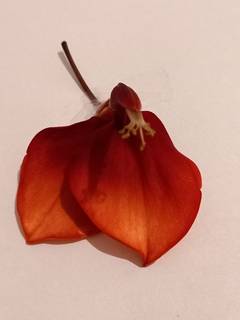
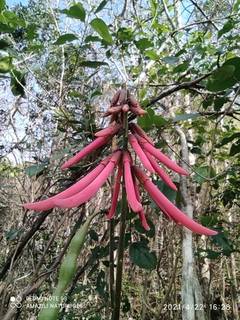
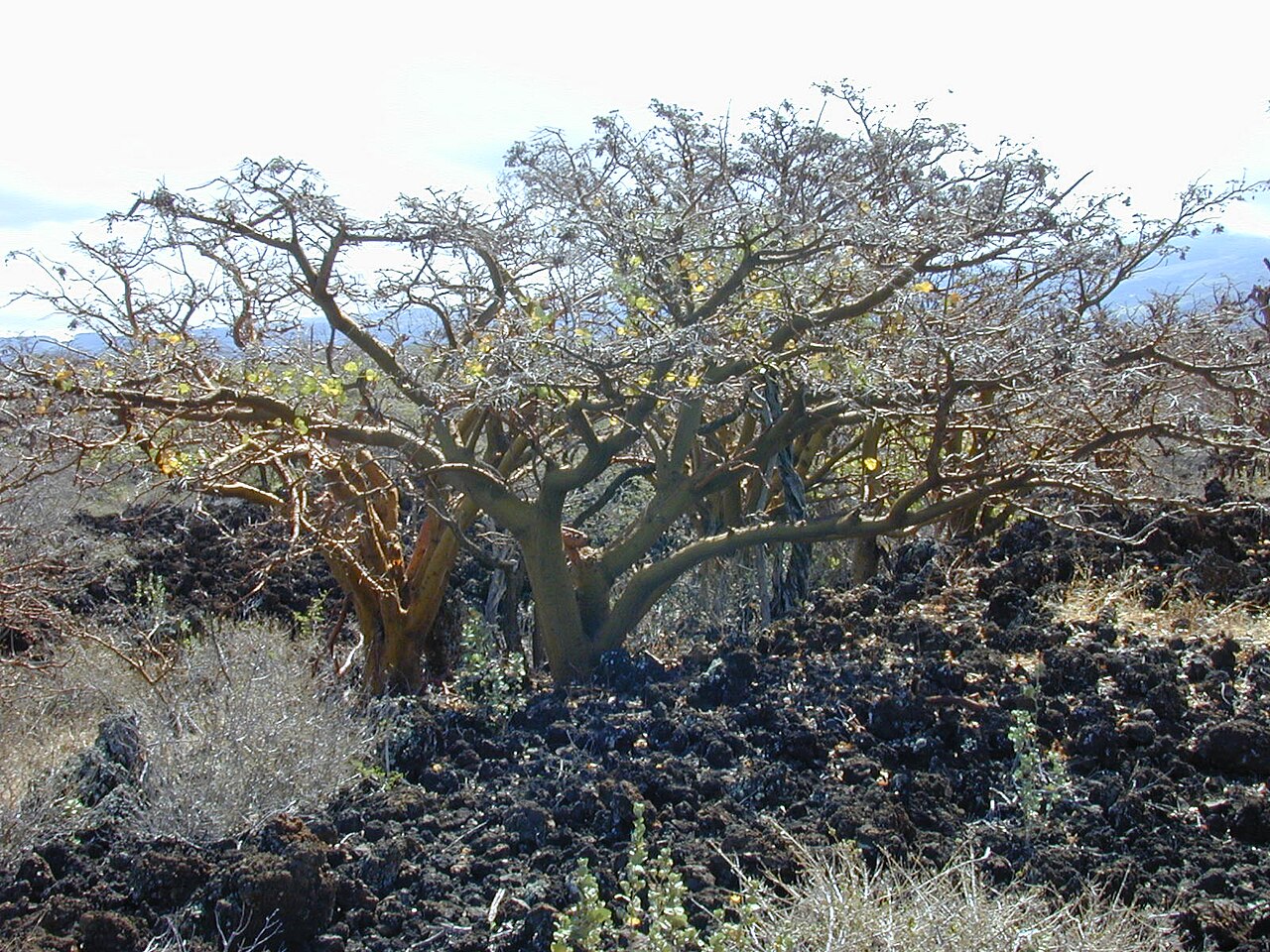
Erythrina sandwicensis is a deciduous tree endemic to Hawaiian dry forest, 15-30 feet (4.5-9 m) tall with a broad low crown 20-40 feet (6-12 m) across. The trunk is stout and often crooked, with smooth orange-tinged bark and scattered short prickles on young wood. Leaves are trifoliate with broadly triangular leaflets 2-4 inches (5-10 cm) long, and the tree sheds them through the summer dry season, flowering on bare branches. Racemes stand stiffly upright at the branch tips, each carrying 10-30 curved pea-type flowers 1.5-2.5 inches (4-6 cm) long. Flower colour varies between individual trees within a single population and runs through orange, salmon, red, yellow, pale green, and white. Pods are 3-6 inches (8-15 cm) long and constricted between the seeds, which are orange-red or yellow and about 0.5 inch (1.3 cm) long. The wood has a density near 0.25 grams per cubic centimetre, roughly a third that of Acacia koa, and was worked into canoe outrigger floats and surfboards. Since 2005 the Erythrina gall wasp (Quadrastichus erythrinae) has deformed new growth and killed trees across the islands, and populations now lean on a biocontrol parasitoid released in 2008. Seeds contain erythrina alkaloids and are toxic when swallowed.
Native Range
Erythrina sandwicensis is endemic to the Hawaiian Islands and occurs on all the main islands in leeward dry forest and shrubland from sea level to 2,000 feet (600 m). It grows where annual rainfall is 10-30 inches (250-760 mm) and a 4-6 month dry season is normal. Hawaiian dry forest now covers under 10 percent of its former extent.Suggested Uses
Planted as a specimen and street tree in dry leeward landscapes at spacings of 25-40 feet (7.5-12 m), where summer leaflessness matches the dry season. Used in Hawaiian dry-forest restoration alongside Sida fallax and Sophora chrysophylla. Seeds are strung into lei, and the light wood was historically shaped into canoe outrigger floats, surfboards, and net floats.How to Identify
Appearance
Size & Dimensions
Height15' - 30'
Width/Spread20' - 40'
Bloom Information
Flowering runs July through November and peaks between August and October while the tree is leafless. Individual racemes stay in flower for 2-3 weeks and a tree flowers across roughly 12 weeks. Pods ripen 3-4 months later and split on the tree, releasing seeds that stay viable for several years. Trees begin flowering at 5-8 years old.
Detailed Descriptions
Flower Description
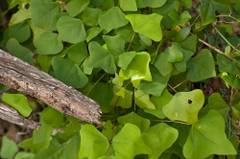
Orange, salmon, red, yellow, pale green, or white depending on the individual treeFoliage Description
Light greenGrowing Conditions
Sun Requirements
Requires 6-12 hours of direct sunlight daily
• Full Sun: 6+ hours of direct sunlight
• Partial Shade: 3-6 hours of direct sunlight
• Full Shade: Less than 3 hours of direct sunlight
Care & Maintenance
Care Guide
Erythrina sandwicensis requires full sun and sharply drained rocky, sandy, or lava substrate at pH 6.0-8.0. It withstands 6-8 dry months without irrigation once established and declines where soil holds water through the wet season. Summer irrigation cuts across the natural cycle, since the tree drops its leaves and flowers under dry conditions, and watering through that period lowers flower output. Hardiness reaches USDA zones 10-11, with damage below 32F (0C). The Erythrina gall wasp is the governing pest, producing curled, thickened leaves and shoot dieback, and untreated infestations kill young trees within 2-3 years. Systemic treatment and released biocontrol parasitoids reduce the damage without eliminating it. Fertilizer is unnecessary on the lean soils this species occupies.Pruning
Pruning is done in late autumn after pods drop and addresses structure rather than size, since the crown naturally spreads about twice as wide as tall. Gall-damaged shoot tips are cut back into clean wood and taken off the site. The wood is soft and low in density, so cuts over 3 inches (7.5 cm) in diameter decay quickly and are kept to a minimum. Prickles on young wood slow hand-pruning.Pruning Schedule
Prune: November–December
fallwinter