Acacia, Genus, koa, Species,
- Genus & species
Koa
Overview
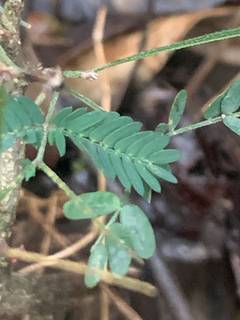
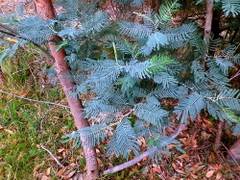
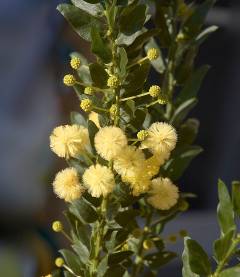
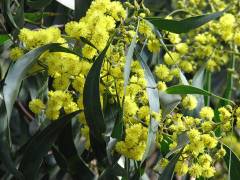
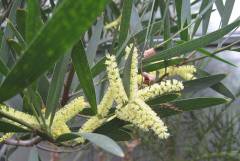
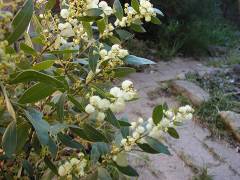
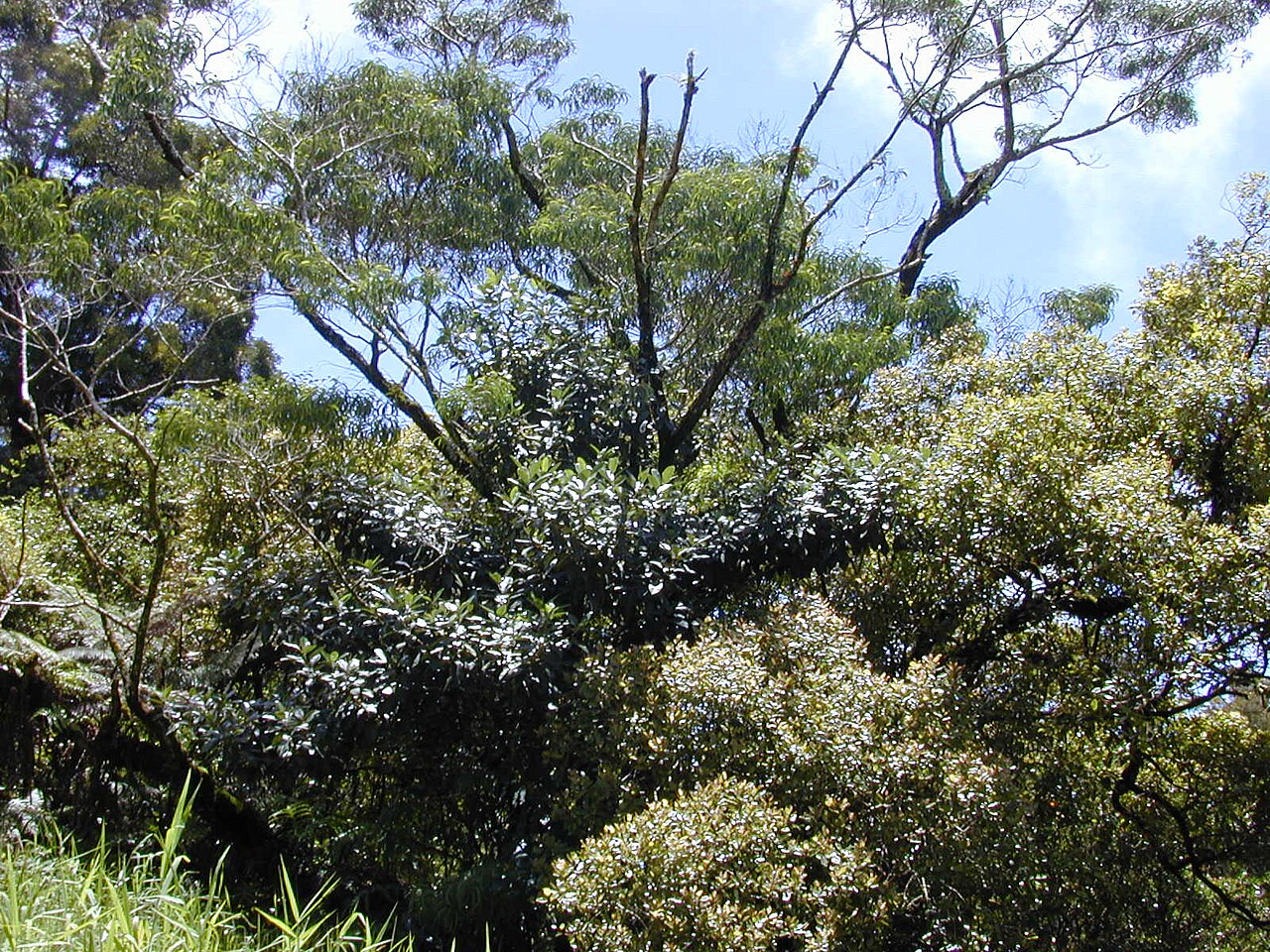
Acacia koa is a canopy tree endemic to the Hawaiian Islands, reaching 50-80 feet (15-25 m) tall with a spreading crown 40-60 feet (12-18 m) wide and trunk diameters of 3-6 feet (0.9-1.8 m) on mature forest specimens. Seedlings first produce true bipinnate compound leaves with 12-24 leaflet pairs; within the first year these give way to flattened, sickle-shaped phyllodes 4-10 inches (10-25 cm) long and 0.5-1 inch (1.3-2.5 cm) wide that carry out photosynthesis for the rest of the tree's life. Juvenile plants often bear both leaf forms at once. Bark is smooth and gray on young trunks, becoming furrowed and scaly with age. Pale yellow flower heads 0.3 inch (8 mm) across cluster in the phyllode axils, followed by flat brown pods 3-6 inches (8-15 cm) long holding 6-12 dark seeds. Growth runs 3-5 feet (0.9-1.5 m) per year on young trees, and root nodules fix atmospheric nitrogen. Trees below 2,000 feet (600 m) are frequently killed by koa wilt, a soil-borne Fusarium oxysporum infection, and lifespan under those conditions is often under 20 years compared with 60 years or more in upland forest.
Native Range
Acacia koa is endemic to the Hawaiian Islands and occurs naturally on Kauai, Oahu, Molokai, Lanai, Maui, and Hawaii island. It grows in mesic and wet forest between 200 and 7,000 feet (60-2,100 m) elevation, and is most abundant between 2,000 and 6,000 feet (600-1,800 m). Its range has contracted through pasture clearing and browsing by feral cattle, goats, and deer.Suggested Uses
Planted as a shade and canopy tree in large landscapes, parks, and pasture windbreaks at spacings of 20-30 feet (6-9 m). Used extensively in Hawaiian watershed reforestation and in koa timber plantations, where nitrogen fixation supports interplanted understorey species. The heartwood is milled for furniture, ukuleles, canoe hulls, and bowls on harvest rotations of 25-40 years.How to Identify
Appearance
Size & Dimensions
Height50' - 80'
Width/Spread40' - 60'
Colors
Bloom Information
Flowering runs from January through April in most populations, with scattered heads opening at other times of year on individual trees. Each pale yellow head opens over 2-3 days and a full flowering episode lasts 6-10 weeks. Pods mature 6-9 months after flowering and persist on the tree into the following season. Trees begin flowering at 4-6 years old.
Detailed Descriptions
Foliage Description
Blue-green to gray-green phyllodesGrowing Conditions
Sun Requirements
Requires 6-12 hours of direct sunlight daily
• Full Sun: 6+ hours of direct sunlight
• Partial Shade: 3-6 hours of direct sunlight
• Full Shade: Less than 3 hours of direct sunlight
Care & Maintenance
Care Guide
Acacia koa grows in full sun and reaches full size only where annual rainfall is 40-100 inches (1,000-2,500 mm). It requires deep, free-draining volcanic loam or rocky substrate at pH 5.0-7.0; standing water at the root collar causes rapid decline. Root nodules fix atmospheric nitrogen, so nitrogen fertilizer is unnecessary and high-nitrogen feeding produces weak, wind-prone shoots. Cattle, goats, pigs, and deer browse unfenced seedlings to ground level. Koa wilt, caused by Fusarium oxysporum f. sp. koae, is the main disease pressure below 2,000 feet (600 m), and the black twig borer (Xylosandrus compactus) tunnels into branch tips throughout the range. Hardiness extends to USDA zones 10-11, and temperatures below 28F (-2C) damage young foliage.Pruning
Formative pruning in the first 3-5 years removes competing leaders and produces a single straight trunk for timber use. Cuts are made in dry weather between June and September, when soil-splash spore loads are lower. Branches over 3 inches (7.5 cm) in diameter close slowly and the exposed heartwood becomes an entry route for decay fungi. Wind damage in mature crowns is common, and broken limbs are cut back to the branch collar.Pruning Schedule
Prune: June–September
summer