Sophora, Genus, chrysophylla, Species,
- Genus & species
Mamane
Overview
Sophora chrysophylla is an evergreen tree or shrub in the Fabaceae ranging from 6 feet (1.8 m) at treeline to 50 feet (15 m) in sheltered lower forest, with trunks reaching 24 inches (60 cm) across on old plants. Leaves are pinnately compound, 2-6 inches (5-15 cm) long, with 6-20 pairs of oblong leaflets 0.3-0.8 inch (8-20 mm) long; new growth carries dense golden hairs that wear away as the leaves age. Flowers are pea-shaped, yellow, 0.6-1 inch (15-25 mm) long, and grouped in clusters of 3-10 at the branch tips. Fruit is a pod 2-5 inches (5-13 cm) long with four papery wings running its length, pinched in between the 3-8 orange-yellow seeds inside. Seeds contain quinolizidine alkaloids. Roots form nodules with nitrogen-fixing bacteria. Growth runs 12-24 inches (30-60 cm) per year, and plants flower 3-5 years from seed. Form shifts with elevation: plants above 8,000 feet (2,440 m) grow as low multi-stemmed shrubs, while trees below 5,000 feet (1,525 m) develop a single trunk. Seedlings are killed by sheep and goat browsing, and stands fail to regenerate where ungulates have access.
Native Range
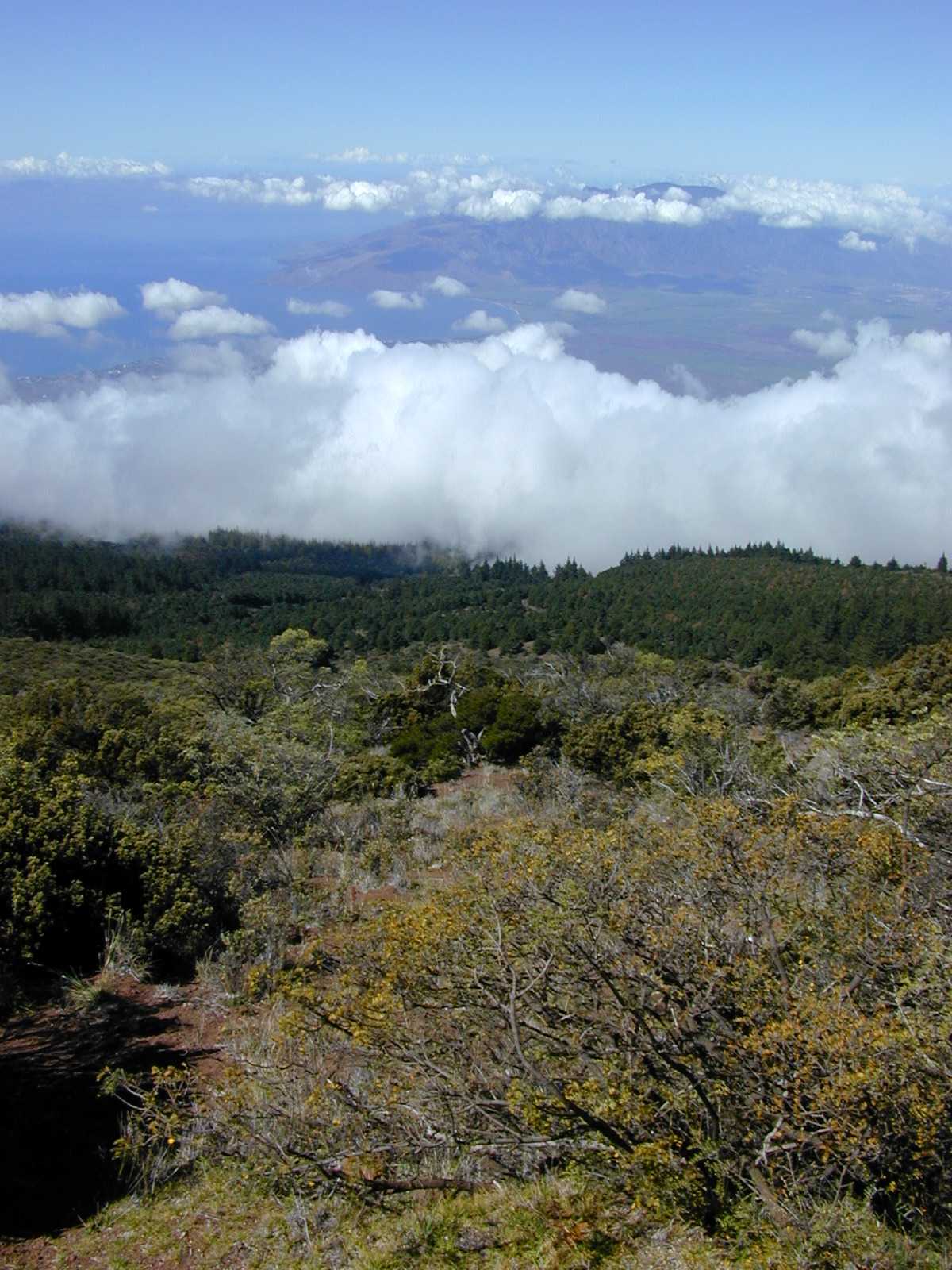
Endemic to the Hawaiian Islands, present on Kauai, Oahu, Molokai, Lanai, Maui, and Hawaii Island. It grows in dry and mesic forest, subalpine woodland, and on lava substrates between about 1,300 and 10,000 feet (400-3,050 m). Continuous stands cover the upper slopes of Mauna Kea and Haleakala.Suggested Uses
Planted in dry and subalpine native Hawaiian gardens and in reforestation on Mauna Kea and Haleakala at 12-20 foot (3.7-6 m) spacing. The tree is the main food source for the palila, Loxioides bailleui, a Hawaiian honeycreeper that eats the immature seeds despite their alkaloid content. The hard dense wood was worked into digging sticks, fence posts, and sled runners.How to Identify
Appearance
Size & Dimensions
Height6' - 50'
Width/Spread6' - 25'
Bloom Information
Flowering runs from December through May, with the peak shifting later at higher elevations: plants below 4,000 feet (1,220 m) flower December to March, while subalpine stands above 8,000 feet (2,440 m) flower March to May. Individual clusters last 2-3 weeks, and a tree flowers across 8-12 weeks. Pods ripen 4-6 months after flowering and hang on the tree for a further 6-12 months. Scattered flowers open outside the main season, giving overlapping crops of flowers and pods.
Detailed Descriptions
Foliage Description
gray-green with golden hairs on new growthGrowing Conditions
Sun Requirements
Requires 6-12 hours of direct sunlight daily
• Full Sun: 6+ hours of direct sunlight
• Partial Shade: 3-6 hours of direct sunlight
• Full Shade: Less than 3 hours of direct sunlight
Care & Maintenance
Care Guide
Seed needs scarification and germinates in 1-4 weeks once the coat is nicked; untreated seed can sit dormant for years. Seedlings grow in free-draining soil with 4-6 hours of direct sun in the nursery and are planted out at 12-18 inches (30-45 cm) tall. Water weekly through the first year, then during dry spells longer than 6 weeks; established trees grow on 15-25 inches (380-635 mm) of annual rainfall. Soil must drain freely at pH 6.0 to 7.5, since roots rot in ground that holds water more than a few days. Sheep, goats, and cattle browse seedlings and strip bark from young trunks, ending regeneration in unfenced stands. Lifespan runs 60-100 years or more on dry subalpine sites.Pruning
Branches are shortened after flowering ends in early summer, so developing pods are not taken off with the cut wood. Cuts into wood over 2 inches (5 cm) across close slowly on dry-site trees and can take 3-4 seasons. Lower limbs are removed to raise the crown on single-trunked trees below 5,000 feet (1,525 m), while high-elevation shrubs are left unpruned and hold their compact form. Dead branches inside the canopy are cut out at the branch collar.Pruning Schedule
Prune: June–July
summer
Container Growing
Suitable for container growing
Minimum container size: 10 gallons