Image 1 of 2
1 / 2
© © Derek Ramsey / derekramsey.com, some rights reserved (CC-BY-SA) · Wikimedia Commons
Acer, Genus, saccharum, Species, 'Green Mountain', Cultivar,
- Genus & species
- Cultivar
green mountain sugar maple tree
Eastern North America (species); cultivar from Vermont
Overview
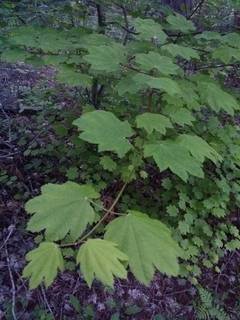
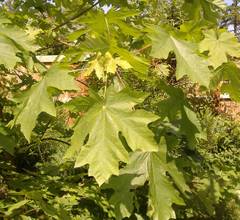
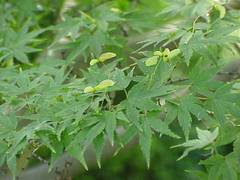
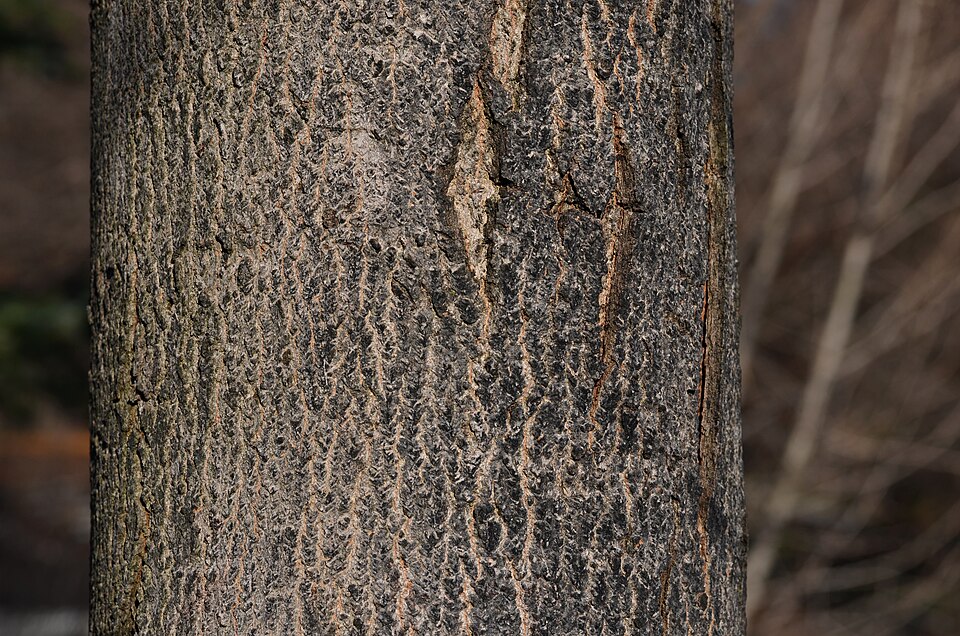
Acer saccharum 'Green Mountain' is a deciduous sugar maple cultivar reaching 50-70 feet (15-21 m) tall and 35-45 feet (11-14 m) wide at maturity, with an upright oval crown. Selected from a New England population for thicker leaf cuticle and resistance to summer leaf scorch in zones 4-7. Bark gray-brown, smooth on young trees, developing thick vertical plates that lift at the edges with age. Leaves opposite, 3-5 inches (7.5-13 cm) long and as wide, five-lobed with rounded sinuses and a few large teeth on each lobe; emerge medium green and remain dark green through summer, turning yellow to orange to deep red in fall. Fall color develops in late September through October in zones 4-7 with temperature-dependent variation. Yellow-green flower clusters open with new leaves in late April. Paired green samaras 1-1.5 inches (2.5-4 cm) long mature in September. Growth rate 1-2 feet (30-60 cm) per year on suitable sites. Tolerates seasonal drought and summer heat better than seedling A. saccharum but requires deep, well-drained loam for establishment.
Native Range
Acer saccharum is native to eastern North America from Newfoundland west to Manitoba, south to northern Georgia and Mississippi. The species inhabits mesic upland forests, north-facing slopes, and rich woodlands at elevations from sea level to 5,000 feet (1,500 m). The 'Green Mountain' cultivar originated as a selection from a Vermont population and was introduced to the nursery trade in 1964 by Princeton Nurseries.Suggested Uses
Commonly planted as a shade tree in residential lawns and parks in zones 3-7 with 35-45 foot (11-14 m) spacing for canopy coverage. Used in formal allees and historic streetscapes where the upright oval form maintains uniformity in linear plantings. Tolerates road salt poorly compared to other large landscape trees and is unsuited to heavily salted urban planting strips; performance is reduced on compacted clay soils.How to Identify
Appearance
Size & Dimensions
Height50' - 70'
Width/Spread35' - 45'
Bloom Information
Yellow-green pendulous flower clusters open with new leaves in late April through early May, with peak bloom lasting 7-10 days. Paired green samaras 1-1.5 inches (2.5-4 cm) long develop within 12-16 weeks of pollination and mature to brown in September. Wind disperses samaras up to 300 feet (90 m) from the parent tree. Bloom timing shifts 2-3 weeks later in zones 3-4 compared to zones 6-7.
Detailed Descriptions
Foliage Description
medium to dark green in summer; turns yellow to orange to deep red in fallGrowing Conditions
Sun Requirements
Requires 4-12 hours of direct sunlight daily
• Full Sun: 6+ hours of direct sunlight
• Partial Shade: 3-6 hours of direct sunlight
• Full Shade: Less than 3 hours of direct sunlight
Care & Maintenance
Care Guide
Newly planted trees require 15-20 gallons (57-76 L) of water per week during the first growing season, decreasing to bi-weekly watering during the second season. Mature trees tolerate 4-6 weeks of summer drought without significant leaf drop on this scorch-resistant cultivar; longer drought causes leaf curling and partial defoliation. A 2-3 inch (5-8 cm) layer of organic mulch in a 4-6 foot (1.2-1.8 m) radius around the trunk reduces lawn competition and conserves moisture. Annual fertilization is unnecessary on most native soils. Verticillium wilt and tar spot fungus occur in some regions; tar spot is cosmetic only. Frost cracks may develop on south-facing trunks in zones 3-5 in temperatures below -20°F (-29°C).Pruning
Structural pruning is performed in summer from June through August after leaves have fully expanded; winter pruning of Acer species can result in heavy sap bleeding. Removal of co-dominant leaders before the tree reaches 6 inches (15 cm) of trunk diameter prevents future bark inclusions. Cuts up to 4 inches (10 cm) callus over within 2-3 growing seasons. Spring pruning is associated with sap flow at cut surfaces that does not affect tree health.Pruning Schedule
Prune: June–August
summer