Ficus, Genus, rubiginosa, Species,
- Genus & species
port jackson fig
Overview
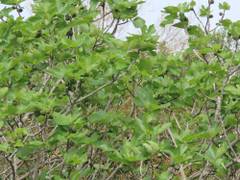
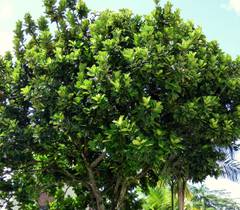
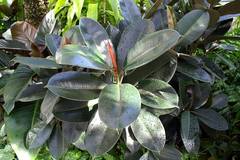
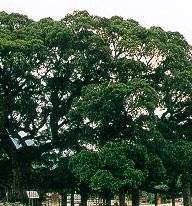
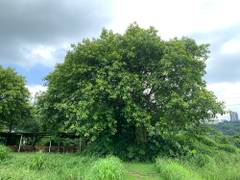
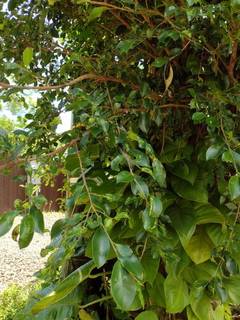
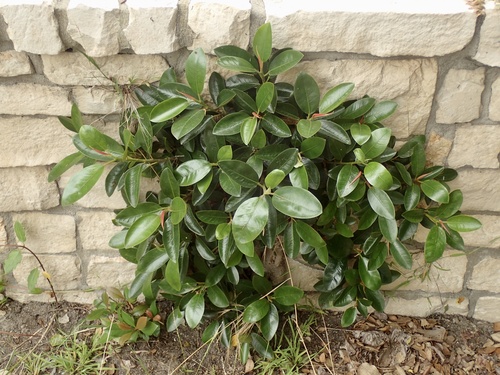
Ficus rubiginosa is an evergreen fig tree reaching 30-60 feet (10-18 m) tall with a broad, dense, spreading crown often wider than its height. The trunk is stout and grey, and the tree produces aerial roots and sometimes buttresses; plants growing on rock or other trees can begin life as stranglers. Leaves are oval, leathery, 2-4 inches (5-10 cm) long, glossy dark green above and usually covered with rust-coloured hairs beneath, the source of the name rusty fig. Small fig fruits about 0.4 inch (1 cm) across are borne in pairs in the leaf axils, ripening yellow to red, and are eaten by birds and bats. Like all figs it is pollinated by a specific fig wasp. The tree casts heavy shade and has aggressive surface roots that lift paving and invade drains. It tolerates salt wind, poor soil, and dry spells once established, and grows along the coast, on rocky headlands, and in dry rainforest.
Native Range
Ficus rubiginosa is native to eastern Australia, from Queensland through New South Wales, mainly within reach of the coast. It grows on rocky headlands, sandstone outcrops, sea cliffs, and the margins of dry rainforest, often rooting in rock crevices and on other trees before reaching the ground.Suggested Uses
Ficus rubiginosa is planted for shade in large parks, on rural properties, and in coastal settings, spaced 40-65 feet (12-20 m) apart to allow for the wide crown. Small plants are grown in containers and as bonsai. Its size and invasive roots make it unsuited to small gardens or planting near buildings, paving, and drains.How to Identify
Appearance
Size & Dimensions
Height30' - 60'
Width/Spread40' - 65'
Bloom Information
Figs are the flowering structure, so Ficus rubiginosa has no visible flowers; the tiny flowers line the inside of each fig. Figs form through much of the year, with a peak in the warmer months, and ripen yellow to red. Each fig depends on its specific pollinating wasp to set seed.
Detailed Descriptions
Foliage Description
dark greenGrowing Conditions
Sun Requirements
Requires 6-10 hours of direct sunlight daily
• Full Sun: 6+ hours of direct sunlight
• Partial Shade: 3-6 hours of direct sunlight
• Full Shade: Less than 3 hours of direct sunlight
Care & Maintenance
Care Guide
Ficus rubiginosa grows in full sun in a wide range of soils, including shallow soils over rock, and tolerates salt wind, heat, and dry spells once established. Young trees grow at a moderate rate and develop a wide, strong root system. The surface roots lift paving, block drains, and compete with nearby plants, so the tree needs open space well clear of structures. It withstands hard pruning and is sometimes shaped or grown as a large indoor and bonsai subject when small. Established trees need little care beyond removing dead or hazardous limbs. Fig-leaf and sap contact can irritate skin.Pruning
The tree tolerates hard pruning and regrows from cut branches and the trunk, so it is shaped or reduced in late winter or after the main growth flush. Removing low branches lifts the crown for clearance beneath. Roots that lift paving are cut only with care, as severing major roots can destabilise large trees.Container Growing
Suitable for container growing
Minimum container size: 10 gallons