Ficus, Genus, spp., Multiple species,
- Genus
- Multiple species
figs
Pantropical (Asia, Africa, Australia, Pacific, the Americas)
Overview
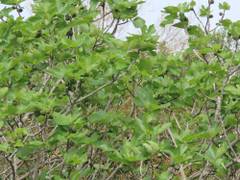
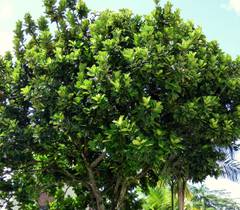
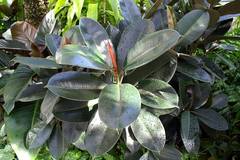
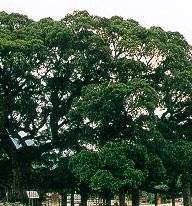
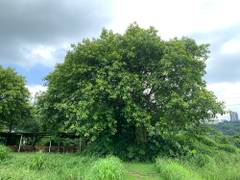
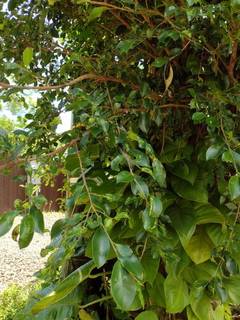
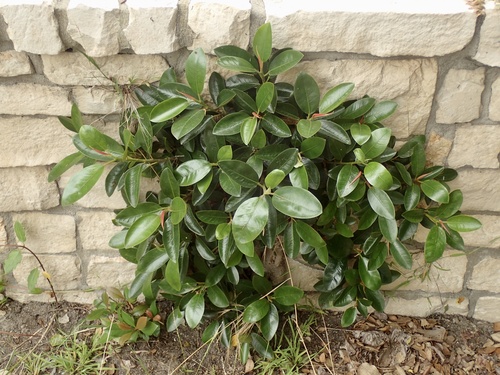
Ficus is a genus of roughly 850 species in the mulberry family, Moraceae, distributed through the tropics and subtropics worldwide with a few species reaching warm-temperate zones. The genus includes evergreen and deciduous forms and spans a wide range of habits: freestanding trees such as the banyan F. benghalensis, stranglers that germinate in the canopy and descend on aerial roots, woody climbers such as F. pumila, and shrubs. Heights run from creeping species under 3 ft (1 m) to forest trees exceeding 100 ft (30 m) with broad crowns supported by buttress or prop roots. Leaves are usually alternate, leathery, and entire, though some species are lobed, ranging from under 1 in (2.5 cm) to over 12 in (30 cm). All members exude milky white latex when cut. The defining feature is the syconium, a hollow fleshy receptacle that lines hundreds of tiny flowers on its inner wall and ripens into the fruit known as a fig. Most species depend on a specific fig wasp for pollination. The edible fig F. carica is the most familiar crop member, while many tropical species are grown as ornamental and indoor foliage plants. The latex is a skin irritant, and several species are sensitive to cold and root disturbance.
Native Range
Members occur naturally across tropical and subtropical regions of Asia, Africa, Australia, the Pacific, and the Americas. A few species, including the strangler fig F. aurea, are native to southern Florida and the Caribbean, while F. carica originates in the Mediterranean and western Asia.Suggested Uses
Tree species are grown for shade and as large specimens in tropical and subtropical landscapes, while strangler and banyan forms are used in parks where their aerial roots have room to develop. Smaller and variegated species are widely grown as indoor foliage plants, and F. pumila is grown as a climbing cover for walls. F. carica is cultivated for edible fruit.How to Identify
Appearance
Size & Dimensions
Height1' - 100'
Width/Spread3' - 60'
Colors
Foliage Colors
Bloom Information
The flowers are enclosed inside the fig and are never visible externally, so Ficus has no conventional bloom display. In tropical species, figs form and ripen in flushes throughout the year; in temperate F. carica, fruit develops over summer into autumn. Each species relies on a particular fig wasp that enters the syconium to pollinate the enclosed flowers.
Detailed Descriptions
Foliage Description
green, some forms variegated with cream, white, or pinkGrowing Conditions
Sun Requirements
Requires 4-10 hours of direct sunlight daily
• Full Sun: 6+ hours of direct sunlight
• Partial Shade: 3-6 hours of direct sunlight
• Full Shade: Less than 3 hours of direct sunlight
Care & Maintenance
Care Guide
Care varies with the wide habit range of the genus. Most species grow in full sun to part shade in moist, freely draining soil, and tropical members are damaged below about 30-40F (minus 1 to 4C). Indoor foliage species such as F. benjamina and F. elastica need bright indirect light, steady warmth, and even moisture, and they drop leaves abruptly after sudden changes in light, drafts, or watering. Soil pH around 6.0-7.0 suits most species. The milky latex irritates skin and eyes and is toxic to cats and dogs if chewed. Common problems include scale, mealybug, and root rot in waterlogged soil.Pruning
Most Ficus tolerate hard pruning and resprout readily from old wood, which allows tree species to be reduced and indoor plants to be cut back to shape. Pruning is done in spring before new growth, and all cuts release latex that is left to dry. Aerial-rooting and climbing species are cut back through the growing season to limit spread.Container Growing
Suitable for container growing