Ficus, Genus, aurea, Species,
- Genus & species
Florida strangler fig
Florida, Caribbean, and Central America
Overview
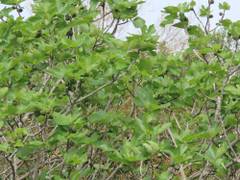
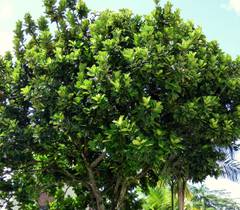
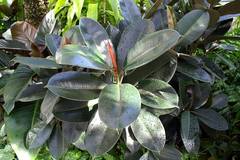
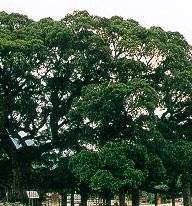
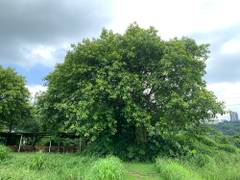
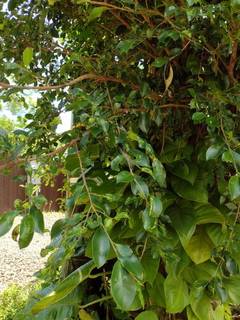
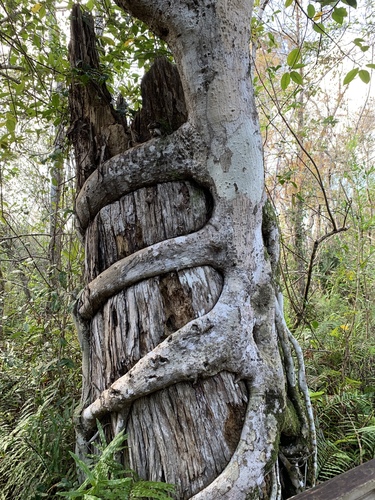
Ficus aurea is an evergreen fig tree native to Florida, the Caribbean, and parts of Central America, reaching 30-60 ft (9-18 m) tall with a broad, dense crown. It frequently begins life as a hemiepiphyte: a seed germinates in the canopy of a host tree, and the seedling sends aerial roots downward that fuse around the host trunk and may eventually girdle it, giving rise to the name strangler fig. Free-standing trees develop a stout trunk and a buttressed, fused-root base. Leaves are leathery, oval to elliptic, 2-5 in (5-13 cm) long, and glossy dark green. Like other figs, it bears its flowers inside enclosed receptacles that ripen into small paired figs about 0.4 in (10 mm) wide, turning yellow to dull red. Each fig is pollinated by a single host-specific wasp species, without which fruit set does not occur. All parts exude milky latex when cut. The species grows quickly and develops an extensive, aggressive root system that can lift pavement and invade drains, limiting its use near structures. It occurs in hammocks, swamps, and coastal woodlands and tolerates salt wind.
Native Range
Ficus aurea is native to southern and central Florida, the Florida Keys, the Caribbean islands, and from Mexico through Central America. It grows in tropical and subtropical hammocks, cypress swamps, and coastal woodlands, often beginning as an epiphyte on cabbage palms and other host trees.Suggested Uses
Used as a large shade or specimen tree in tropical and subtropical landscapes, parks, and naturalized hammocks with room to spread. It also serves in bonsai culture, where root and trunk growth are confined. The figs draw fruit-eating birds and other wildlife.How to Identify
Appearance
Size & Dimensions
Height30' - 60'
Width/Spread30' - 60'
Bloom Information
Figs and their enclosed flowers can form year-round in frost-free climates, with peaks in spring and summer. The tiny flowers are hidden inside the fig receptacle and are not visible externally. Ripe figs appear over many months and are eaten by birds and mammals.
Detailed Descriptions
Foliage Description
dark greenGrowing Conditions
Sun Requirements
Requires 6-10 hours of direct sunlight daily
• Full Sun: 6+ hours of direct sunlight
• Partial Shade: 3-6 hours of direct sunlight
• Full Shade: Less than 3 hours of direct sunlight
Care & Maintenance
Care Guide
It grows in full sun to partial shade and tolerates a wide range of soils, including limestone, sand, and seasonally wet ground. Once established it withstands drought, salt spray, and brief flooding, reflecting its coastal and hammock origins. Growth is rapid, and the spreading roots and broad crown call for ample open space away from foundations, pavement, and septic lines. It is hardy only in USDA zones 10-11 and is damaged or killed by hard frost. Few pests trouble it, although fig rust and sooty mold can mark the foliage. Container specimens stay much smaller and can be moved under cover where winters are cold.Pruning
Prune in late winter or early spring to remove crossing or low branches and to manage size. Cut surfaces release latex that can stain. Regular trimming keeps free-standing trees within bounds, though their natural form is broad and low-branching.Pruning Schedule
Prune: February–March
winterearly spring
Container Growing
Suitable for container growing
Minimum container size: 10 gallons