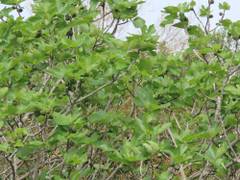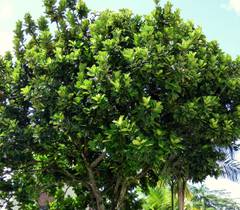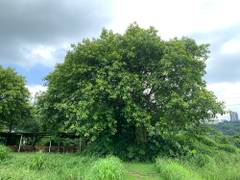
Ficus, Genus, elastica, Species, 'Burgundy', Cultivar,
- Genus & species
- Cultivar
burgundy rubber tree
Tropical and subtropical South and Southeast Asia (the species native range covers northeastern India, Nepal, Bhutan, Myanmar, southern China, Malaysia, Sumatra, and Java); tropical-rainforest, monsoon-forest, and lower-montane-forest habitats with warm year-round temperatures, high atmospheric humidity, and partial-shade exposure beneath canopy trees in the species' juvenile growth phase before reaching the canopy emergent height in mature outdoor specimens.
Overview
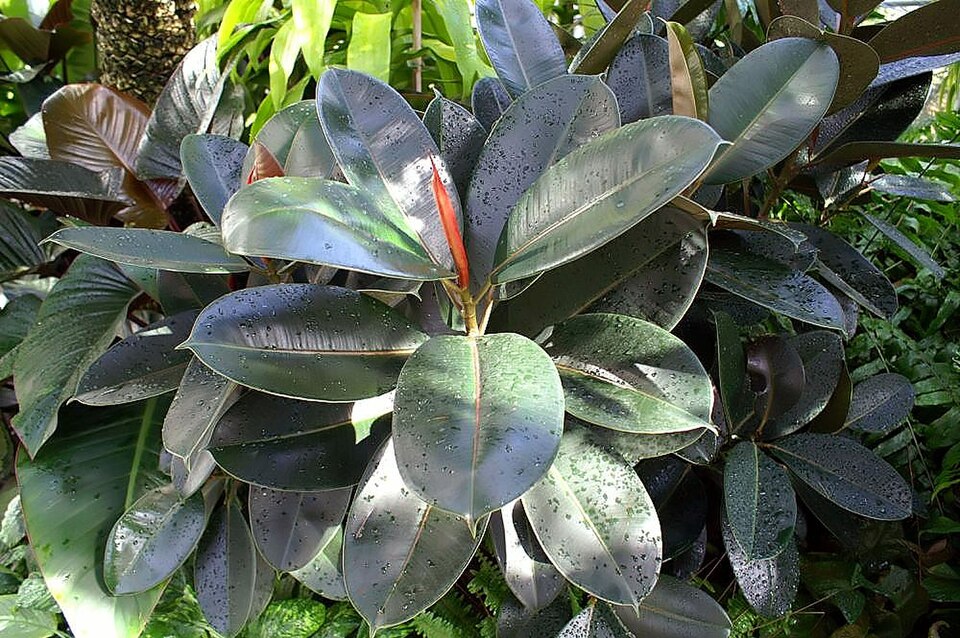
Ficus elastica 'Burgundy' is the burgundy rubber tree (also called dark-leaved rubber plant), a cultivar selection of the rubber tree species in the mulberry-and-fig family (Moraceae) growing 4-10 feet (120-300 cm) tall and 2-4 feet (60-120 cm) wide as an indoor houseplant. The cultivar is among the darkest-foliaged rubber tree selections in commercial cultivation: the deep burgundy-black mature leaf color approaches near-black under lower indoor light conditions and shows more visible burgundy-red tones under brighter indirect light, and the dark cultivar foliage color is the principal cultivar distinction from the standard green-foliage species type Ficus elastica. Each leaf is large (8-12 inches / 20-30 cm long, 4-6 inches / 10-15 cm wide) and thick with a leathery glossy cuticle and a prominent central midrib running from the petiole to the leaf tip — the leaves are among the larger leaf forms in commonly cultivated indoor houseplants and the leaf size combined with the dark color produces the cultivar's recognizable indoor specimen profile. New leaves emerge enclosed in a bright cherry-red protective sheath (technically a stipule) that splits and falls away as the leaf unfurls to expose the new burgundy-black mature leaf, producing a recurring red-against-black color contrast across the active growing season that is one of the cultivar's recognizable features. The species Ficus elastica produces white milky latex sap when leaves or stems are cut or damaged, and the latex is the original commercial source of natural rubber — pre-dating the plantation cultivation of Hevea brasiliensis (the Para rubber tree, which replaced F. elastica as the dominant commercial rubber source in the late 19th century after the species was successfully transplanted to plantation cultivation in Southeast Asia). The latex sap stains clothing and household surfaces and contains the ficin proteolytic enzyme and other compounds that cause skin irritation and contact dermatitis in sensitive individuals on direct contact, and ingestion of leaves or sap produces oral irritation, drooling, and gastrointestinal upset in pets and children. Standard pruning protocol uses gloves and protective clothing to manage the latex contact, and pruning is generally done over a drop cloth that catches dripping latex. The cultivar's growth habit is naturally single-stemmed and unbranched in juvenile specimens — an unpruned plant grows as a single tall stem with leaves spaced along the stem at internodes of 2-4 inches (5-10 cm) — and the cultivar therefore benefits from periodic pruning above a leaf node to encourage lateral branching and a fuller bushier habit. New shoots emerge from dormant buds at the cut node site within 4-8 weeks of pruning under typical indoor conditions. The species is native to tropical and subtropical South and Southeast Asia (northeastern India, Nepal, Bhutan, Myanmar, southern China, Malaysia, Sumatra, and Java) where the plant grows in tropical-rainforest, monsoon-forest, and lower-montane-forest habitats reaching 100+ feet (30+ meters) tall as a canopy emergent in mature outdoor specimens. Hardy outdoors only in tropical zones 10-12; in cold zones the cultivar is grown exclusively as an indoor houseplant.
Native Range
The species Ficus elastica is native to tropical and subtropical South and Southeast Asia with a continuous native range across northeastern India (Assam, Sikkim, West Bengal), Nepal, Bhutan, Myanmar, southern China (Yunnan and Guangxi provinces), Malaysia, Sumatra, and Java. The species occurs in tropical-rainforest, monsoon-forest, and lower-montane-forest habitats with warm year-round temperatures (typically 65-90°F / 18-32°C), high atmospheric humidity (60-90% relative humidity), and partial-shade exposure beneath canopy trees in the species' juvenile growth phase before reaching the 100+ foot (30+ meter) canopy emergent height in mature outdoor specimens. The 'Burgundy' cultivar is a horticultural selection from the species developed for the dark cultivar foliage color, and is grown as an indoor houseplant across temperate-zone gardens worldwide where the species' tropical climate requirements are met by indoor cultivation conditions.Suggested Uses
Used as a dark-foliage statement houseplant in modern interior design compositions, residential and commercial indoor settings, large-scale indoor planters, and other indoor positions where the 4-10-foot scale and the dark cultivar foliage color supply the design contribution. The deep burgundy-black foliage color is the cultivar's principal design feature and gardeners who select the cultivar specifically for the dark-foliage statement contribution typically pair the cultivar with lighter-foliage companion houseplants for a visual color contrast. The cultivar pairs with companion indoor foliage houseplants including Pilea peperomioides (Chinese money plant), Calathea cultivars (prayer plants), Maranta cultivars, Strelitzia nicolai (giant white bird of paradise), Philodendron cultivars, and broad-leafed Monstera deliciosa for a multi-species indoor foliage planting where the Ficus elastica 'Burgundy' dark-leafed structural specimen anchors the planting against the lighter green and variegated companion foliage. The cultivar is sited away from positions where pets or children might consume the foliage because of the latex-sap toxicity, and pruning maintenance is done with protective gloves and clothing because of the latex contact-irritation profile.How to Identify
Appearance
Size & Dimensions
Height4' - 10'
Width/Spread2' - 4'
Bloom Information
The cultivar does not flower under indoor cultivation conditions. In tropical outdoor cultivation in zone-10-12 plantings, the species produces inconspicuous Ficus-typical syconium-enclosed flowers (the small fig-fruit structure that contains internal flowers, in the typical Ficus-genus floral architecture shared with Ficus carica edible fig and other Ficus species), but the syconia are essentially never noticed in indoor settings and the cultivar's principal ornamental contribution is the year-round dark foliage rather than seasonal flowering display.
Detailed Descriptions
Flower Description
The species does not flower under indoor cultivation conditions; in tropical outdoor cultivation the species produces inconspicuous Ficus-typical syconium-enclosed flowers (the small fig-fruit structure that contains internal flowers, in the typical Ficus-genus floral architecture) but the syconia are essentially never noticed in indoor settingsFoliage Description
Deep burgundy-black; very large (8-12 inches / 20-30 cm long, 4-6 inches / 10-15 cm wide) thick glossy ovate leaves with a leathery cuticle and prominent central midrib; the foliage color approaches near-black under lower indoor light conditions and shows more visible burgundy-red tones under brighter indirect light, and the dark cultivar foliage color is the species' principal cultivar distinction from the standard green-foliage species type Ficus elasticaGrowing Conditions
Sun Requirements
Needs bright indirect light. Keep it out of direct sun, which can scorch the leaves.
• Bright indirect light: a bright spot near a window, with no direct sun on the leaves
Care & Maintenance
Care Guide
Place in bright indirect light to support the deepest cultivar foliage color — the dark burgundy-black coloration develops most fully under bright indirect light conditions, while lower-light conditions produce a more uniformly dark near-black color with reduced burgundy tonal variation. The cultivar tolerates moderate-shade conditions but is damaged by intense direct afternoon sun in indoor settings (the leaves scorch under harsh direct light). Water when the top 2 inches (5 cm) of soil dries to the touch — the cultivar performs better with consistent moisture across the active growing season but tolerates moderate drought between waterings. Avoid prolonged waterlogged conditions because the root system is susceptible to root rot in standing water. Well-draining substrate at pH 6.0-7.0 supports the cultivar reliably; standard houseplant potting mix with added perlite or sand works well. Fertilization is at half-strength every 2-3 months during the active growing season (spring through summer) using a balanced liquid fertilizer. Wipe the leaves periodically with a damp cloth to remove dust accumulation that reduces both light absorption and the foliage gloss; the large leaf surface area accumulates dust readily in indoor environments. Avoid sudden temperature changes and cold drafts (below 55°F / 13°C) because the cultivar produces leaf drop in response to thermal shock. The species produces white milky latex sap when leaves or stems are cut or damaged; the latex stains clothing and household surfaces and the species is mildly toxic on ingestion (oral irritation, drooling, gastrointestinal upset in pets and children) and on direct skin contact (contact dermatitis in sensitive individuals). Pruning protocol uses gloves and protective clothing to manage the latex contact, and pruning is generally done over a drop cloth. Hardy outdoors only in tropical zones 10-12; in cold zones the cultivar is grown exclusively as an indoor houseplant in 7-gallon (26-liter) or larger pots.Pruning
Prune above a leaf node to encourage lateral branching from dormant buds at the cut site — the cultivar grows naturally as a single unbranched stem in juvenile specimens, and pruning encourages the bushier branched habit that most indoor gardeners prefer for shape and density. New shoots emerge from dormant buds at the cut node site within 4-8 weeks of pruning under typical indoor conditions. The species produces white milky latex sap on cutting; the latex stains clothing and household surfaces and contains compounds that cause skin irritation in sensitive individuals — protective gloves and clothing during pruning, and a drop cloth beneath the plant to catch dripping latex, are standard horticultural practice. The cultivar can be propagated from stem cuttings rooted in moist substrate or water; rooting hormone speeds the rooting process but is not strictly required.Container Growing
Suitable for container growing
Minimum container size: 7 gallons