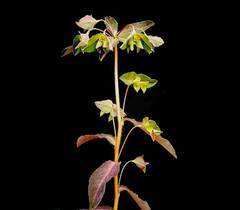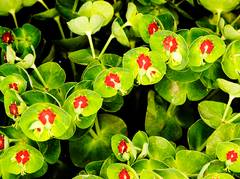
Euphorbia, Genus, polycarpa, Species,
- Genus & species
smallseed sandmat
Overview
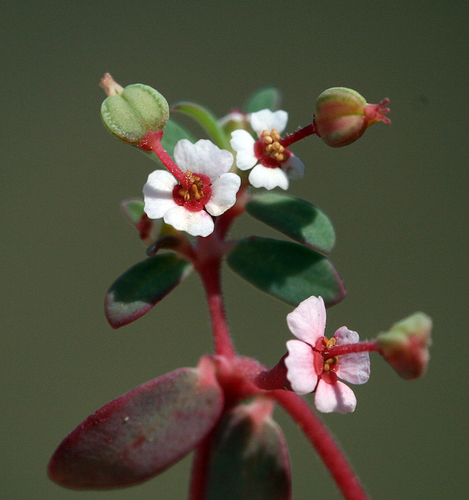
Euphorbia polycarpa is a low, mat-forming perennial in the spurge family, building mounds 2-6 inches (5-15 cm) tall and spreading 8-20 inches (20-50 cm) across. Slender, much-branched stems radiate from a woody base and carry pairs of tiny rounded leaves 0.1-0.25 inch (2-6 mm) long. Like other spurges, broken stems and leaves release a milky white latex. The flowers are reduced structures called cyathia, each about 0.06 inch (1.5 mm) wide, surrounded by small white to pink-tinged petal-like appendages, and they appear over much of the year. Tiny three-lobed capsules follow, each holding several minute seeds that give the plant its common name. The milky latex contains irritant compounds that can inflame skin and eyes and is toxic if eaten. The species grows on sandy and gravelly desert flats, washes, and rocky slopes, tolerating intense heat and prolonged drought. It greens up and flowers after rain, then slows during the driest months. Its low, open mats add little visual mass, and the caustic sap limits its handling in cultivated settings.
Native Range
Native to the deserts of southwestern North America, from southern California and Arizona south through Baja California and northwestern Mexico.Suggested Uses
Used in desert restoration, rock gardens, and low-water plantings as a sparse groundcover, spaced 12-18 inches (30-45 cm) apart. It also stabilizes sandy soil on hot, exposed flats where few other plants persist.How to Identify
Appearance
Size & Dimensions
Height2" - 6"
Width/Spread8" - 1'8"
Bloom Information
Detailed Descriptions
Flower Description
white to pink-tingedFoliage Description
greenGrowing Conditions
Sun Requirements
Requires 8-12 hours of direct sunlight daily
• Full Sun: 6+ hours of direct sunlight
• Partial Shade: 3-6 hours of direct sunlight
• Full Shade: Less than 3 hours of direct sunlight