Euphorbia, Genus, dentata, Species,
- Genus & species
green poinsettia
SunFull Sun – Part Shade
Overview
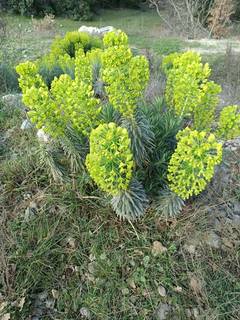
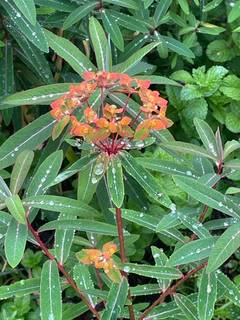
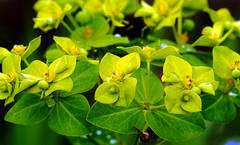
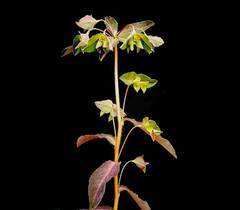
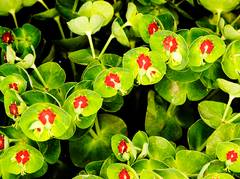
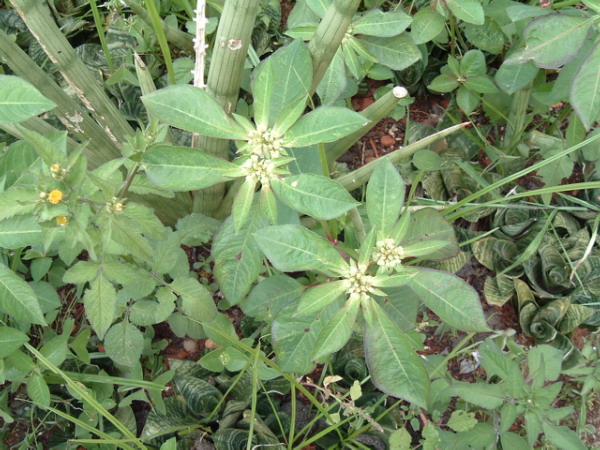
Euphorbia dentata is an annual of the spurge family growing 4-24 inches (10-60 cm) tall on erect, branching, hairy stems that exude a milky white latex when cut. The leaves are mostly opposite, 1-3 inches (2.5-8 cm) long, lance-shaped to ovate with coarsely toothed margins, and vary from green to slightly paler at the base. The tiny flowers sit in cup-like cyathia clustered at the stem tips, each cyathium bearing one or two stalked, yellow-green nectar glands rather than petals. The surrounding leaves stay green, unlike the red-blotched bracts of the related E. cyathophora. Native to the central and southern United States and Mexico, E. dentata grows on prairies, roadsides, fields, and disturbed ground, and has naturalized in South America, Europe, and Australia. As an annual it sets seed in a three-lobed capsule that ejects seed explosively, then dies with frost. The milky latex contains irritant diterpene compounds that can inflame skin and eyes and is poisonous if eaten. One limitation is that it behaves as an agricultural weed in row crops, competing with seedlings on open ground.
Native Range
Euphorbia dentata is native to North America, from the central and southern United States south into Mexico. It grows in prairies, open woods, fields, and disturbed sites, and has naturalized in South America, southern Europe, southern Africa, and Australia.Suggested Uses
Euphorbia dentata is not grown ornamentally and is treated mainly as a weed of crops and disturbed land. It has limited use in native-plant and pollinator studies for its insect-attracting nectar glands. The milky latex limits handling and garden use.How to Identify
Appearance
Size & Dimensions
Height4" - 2'
Width/Spread6" - 1'6"
Bloom Information
Detailed Descriptions
Foliage Description
greenGrowing Conditions
Sun Requirements
Requires 6-10 hours of direct sunlight daily
• Full Sun: 6+ hours of direct sunlight
• Partial Shade: 3-6 hours of direct sunlight
• Full Shade: Less than 3 hours of direct sunlight
Water & Climate
Water Needs
Drought Tolerance
Drought tolerant when established