Euphorbia, Genus, cyathophora, Species,
- Genus & species
wild poinsettia
SunFull Sun – Part Shade
Overview
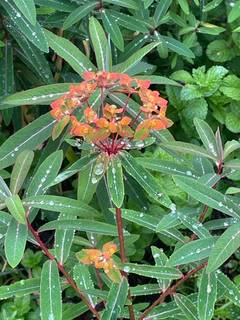
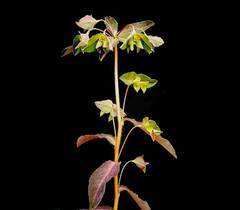
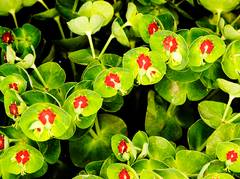
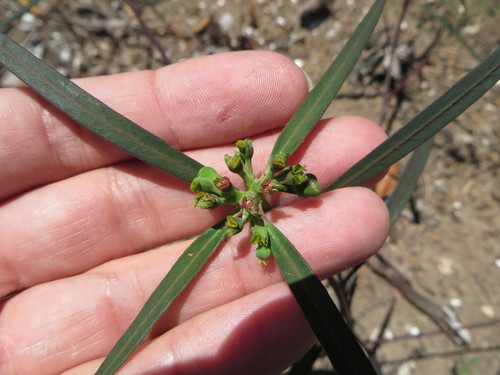
Euphorbia cyathophora is an erect annual or short-lived perennial in the spurge family, growing 12-36 in (30-90 cm) tall on branching stems that bleed a milky white sap when cut. The leaves vary widely in shape, from oval to fiddle-shaped or lobed, 1-4 in (2.5-10 cm) long. Toward the stem tips the upper leaves and bracts develop bright red to orange-red bases while their margins stay green, creating a poinsettia-like patch of color around the flower clusters. The true flowers are tiny and gathered in small cup-shaped structures called cyathia, each bearing a single yellow gland. Flowering runs through summer and fall, followed by three-lobed capsules that eject seed. It grows in open woods, fields, stream banks, and disturbed ground across the warmer Americas and self-sows readily. The milky sap contains irritant compounds that can inflame skin and eyes and are toxic if swallowed. As an annual it is grown from seed for its colored bracts and often persists in gardens by reseeding.
Native Range
Euphorbia cyathophora is native to the Americas, from the southern and eastern United States south through Mexico, Central America, and into South America. It grows in disturbed ground, open woods, and along streams, and has naturalized in warm regions worldwide.Suggested Uses
Used in annual beds, cottage gardens, and naturalized plantings for the red-and-green bracts, spaced 10-18 in (25-45 cm) apart. Grown as a warm-season filler that reseeds from year to year. Combines with other heat-tolerant annuals in sunny borders.How to Identify
Appearance
Size & Dimensions
Height1' - 3'
Width/Spread8" - 1'6"
Bloom Information
Detailed Descriptions
Foliage Description
green with red bract basesGrowing Conditions
Sun Requirements
Requires 5-10 hours of direct sunlight daily
• Full Sun: 6+ hours of direct sunlight
• Partial Shade: 3-6 hours of direct sunlight
• Full Shade: Less than 3 hours of direct sunlight
Water & Climate
Water Needs
Drought Tolerance
Drought tolerant when established
Care & Maintenance
Care Guide
Grows in full sun to part shade on average, well-drained soil and tolerates heat, humidity, and short dry spells. Soil pH from 6.0 to 7.5 is suitable. It establishes easily from seed sown after the last frost and self-sows where the ground is open. Water moderately, since established plants tolerate some drought. Overly rich soil produces leafy growth with less bract color. The milky sap can irritate skin and eyes and is a concern when cutting or pulling stems.Pruning
No routine pruning is needed. Pinching the stem tips of young plants encourages a bushier, branched form. Plants can be pulled at season end, taking precautions with the irritant sap, or left to drop seed for the next year.Container Growing
Suitable for container growing
Minimum container size: 2 gallons
Toxicity Warning
Toxic to pets and humansPlanting Guide
Planting Methods & Timing
Planting Method
direct sow
Direct Sow Timing
after last frost when soil warms
Days to Maturity
60–90 days
Plant Spacing
12 inches