Euphorbia, Genus, ceratocarpa, Species,
- Genus & species
Sicilian spurge
Overview
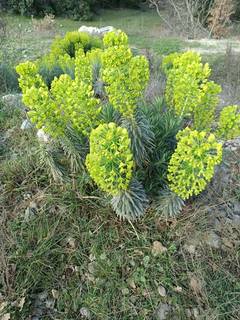
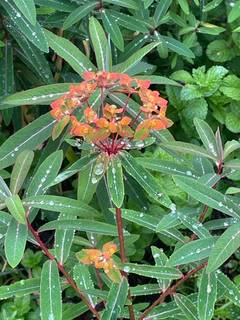
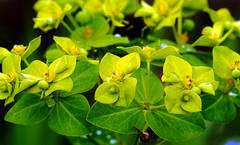
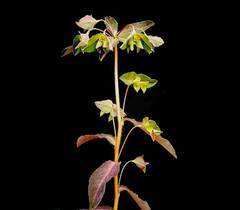
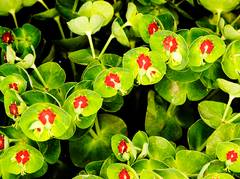
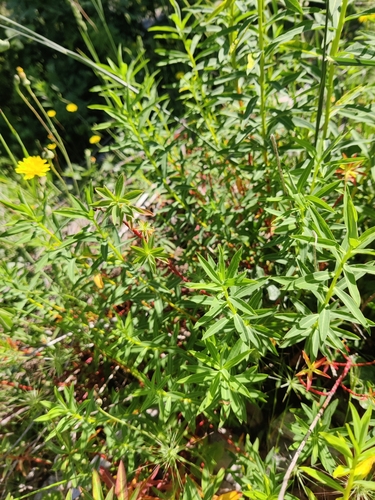
Euphorbia ceratocarpa is an evergreen perennial spurge that forms a rounded, shrubby mound 3–4 feet (90–120 cm) tall and wide. The upright stems carry narrow, blue-green leaves 1–3 inches (2.5–8 cm) long arranged spirally, and the whole plant exudes milky white latex when cut. From late spring through autumn, and nearly year-round in frost-free climates, the stem tips bear branched clusters of yellow-green structures called cyathia, each framed by paired chartreuse bracts about 0.2 inch (5 mm) across. The true flowers are tiny and held within these bracts. Horned seed capsules follow, giving the species its name. The plant grows quickly, tolerates heat and drought once established, and stays evergreen where winters are mild. The latex irritates skin and eyes and is toxic if eaten. Cold below its hardiness range damages the foliage, and heavy, wet soil leaves the roots prone to rot.
Native Range
Euphorbia ceratocarpa is native to Sicily and southern Italy, where it grows on dry, rocky slopes and disturbed ground in a Mediterranean climate. It is adapted to hot, dry summers and mild, wet winters.Suggested Uses
Euphorbia ceratocarpa is used in Mediterranean, gravel, and dry-garden plantings and in mixed borders for long-season foliage and bract color, spaced 30–36 inches (75–90 cm) apart. It combines with drought-tolerant perennials and grasses. The irritant latex makes it less suited to gardens with young children or pets that chew foliage.How to Identify
Appearance
Size & Dimensions
Height3' - 4'
Width/Spread3' - 4'
Bloom Information
Flowering extends from late spring through autumn and continues nearly year-round in frost-free gardens. The yellow-green bracts surrounding the cyathia hold their color for many weeks, accounting for the long display. Small horned capsules develop as each cluster matures.
Detailed Descriptions
Foliage Description
Blue-greenGrowing Conditions
Sun Requirements
Requires 6-12 hours of direct sunlight daily
• Full Sun: 6+ hours of direct sunlight
• Partial Shade: 3-6 hours of direct sunlight
• Full Shade: Less than 3 hours of direct sunlight
Care & Maintenance
Care Guide
Euphorbia ceratocarpa grows in full sun and well-drained soil of low to average fertility, with a pH between 6.0 and 7.8. It tolerates heat, drought, and poor stony ground once established, and declines in heavy, wet soil where the roots rot. Watering is needed only during extended drought in the first season. The evergreen stems are damaged by hard frost, so a sheltered position helps in colder zones. The milky latex irritates skin and eyes and is toxic if swallowed. Cutting out the oldest stems at the base each year keeps the mound dense.Pruning
Flowered stems can be removed at the base after the bracts fade, since each stem declines once it has bloomed. This renewal keeps fresh growth coming from the crown. The cut stems ooze irritant latex that causes skin and eye irritation on contact.Pruning Schedule
Prune: June–July
summer
Container Growing
Suitable for container growing
Minimum container size: 5 gallons