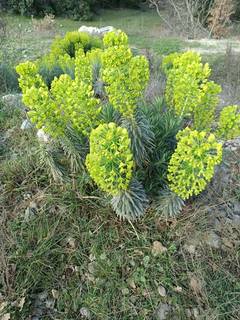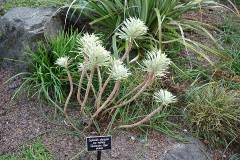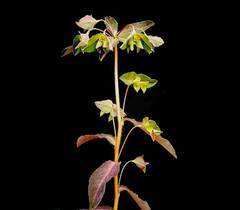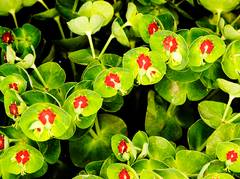
Overview
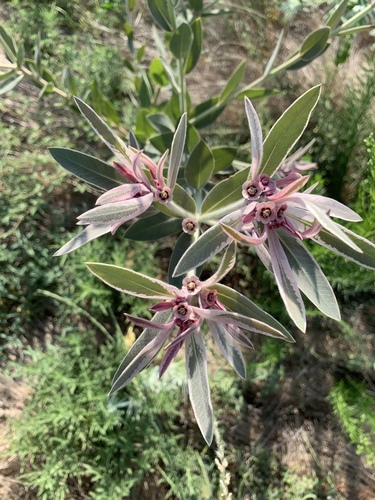
Euphorbia bicolor is an upright summer annual reaching 24-60 inches (60-150 cm) tall and 12-24 inches (30-60 cm) wide, with erect stems that branch toward the top. The lower leaves are green and lance-shaped, 1-3 inches (2.5-7.5 cm) long, while the upper leaves and bracts are edged in a broad white margin that gives the plant its snow-on-the-prairie name. The true flowers are tiny and clustered in cup-like structures called cyathia, each ringed by small white-and-green bracts, and they open from midsummer into fall. Broken stems and leaves release a milky white latex that irritates skin and eyes and is toxic if eaten. The seed is a three-lobed capsule that splits to scatter seed. It grows in prairies, fields, roadsides, and open disturbed ground in the south-central United States, mostly on clay and limestone soils. It can self-sow heavily and become weedy where conditions suit it.
Native Range
Euphorbia bicolor is native to the south-central United States, chiefly Texas, Oklahoma, Arkansas, and Louisiana. It grows in prairies, fields, roadsides, and open disturbed ground, often on clay and limestone soils.Suggested Uses
Used in prairie and meadow plantings, cottage borders, and cut-flower beds, where the white-margined bracts read from a distance. It suits hot, dry sites and poor soils where many annuals struggle. Sown or spaced about 18 inches (45 cm) apart.How to Identify
Appearance
Size & Dimensions
Height2' - 5'
Width/Spread1' - 2'
Bloom Information
Detailed Descriptions
Foliage Description
green with white marginsGrowing Conditions
Sun Requirements
Requires 6-8 hours of direct sunlight daily
• Full Sun: 6+ hours of direct sunlight
• Partial Shade: 3-6 hours of direct sunlight
• Full Shade: Less than 3 hours of direct sunlight
Water & Climate
Water Needs
Drought Tolerance
Drought tolerant when established
Care & Maintenance
Care Guide
Grow in full sun in well-drained soil, including dry clay, limestone, and sandy ground. This annual tolerates heat and drought and needs little water once it is growing. Rich, moist soil produces tall, floppy stems that may need support. Sow seed in spring after the last frost, or allow established stands to self-sow. The milky latex irritates skin and eyes, and cut stems release sap readily. Plants set seed freely and can spread into nearby beds.Pruning
No routine pruning is needed for this annual. Cutting stems for arrangements releases the milky latex, which can irritate skin and eyes. Spent plants can be pulled after they set seed to limit self-sowing.Toxicity Warning
Toxic to pets and humansPlanting Guide
Planting Methods & Timing
Planting Method
direct sow
Direct Sow Timing
Spring after last frost
Days to Maturity
90–120 days
Plant Spacing
18 inches