Image 1 of 2
1 / 2
© john47kent from Chatham,Kent, England, some rights reserved (CC-BY) · Wikimedia Commons
Clematis, Genus, 'Duchess of Edinburgh', Cultivar,
- Genus
- Cultivar
Duchess of Edinburgh clematis
Garden hybrid; bred in England (1875)
Overview
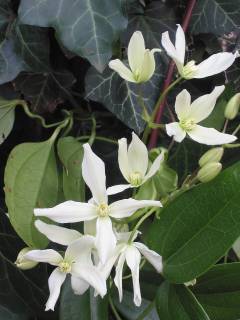
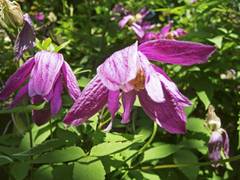
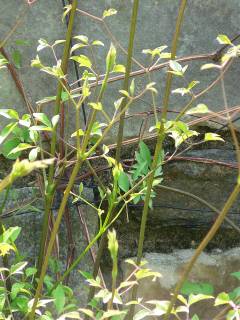
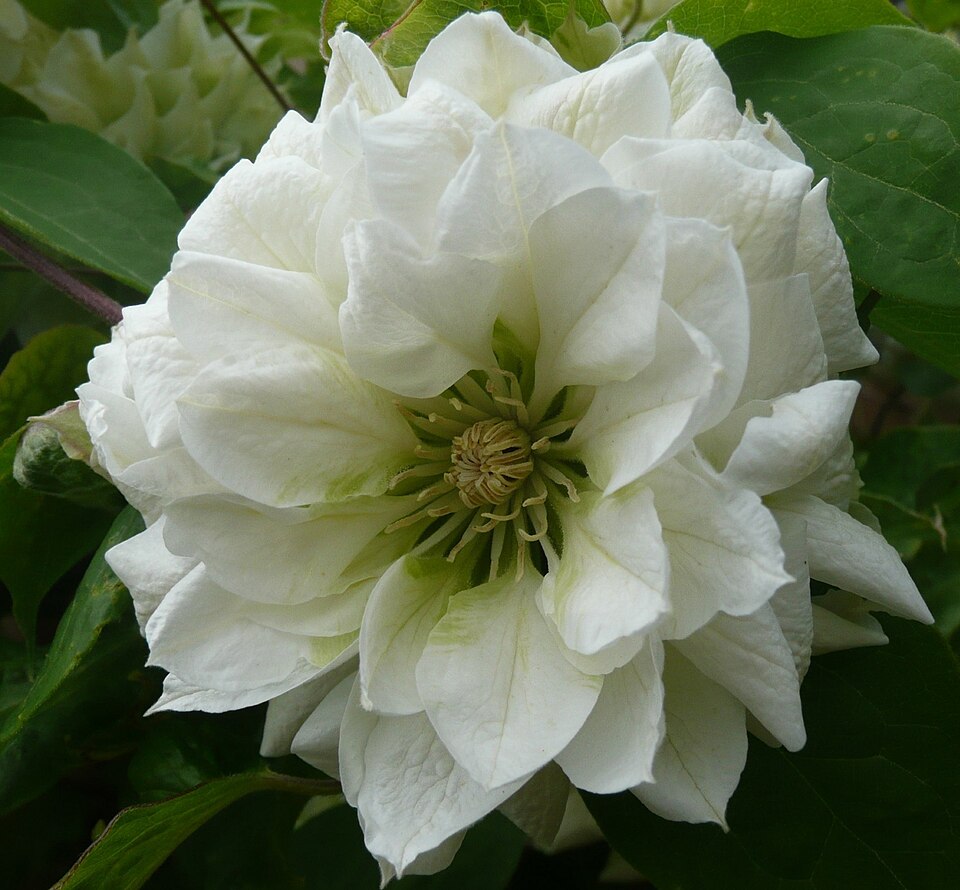
Clematis 'Duchess of Edinburgh' is a deciduous climbing vine reaching 8-10 feet (2.4-3 m) tall with a 3-6 foot (90-180 cm) spread when supported. Stems become woody at the base; new growth twines via leaf petioles around supports up to 0.4 inch (1 cm) in diameter. Compound leaves bear three leaflets, each 2-3 inches (5-8 cm) long, ovate with pointed tips, mid-green and turning yellow before falling in autumn. First-flush flowers are fully double, 4-5 inches (10-13 cm) across, pure white with pale green tints in the central petaloids; each bloom carries 60-80 petal-like sepals arranged in a rosette. Main flowering occurs late May through June on previous season's wood, with a smaller second flush in August-September on new growth that produces semi-double or single blooms. Individual flowers last 7-10 days. Plants take 3-4 years to reach mature size after planting and grow more slowly than many large-flowered Clematis hybrids. Susceptible to clematis wilt (Calophoma clematidina) in years 1-3; affected stems collapse rapidly but plants typically regenerate from the crown when set 2-3 inches (5-8 cm) below soil level. Lower stems become bare with age.
Native Range
A garden hybrid of Clematis not found in the wild. Bred by the George Jackman & Son nursery in Woking, England, and introduced in 1875. Parentage involves crosses between C. lanuginosa and C. florida types common in mid-Victorian Clematis breeding.Suggested Uses
Grown on trellises, obelisks, and pergolas at 6-8 feet (1.8-2.4 m) of support height, and through climbing roses or shrubs that shade the root zone. Container culture works in pots of at least 18 inches (45 cm) diameter and 18 inches (45 cm) deep with well-draining mix; lower-growing perennials are commonly planted at the base to cover the bare lower stems.How to Identify
Appearance
Size & Dimensions
Height8' - 10'
Width/Spread3' - 6'
Bloom Information
Main flush late May through June in zones 6-8, carried on previous season's wood. A second flush appears August through September on new growth. Individual blooms last 7-10 days; first-flush bloom duration is 4-5 weeks. Cool spring temperatures extend first-flush bloom by 1-2 weeks; temperatures above 85°F (29°C) shorten individual flower lifespan.
Detailed Descriptions
Flower Description
white with pale green tints in early flowersFoliage Description
mid-green; yellow in autumnGrowing Conditions
Sun Requirements
Requires 4-6 hours of direct sunlight daily
• Full Sun: 6+ hours of direct sunlight
• Partial Shade: 3-6 hours of direct sunlight
• Full Shade: Less than 3 hours of direct sunlight
Care & Maintenance
Care Guide
The crown is typically set 2-3 inches (5-8 cm) below soil level at planting to encourage basal shoot production and recovery from clematis wilt. Water deeply once weekly during the first two growing seasons in the absence of rain; established plants tolerate brief dry periods, with flower production decreasing under sustained drought. A 2-3 inch (5-8 cm) layer of shredded leaf or compost mulch maintains cool root-zone temperatures; the crown itself is left mulch-free to limit rot. Clematis wilt may collapse one or more stems in years 1-3; cutting affected stems to ground level typically allows regrowth from the crown. Powdery mildew develops on foliage in humid summers with poor air circulation. A balanced fertilizer applied in early spring as buds break supports the first flush.Pruning
Pruning Group 2 (light pruning). In late winter or early spring before bud break, dead and weak stems are removed and remaining stems are lightly trimmed back to a strong pair of buds. After the first flush of flowers in June, spent flowering stems are cut back by one-third to one-half to encourage the second flush. Hard pruning in late winter sacrifices the double first-flush flowers, which form on previous season's wood.Pruning Schedule
Prune: February–March & June
early springsummer
Container Growing
Suitable for container growing
Minimum container size: 7 gallons