Clematis, Genus, 'Duchess of Albany', Cultivar,
- Genus
- Cultivar
duchess of albany clematis
Hybrid of garden origin; texensis type, raised Jackman's Nursery, Woking, England
Overview
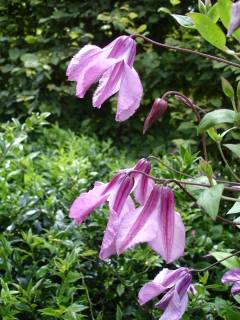
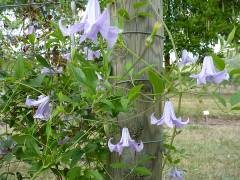
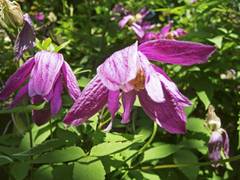
Clematis 'Duchess of Albany' is a vigorous, deciduous, climbing vine in the Texensis Group reaching 8–12 feet (2.4–3.6 m) per season with a spread of 3–4 feet (0.9–1.2 m). The cultivar carries upright, narrow, tulip-shaped flowers 2–2.5 inches (5–6 cm) long with four thick tepals in deep pink with a darker pink central bar on each tepal, from July through September on current-season growth. The tulip form—tepals held upright and only partially opening rather than spreading flat or nodding—is the defining character of the texensis hybrids and sets them apart from all other clematis groups in cultivation. Leaves are compound and pinnate with 3–5 leaflets, blue-green in color. The plant climbs by twining leaf petioles. Growth rate is vigorous once established. Pruning Group 3: all stems are cut to 6–12 inches (15–30 cm) in late winter. The C. texensis parentage confers heat tolerance; the cultivar performs in zones 7–9 where many European clematis decline. Less cold-hardy than alpina types; zones 5–9. Clematis wilt occasionally affects texensis hybrids, though deep planting at the crown allows regrowth from below ground if the upper stems fail. Raised by Jackman's Nursery, Woking, England, before 1897. All parts contain protoanemonin, an irritant that causes skin and mucous membrane contact dermatitis; sap contact during pruning should be rinsed off promptly and ingestion causes mouth burning and GI upset.
Native Range
Clematis 'Duchess of Albany' is a texensis hybrid of garden origin, involving C. texensis (native to the Edwards Plateau region of central Texas). Raised at Jackman's Nursery, Woking, England, before 1897.Suggested Uses
Planted on trellises, obelisks, fences, and arbors at 3–5 foot (0.9–1.5 m) spacing. The tulip-shaped flowers contrast with open-faced clematis and roses in mixed climber compositions. Functions scrambling through medium to large shrubs, threading among the host branches without weighing them down. Grows in large containers of at least 7 gallons (26 L) with a support. The heat tolerance from the texensis parentage suits warm-climate gardens in the southeastern United States and coastal California where alpina and viticella hybrids decline. Paired with blue and white clematis, the deep pink tulips contrast with cooler tones in combined trellis plantings. The summer-fall bloom complements spring-flowering alpina types for season-long clematis interest across the same support.How to Identify
Appearance
Size & Dimensions
Height8' - 12'
Width/Spread3' - 4'
Bloom Information
Detailed Descriptions
Flower Description
Deep pink with darker pink central bars, tulip-shapedFoliage Description
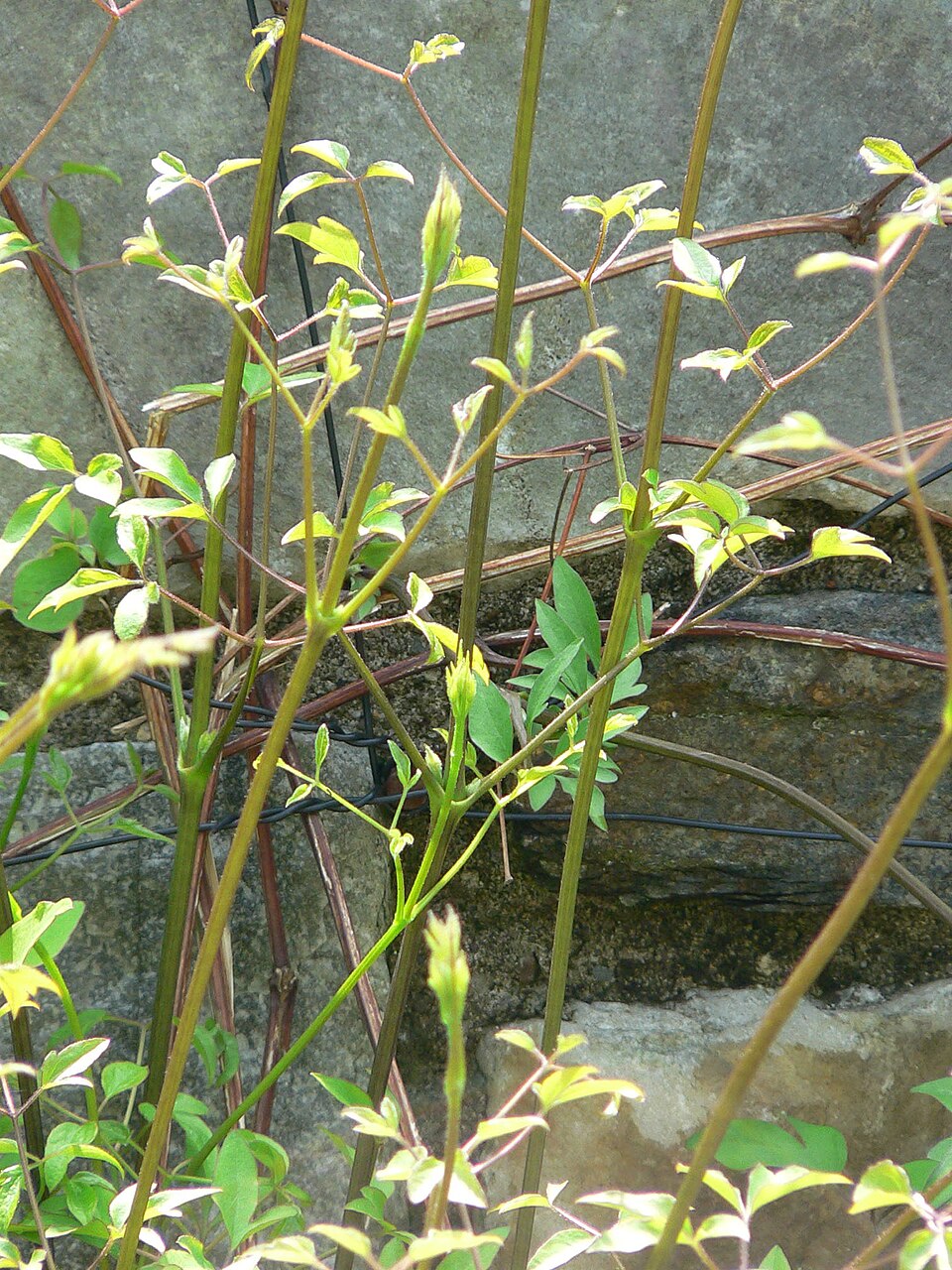
Blue-green, compound pinnate with 3-5 leafletsGrowing Conditions
Sun Requirements
Requires 4-10 hours of direct sunlight daily
• Full Sun: 6+ hours of direct sunlight
• Partial Shade: 3-6 hours of direct sunlight
• Full Shade: Less than 3 hours of direct sunlight
Care & Maintenance
Care Guide
Plant with the crown 2–3 inches (5–8 cm) below soil surface in moist, well-drained soil. Full sun to partial shade; shading the root zone with mulch or low companions reduces summer stress. A trellis, fence, or other climbing support is required. The C. texensis parentage from central Texas confers heat tolerance, extending the cultivar's usefulness into zones 8–9 where many European clematis struggle. Consistent moisture through the growing season supports sustained bloom. Cutting all stems to 6–12 inches (15–30 cm) in late winter (Pruning Group 3) renews the flowering framework. Clematis wilt occasionally occurs; the deep planting of the crown allows regrowth from below ground if the upper stems fail. Cold hardiness extends to zone 5, less than the alpina types. All parts contain protoanemonin, an irritant; gloves during pruning reduce skin contact.Pruning
Pruning Group 3: all stems are cut to 6–12 inches (15–30 cm) above ground in late February to March. Flowers form on new wood. The vigorous annual regrowth reaches full height by mid-summer.Pruning Schedule
Prune: February–March
winterearly spring
Container Growing
Suitable for container growing
Minimum container size: 7 gallons